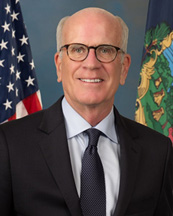
Peter WELCH
Democrat · Vermont
Ranked #35 of 100 senators
Total Score170
Actions4
Avg/Action42.5
Era Comparison
Biden Term
Jan 2021 - Jan 2025
Score60
Actions2
Avg30.0
Trump 2nd Term
Jan 2025 - Present
Score110▲ 83%
Actions2
Avg55.0
Tactics Breakdown
EXTENDED DEBATE1 actions (65 pts)
UC OBJECTION1 actions (45 pts)
Action History
Loading filters...
Thu, September 18, 2025
UC OBJECTION45
S. Res. 224 regarding Gaza conflict/humanitarian aid
Senator Risch formally objects to unanimous consent request for S. Res. 224, providing substantive policy-based reasoning for his objection rather than purely procedural obstruction.
View floor text
Mr. President, as if in legislative session and notwithstanding rule XXII, I ask unanimous consent that the Committee on Foreign Relations be discharged from further consideration and that the Senate now proceed to S. Res. 224; further, that the resolution be agreed to, the preamble be agreed to, and the motions to reconsider be considered made and laid upon the table. The PRESIDING OFFICER. Is there objection? The Senator from Idaho. Mr. RISCH. Mr. President, reserving the right to object, allow me to say some things. As chairman of the Foreign Relations Committee, I oppose this measure. Like everyone on this floor, we want--we all want the conflict in Gaza to end as quickly as possible. The reality is, Hamas has the ability to do so right now by releasing all the hostages and immediately laying down their weapons. Let me say that again. We can have a cease-fire immediately, but it takes Hamas to do it. Hamas refuses to do so. Hamas has the duty to do this. They started this. The entity that started this needs to end it, and they can end it by simply stopping the fighting and releasing the hostages. They refuse to do that and continue constant attacks. They have the duty to start this cease-fire. One of the things that this measure does that I object to vehemently is the fact that it does not underscore the fact that all of this is the fault of Hamas. Every starvation, every injury, every death, every single thing that happens in this conflict is the fault of Hamas. On October 7, when this invasion by Hamas started, Israel was doing nothing to deserve this. Instead, Hamas invaded the country. They killed 1,200 people. They took 251 hostages. If that wasn't enough, the torture that they committed on that day was horrific. For those of you who haven't seen the film of what they did, I strongly recommend you don't look at it because you won't sleep. It is inhuman, what Hamas did to the Israeli people. The Israeli people believe they have to defend themselves and they have to eliminate Hamas. Worse, Hamas has used previous pauses in humanitarian aid convoys to resupply their attacks at the expense of the Palestinian people, to include looting at gunpoint the majority of the trucks that crossed into Gaza. This is pure evil. They show pictures of women and children starving. Those women and children are starving. They are not being starved by Israel; they are being starved by Hamas. The Hamas fighters you will see in the photography are well fed, well taken care of. They steal the food that is supposed to go in there and go to the women and children, who are not fighting. This resolution fails to even mention this threat from Hamas, much less recognize the terrorism as the root cause of this conflict. Additionally, we should be very cautious against getting ahead of the negotiations of both our President and our democratic ally Israel, who are working diligently to resolve this conflict. In fact, the administration has worked with Israel to establish a new system of aid distribution that prevents diversions by terrorists. More aid was delivered into Gaza last month than in almost any other month of the past year. There is no blockade. Food is getting in. Hamas is stealing it, and what they steal, they either eat or they sell. This resolution is incomplete, it is misleading, and unfortunately it is partisan. For these reasons, I object. The PRESIDING OFFICER. The objection is heard. Mr. WELCH. Mr. President, I thank the gentleman from Idaho, the chair of our Foreign Relations Committee. I join him. I join him enthusiastically in condemning the actions of Hamas--the invasion on October 7 of Israel, the slaughter of 1,200 innocent people, the taking of hostages, and the infliction of suffering that Hamas has inflicted on Palestinians within Gaza. But the situation is much different today than it was a few months ago. Four months ago, I stood here, and I asked for unanimous consent in support of the Senate resolution on the humanitarian disaster in Gaza. The resolution called for an end to the siege, an end to the war, and the return of the hostages. Since then, more than 400 people have died of starvation, including more than 100 children, and that is ongoing and accelerating. Thousands more have died under bombs and bullets at aid sites themselves. At the time, I held up this picture of Jinan Iskafi. She died in her parents' arms, the victim of a military blockade on infant formula. Here joining Jinan are children suffering from famine conditions that exist right now, this month--Amer, Maryam, and Shamm. There is an ongoing famine in Gaza, and the Netanyahu government has made a self-conscious decision to deny people the food and medicine they need to survive. Women waiting for C-sections are trapped in the middle of a bombing campaign. Children are forced to watch their mothers die slowly of cancer, with no access to medicine. The hospitals they need are being destroyed. At the same time, the Netanyahu government has begun a new military operation to take complete control of Gaza City. In Gaza City, hundreds of civilians are living under nonstop bombardment. It is about destroying buildings that are left standing, and it is a bombing campaign that has as part of its objective to force them to leave. The Netanyahu officials in his government acknowledge that they want people to move out. They acknowledge that their campaign is in significant part about displacing people who live in Gaza City and forcing them to move elsewhere. That is at a time when those folks are living in tents; the kids aren't going to school; where they have already moved six or seven times. The decision a family has to make is horrific: Do they move to another place where there is no place to go and they have no guarantee of any kind of safety, or is it better for them and their family to stay where they are and risk that they will be in the path of the bombing campaign? ____ The definition of international terrorism in our law--title 18 section 2331--includes violent actions that are intended to intimidate or coerce a civilian population. And what is coercion and intimidation more than bombing where people live? Mr. President, 46 Senators cosponsored this simple resolution months ago, and it is about trying to bring about an end to this relentless and needless suffering. We must act. We must act so that an innocent son or daughter risking starvation does not starve. We must act to save someone's mother or father from a bomb dropped in Gaza into a place that is already unlivable. And we have to act as a body to do everything we can to end this war. Now, the objection that my colleague made is about Hamas stealing food, and there is no doubt Hamas is stealing food. They care nothing about the Palestinians living under their oppression. But there is also no doubt that the Israeli Government, self-consciously, has restricted the aid that is necessary to get in, has interfered with organizations that were delivering aid, and it is resulting in an extension of the suffering. Wars are terrible, not always avoidable. But after the horrors of World War II, we had, as part of the international community, the Geneva Conventions. It stated that collective punishment is a war crime; militaries would not be any longer allowed to use food as a weapon in order to press a battlefield advantage. And war may not be avoidable, but those waging war have limits on what they can do in waging even a just war. So this is not just about Gaza. If we relinquish our commitment to the Geneva Conventions, we reopen society's acceptance of ``anything goes'' in causing the suffering of innocents to achieve some military advantage. We do not want to go there. My colleagues have also objected to the declarations of famine, even though that is the declaration that experts--and I say ``experts.'' It is people who have as their goal and life's work to try to feed people who are desperately in need of nutrition. In order to hold that the children are not suffering, we would have to completely discount the consensus of every humanitarian expert and agency in the world, the organizations that in many cases were founded with the significant help of bipartisan efforts here in this U.S. Congress. I am talking about the World Food Programme, about UNICEF, about the Integrated Food Security Phase Classification, about Mercy Corps, about Doctors Without Borders. All of these organizations have documented the devastating starvation. So this is not a question of whether there is starvation or there isn't. And yes, there can be fault, as the chairman indicated, with Hamas and the role they play, and I condemn that. But there is a significant actor here, and that is the Netanyahu government. When they bar aid trucks from going in, that leads to hunger, starvation, malnutrition, and lack of medicine for people who desperately need it. I do want to thank folks who are continuing their efforts to do anything they can to help feed these starving kids in Gaza--the Catholic Relief Services, Refugees International, Friends Committee, Mercy Corps, Oxfam, Amnesty International, MedGlobal, Human Rights Watch, Norwegian Refugee Council, HIAS, CARE, and the dozens of faith- based organizations--for being here and always being available to brief Members of Congress but, more importantly, to get food to folks who desperately need it. This resolution is going to be rejected today with the objection presented by the chairman, but from my perspective, we can't reject the facts because the facts won't be rejected in history books. Kids and innocent Palestinians are starving. We have seen enough to know that, right now, Prime Minister Netanyahu is leading a policy of mass, forced displacement. People are going from one place to another with whatever it is they can carry on their backs or in their arms. When they go to one place, they are displaced yet again, and there is active discussion about having all of the Palestinians out of Gaza itself. They are being pushed by starvation, by bombing, and by shelling. That, in addition to the restriction on aid that has been imposed by the Netanyahu government, is shocking. We know that the Netanyahu government's rules of engagement--and, by the way, using American bombs that are used in ways that have grossly disproportionate civilian casualties--over 64,000 people in Gaza already killed, many women and children. Nearly 20,000 children are dead. Some experts define these actions as ethnic cleansing. Others suggest it is genocide. And that includes, by the way, many Israeli experts, former intelligence and military officials and organizations: B'Tselem, Physicians for Human Rights--Israel, Combatants for Peace. They have said that what they see is genocide. There are many labels that could apply to what is happening in Gaza today. Whatever label is used--a war crime or crimes against humanity or ethnic cleansing or genocide--one thing is clear: This must end. It is not about just giving a name or a label; it is about saving lives. The United States has a unique role because of the close relationship our country has had to Israel and the close relationship that our President has to Prime Minister Netanyahu. And what matters the most are the actions we all take to make this suffering end. And that can end with a secure and democratic State of Israel, but it also must acknowledge that what is occurring has to stop because so many innocent people are victims of these bombs, of this starvation, of this forced displacement. The Senate today can demand an end. I hope my colleagues will join me in passing this resolution. I yield the floor. The PRESIDING OFFICER (Mr. Banks). The Senator from Michigan. Federal Deficit
Tue, April 1, 2025
EXTENDED DEBATE65
Senate floor proceedings being consumed by extended immigration discussion
This appears to be part of an extended floor speech where Senator Welch is asking lengthy questions during Senator Booker's speech on immigration, contributing to what seems to be hours of floor time consumption on this topic.
View floor text
Madam President, will the Senator yield for a question. Mr. BOOKER. Yes, I will yield for a question while retaining the floor. Mr. WELCH. Thank you. Senator, I have been listening to many of your hours of speech. You are talking about immigration now, and I have another question about the immigration policy. You know, I think all of us understand that it is absolutely essential that our country secure its borders, and, from time to time, the country forgets that. But I think we have had this debate about immigration that has been going on for several years. I don't know if the Senator had an opportunity to address the opportunity we had in the Senate when, last year, there was a realization on the part of both the Republicans and Democrats that the only way we were going to get a secure border and a beneficial, sensible immigration policy was to work together. I know the Senator was watching that very carefully when we had the terrific work of Senator Lankford from Oklahoma, Senator Murphy from Connecticut, and Senator Sinema, of course, from Arizona. Despite the enormous political tension that surrounds the immigration issue, but for understandable reasons, the three of them worked very hard and came together for a tri-partisan proposal, in effect--Senator Sinema, of course, being the Independent, who always played a constructive role in trying to bring the parties together. What was included in that legislation was a major commitment--embraced by Senator Murphy on behalf of the Democrats--for border security. There was an acknowledgment that we have to control our borders. It is really that simple. Mr. BOOKER. Yes. Yes. Mr. WELCH. But when you control your borders, you also have the opportunity to have an immigration policy that the Congress and the President think will benefit the American people. That benefits us, of course, if there is security at the border, but it also benefits us if we have legal immigration that is controlled by the American people. Of course, you know, I have noticed that Elon Musk, who is against immigration and is for everything that President Trump is for--he likes having very highly educated computer people who can help him go from very rich to even richer. So he carves out an exception for people who will be beneficial and helpful to him in his various enterprises. But, you know, we have got in Vermont a lot of dairy farms, and we have a tourist industry, and we have a really hard time filling those jobs. So legal immigration can really be helpful and constructive and beneficial to the people of the State of Vermont. I know, in talking to my colleagues on both sides of the aisle, many of us in our States have tourist industries, and we have agricultural enterprises, just to mention two, where the reality is we don't have the number of people we need to fill those jobs. You know, it is not just a matter of paying more, because I do think we have to be very mindful that we want to do every single thing we can to help elevate the wages of American workers. And, by the way, this is a little bit of an aside. Why in the world haven't we raised the minimum wage? I mean, I know, Senator, you are for that, and I certainly am. But it astonishes me that we still have it at--what is it?--$7 or $7.50? I mean, it is unbelievable what the minimum wage is. A lot of States have raised it. Vermont certainly has. But we, on immigration, had the opportunity and the bill and the will to make enormous progress so that we would have an immigration policy that secured the border, had the validation of bipartisan majorities in the House and in the Senate, would have also addressed the issues about legal immigration that would help us strengthen our economy, and also would have included a pathway to citizenship for Dreamers--folks who were brought here by their parents when they were 4 or 5 or 6 years old and whose only country they know is the United States itself. You know, my understanding from talking to my colleagues on the other side of the aisle is that there is an enormous amount of respect for many of these Dreamers, many of whom have been heroes for us in the military. So this is not a Republican--in my view, it is not a Republican- Democratic situation. It is a desire on the part of almost everyone in this body to accommodate the reality of a child's being brought here by his parents, going to school, getting an education, serving his country--firefighters, marines, teachers--doing all these things that are really helpful to our country, and are here through absolutely no fault of their own. If we were to require them to be deported--and that is an effort that the current administration is making--you literally would be taking people who might be 30 or 40 years old now, who have families, and send them back to the country from which their parents brought them. And they don't even speak the language, and, you know, that obviously makes no sense. When I talk to Vermonters who have very, very strong views of having a strong border and I ask them about this situation, they think: Wait a minute. Well, that is different. You know, that is a person who lives here. That is like my neighbor. So I was so disappointed when we were on the cusp of being able to get this legislation passed when then-Candidate Trump, in his candid way, said, ``Kill it,'' and he was candid about why. It would ``give the Democrats a win.'' I never saw this as a win for Democrats. You know, I saw this as a win for America. The reality is that, when we have to do really hard things here--and we are not doing hard things these days, but when we are trying to do hard things that are really important for the American people--my experience is you really do have to get to a bipartisan place because, you know, we have lost elections, and we lost the last one, and that is on us. It is not on the voters. They made a decision. That is their right to do, and we have to learn, and we have to listen. But when we were listening and hearing loud and clear from the American people that we want a secure border and then we worked with our colleagues on the other side of the aisle to get a secure border, why in the world would the leader of the party kill it? Why? I mean, we know the reason. He thought it was good politics. But this is not about what is good partisan politics. It is about what is good policy that is going to help the American people. So among the many things you are focusing on, of course, is this question of immigration, and this is incredibly important. But I wanted to be clear that I, as one Member of the U.S. Senate, am absolutely all in for the immigration reform that we need. And that is a secure border. That is legal immigration as we determine the type of immigration that would be beneficial to the American people and sustainable, and it also includes a pathway to citizenship for these children who, in many cases, were brought here by their parents, who had no agency, no involvement whatsoever in the decision to come here, how they got here. Pardon me. For those of us who don't stay up all night, some of us use alarms to wake up. So pardon me for being here earlier than I thought I would be here. And you are here maybe later than you thought. But you know, it is such a privilege for you, and it is such a privilege for me. It is such a privilege for the other 98 citizens of this country who serve with us in the U.S. Senate that any chance we get--any chance we get--to do something that is helpful to the people we represent, don't we want to grab it? Don't we want to do it? And does it matter if our name lives in memory that we were here? It doesn't. What matters is what we do here and whether, when we leave, we can look back and have the satisfaction of knowing we gave it our best. There is enormous pressure on folks in this job from the crosscurrents of the political world that we live in. And all of us are fallible. All of us have plenty of opportunity to get it wrong, and we do. But what I have seen in the people I have admired on both sides of the aisle--and I think of Senator McCain, whom Senator Murphy worked with so much. There was a heart and soul to that man, and it was the heart and soul and his spirit that guided him. And when I think about immigration, and we are talking about how tough it is, he worked together with the so-called Gang of 8 to come up with a reform that this Senate passed years ago. I was in the House then, and I remember being so excited--so excited--when I heard that the Senate had actually come up with a proposal that just made sense. It wasn't perfect. What is? You know, Senate to Earth: What is perfect? We do the best we can, but that is about it. But do you know what? When I say ``that is about it,'' that is what life is. Do your best and then move on. By the way, that is one of the reasons why I think, Senator, the bipartisanship, which we don't have now at all, but it has to ultimately--we have to have enough humility to understand that neither side has the answers. And where we try in earnest to come up with the best solution we can at the moment, where we listen to each other, what happens is that if we didn't get it fully right--and we never will--we understand that we have an opportunity to fix it and make it better based on that experience. When there is just our way or the highway, there is no resolution and no progress. No. 1, you don't get the bill passed, as we saw with the immigration bill. Then, No. 2, if you get it passed, the other side just tries to tear it apart and repeal it as opposed to improve it. Every single one of us knows that the American people want progress. But when what we are talking about is something that is hard--and it truly is hard, the issue of immigration--we are talking about something that is hard politically, that spirit of wanting to get to a solution, that was what animated the work of Senator Lankford, Senator Murphy, and Senator Sinema. They wanted to get to a solution, even though they had significantly different points of view going in on what was the right outcome. But they wanted to get to a solution where they represented the points of view of the disparate views of our caucus, and they came up with a compromise that, by all accounts, would be such a better place for us to be now than what we are in: no progress. We haven't been able to act on that immigration bill since the Senate acted, with the leadership of Senator McCain and others. I was mentioning how excited I was. I was in the House at the time, and I was so excited that this bill came over. You know, Vermonters were asking me all the time: Peter, we have got to do something about our borders. We have got to do something to make sure our farmers don't fear having their farms raided and them not being able to milk their cows. It is that essential, right? And I am talking about a lot of pretty conservative people, politically, who politically sometimes agree with me, sometimes don't. But what was so exciting to me was that on the cusp of this coming to the House, I was thinking: I am going to have a chance to vote for secure immigration, securing our borders, a rational immigration plan, and I am going to be able to give fairness to the Dreamers. I was so excited about that. Then what happened is it was announced that the House would not even take up the bill. Why? It was the same reason that then-Candidate Trump proposed to his colleagues or to his party members in the Senate: Kill it. And why was that? Really, in all candor, it is the most cynical of all reasons. Sometimes people in politics prefer to have the issues that they can fight about rather than use the responsibility and opportunity they have to solve the problem. That is pretty much what happened with that. And here we are, and we are seeing it again. You know, there is another thing that is happening with the immigration policies of the current administration. There is a lot of cruelty, this part of it. Yes, we have to have a secure border. Yes, criminals who came here illegally should be deported. But should the consensus that we have about a secure border, about the legitimacy of deporting criminals who are here illegally be used to justify a wholesale roundup, where the people who are rounded up are almost randomly picked up on the basis of good information, but it is clear in this roundup, where so many people were flown to the jails in El Salvador, that the minimal amount of due process, which is inquiry into who is this person, where are they from, does this tattoo mean they are in a gang or is that a tattoo of Mom--are we a society where we don't provide that minimal inquiry that is called due process, that our country was founded on? It appears, in many cases, we haven't done that. Then, what we are seeing also is that a number of people are being rounded up who are here legally. They are here on a student visa, and they published an opinion in a school newspaper expressing their point of view about the suffering in the Middle East. This country, of course, is founded, among other things, on the First Amendment right to free speech. It is a pretty astonishing thing that people who express that, who are here legally, by the way--legally, legally, legally. I want to emphasize that--are suddenly confronted by people who are essentially bearing masks, put in handcuffs, taken away, and then put in a jail at some unknown place until some maybe days later when you find out where they are. How does that solve the border crisis? How does that protect the liberties that have been the hallmark of the United States of America since the Constitution? It is cruel to have a person who essentially ``disappears.'' That is the term I know Senator Murphy used once and, I think, unfortunately, accurately. We have a challenge. It is really not who wins this vote, who wins that vote. And it is not even who is in the majority and who is in the minority because this country only works and this Senate only works when whatever your political views are, you approach the problems that America has from the perspective of your obligation as a U.S. Senator to make progress, to make it better. I was in the State senate for 13 years. I am not going to say my life has been downhill since then, but what I so appreciated about the Vermont Senate--and I learned, working with other people, that ``bipartisan'' doesn't have a meaning almost now because it is like you have got to be on one side or the other. But I remember when I first went to the State senate, Senator Booker, I won an election that was an upset. So I was feeling pretty good about myself. When I got there, it was a majority in the Republican Party, and I was ready to cause trouble--not necessarily in the John Lewis good way. It might have been more of a Peter Welch ego way. I had a lot to learn. What every member who was showing up--and these two Republican Senators who were just really icons for me in my life, as it turns out, they and the Lieutenant Governor made decisions about who would be on what committees. And I really wanted to be on the Finance Committee, but that is not a committee you get on when you just show up and you have won an election and you are acting like you are more important than you are. They put me on the Finance Committee, and I said: I am doomed. The reason is, I know I had to cooperate. They had been so good to me and so generous. They gave me a seat at the table. It was such a thrill for me to be able to actually sit at the table with these people whom I held in such high regard and who knew so much more than me. But they invited me in. They didn't push me aside just because I had different points views and was from a different party. A few years later, I became Senate president, so I had a lot to do with who was on what committees. And I remembered I started then the process that we still do in Vermont, and I appointed a number of Republicans to chair committees. I was in the Senate a second time with the now-Governor of Vermont, Phil Scott, and he became the chair of the Institutions Committee. That is a big deal in Vermont. When I tell folks we did that in Vermont, where sometimes you would appoint somebody who is from the other party, they want me to have a mental status exam around here. You know, you just don't that kind of thing. What I do know and what I do see is that there are a lot of people here who do have that--I will call it the Murphy-Lankford-Sinema attitude: Let's solve the problem. Let's make progress. Let's find a way where we can move ahead. You are talking about immigration, which because we have been going around and around on this for so long without making progress, it is almost creating this cul-de-sac or this sinkhole where people think it is pointless; why even talk about it; why try to solve it. It can't be done. But we know it can be done because we are the people here, 100 of us, that actually have the ability to do it. And I would say we have the responsibility to do it because it is a serious issue that faces the American people, and they are entitled to the safety of a secure border. The Dreamers are entitled to some justice and respect for the commitment they have made to be fully participating citizens here in the United States. So I just applaud the efforts of my colleagues who, despite all of the outside noise, do want to make some progress. When we don't make progress, we descend into a bad place. You know, yes, deport a criminal. Our people are entitled to safety. People are not entitled to come here illegally, and people who are illegally here certainly are not entitled to commit any crimes. But when we go round and round and just use the challenge of immigration reform as a political cudgel, we end up going into some pretty dark places. And that is where we are heading now, where a person gets rounded up who is legally here because the administration doesn't like the opinion they expressed. It is not that their opinion was necessarily subversive. It is not even wrong; it is debatable. You and I would have an opportunity to debate, you know, what should be our policy in the Middle East, what should be our policy on immigration. But the administration decides: That speech, I don't like. Arrest that person. Disappear that person. And then we get into debates that are really not about making progress but mutual recrimination. So I am just very delighted that you are focusing a good part of your effort here on the vital question of immigration. I do hope--I haven't been watching everything, but if it is OK, I just want to direct your attention to these tariffs that are happening a little bit. I know you are going to have an opportunity to talk about a fair number of things; you already have. But I have never seen anything so dumb and reckless as these tariffs on Canada. We have a library in Newport, VT--Derby Line, actually--the Haskell Free Library. And half of it is in Vermont, and half of it is in Canada. Is that cool or what? Canadians come in what I call the backdoor but they call the front door, and we come in the front door which they call the backdoor, and we read books together. We have had this library for decades. We had a roundtable up on the Canada-Vermont border, and the Member of Parliament from Stanstead, which is the town next to Newport, Madam Bibeau, was with us. And we were with some folks who ran businesses on the Vermont side and on the Canadian side and some of whom had operations on both sides. Most of these were family businesses; some were very large, some were small. They ranged from, like, farmers on the Vermont side, who got a lot of their fertilizer from Canada. And that is true, by the way, all across the northern border. It can be Minnesota. It can be Idaho. So many of our farmers all along the Canadian border have cross-relationships with Canada. They get their fertilizer. It is going to cost 25 percent more. We all know how hard our farmers work. Nobody works harder. The margins of what they make are tiny. And you add a 25-percent tariff, and these people are just--they don't know what is going to happen. Our maple syrup makers, back and forth. We get a lot of syrup from Canada and blend it and make it into products with Vermont syrup. Canada is the biggest producer of the second best maple syrup in the world. Vermont is the biggest producer of the best maple syrup in the world--in the United States. But the equipment that our sugar makers use is largely manufactured in Canada. A 25-percent tariff on that, that is going to hammer the Vermont maple producers. Again, they operate on a small margin. A lot of these farms, as you know, and the sugar producers--or, we have got a family company up there, a second generation, that makes high-quality furniture--these are family businesses, and they have tight margins. They are competing. They are really working hard. The Northeast Kingdom is really a pretty low-income part of Vermont, with wonderful, incredibly hard-working people who are very proud of where they live and who they are and who their neighbors are. They are asking really tough questions about how they can make it and whether they can stay in business. And this is not the same as immigration, but there is an element here that is the same as immigration. Shouldn't any policy that we pursue start with the premise that we will do no harm? So it might be a policy the Presiding Officer is advocating. And I know when the Presiding Officer served in your previous job, you would be wanting to make certain that what you did, did no harm. In fact, you would be insisting that it did some good. And my question with the tariffs is whether the administration is starting out from the premise that I think all of us should start with: Yeah, we may have an idea. We hope it might work. But we have to make sure it does no harm. Mr. BOOKER. I was going to ask a question. Did the Senator finish his question? Mr. WELCH. That is a long question, and I am waiting for a long answer. Mr. BOOKER. I want to first start by saying that the Senator has a reputation around this place; that there is a deep, penetrating goodness that is in you. I love to watch my Senate colleagues when other people are not--it is a habit of mine--because I think what you do when no one is watching is really telling. There is a belief I have that someone who is nice to you but not nice to the waiter is not a nice person. And we have a body full of people that show some deep, decent goodness. You are one of those people. And what I love about watching you is that it could be the farthest ideological person away from you, and you just have this--like, you look at people like you see their divinity, whether it is the person at the highest position, a leader of the Senate on either side, or someone who holds the door. What I love about you is, when I watch you, you are one of the Senators--some people just keep to their side of the aisle--I always look up, and I find you over there talking to somebody. And I just rely on that decency in you as a friend, and I have come to love you like a brother, and I want to thank you for being here before your alarm in the morning goes off. It really touches me. And I don't know if you remember this, but about 12 hours ago, you sat right here and you embraced me in a hug, and I leaned on that hug because I wasn't sure that I would even make it 12 hours. I take strength from you, my friend. And I take strength from you to hold to my kindness, to look for it everywhere. This is a story I don't think I have ever shared with you, but it speaks to how we get things done and how we should get things done. When I first got to the U.S. Senate, my mentor, Bill Bradley, gave me three real lessons for me to learn. I think I have obeyed two out of the three. One was to know the rules of procedure really well. That is the one I have probably failed. I am still learning things, 13 years into this, about the rules of procedure. The second one was become a specialist in some areas; don't be a mile wide and an inch deep. I feel like I have done a pretty good job on that. But the one that he told me that was most fruitful--I already mentioned one of the benefits I had in doing this with John McCain earlier in this 12 hours--he commanded me to go and meet with all your Republican colleagues; take them out to dinner, sit with them for lunch, whomever they are. I went out to dinner with Ted Cruz. It was hard--to find a restaurant--because I am a vegan and Ted Cruz is from Texas. But I still remember that we went out and how people were sort of shocked just to see two human beings breaking bread. But the story I want to tell my friend about is when I went to see Jim Inhofe, a Republican from the same State as Lankford. And I couldn't get him to meet with me. I couldn't get on his schedule. And I found out that he had Bible study in his hideaway, and so I go up to his hideaway for Bible study. Thune was there. And we all have implicit biases. We all have implicit biases. My implicit bias was that I did not expect of this older, conservative man that I would walk in and see on his mantle this beautiful picture, centered, of him hugging a little Black girl. I am embarrassed by that, that it so surprised me. And I--especially in those days, I didn't talk to, like, the senior giants in the Senate. I didn't call them by their first names. I still have a problem calling Senator Durbin by his first name, for example. He is a lion of the Senate, in my opinion, and one of the kindest people to me since I have been here. So I go to him--I go to Jim Inhofe. I go, ``Mr. Chairman, sir,'' and I look at the picture and I go, ``Who dat?'' And he smiles and chuckles, and then he tells me the most beautiful story of his family adopting this little Black girl out of some of the most terrible circumstances. And I was so moved. And thinking about my friend Bill Bradley, I would have never known this incredibly beautiful thing about someone who is my--ideologically, we disagreed on so many things, but knowing this personal moment, it created this thread between us--not a rope, not a cord, but a thread-- that connected me to him, and it created a deeper affection. So fast-forward many months in this body, and there is a big education bill, which Chris Murphy referenced earlier. A big education bill was going through the Senate because No Child Left Behind--we were going back the other way. Senator Durbin has told me about this pendulum that sometimes swings and swings back in its place. And it was a deal. Lamar Alexander was in the well of the Senate. He was the manager of the bill. And there were no amendments allowed. No amendments allowed. Of course, I am sitting back here. This is where I sat. And you talk about egos. My ego--I had this great amendment, and I was frustrated that they were having this rule--no amendments--but I have a great amendment to do something about homeless and foster children, who have the worst educational outcomes, and I thought I had a modest amendment to try to make a difference for American children who are in foster care or that were homeless. And I am frustrated. I am sitting back here, something that I dream of doing again one day--sitting--and just kind of upset. And then I see, walking through those doors, Senator Jim Inhofe, and he walks to the well kind of talking. And I remember the story he told me about this little Black girl in his family, and something tells me to get up. And I walk into the well, down these steps, and I say to him, ``Mr. Chairman, sir, I know how much you care for children in tough circumstances. I have an amendment.'' And I explained my amendment to him, and he looked at me and gave me the Senate version of no, which is, ``I will think about it.'' And I got frustrated, and I said, ``Thank you, sir, for considering it,'' and I walked back and I sat down right here. And then when I picked my head up, he is marching into our side--like you do on the other side--like his GPS coordinates were off. He marches up to me and just sort of grunts at me, ``I'm in,'' and then turns around and starts walking away from me. I step up and I say, ``Wait. Excuse me. What do you mean?'' He goes, ``Cory, I am going to cosponsor your amendment.'' And I was so happy. And now I go over to Senator Grassley and say the same thing to him-- a relationship that, thanks to Dick Durbin, I really bonded; I have a sweet relationship with him even though, again, we disagree on so much. He doesn't even make me wait. He looks at me, and he goes, ``You got Inhofe?'' And he signs on my amendment. (Mr. YOUNG assumed the Chair.) By the time I go to Lamar Alexander, I look up and I am like, I got a full house. Sorry, I got no other Democrats, but I got all these Republicans. He looks at me, and he laughs. He goes ``Really?'' and he puts the amendment on the bill. It is the law of the land right now. So what you said in the beginning of your long windup question, my dear friend, my dear brother, is how real change is made. That man, Dick Durbin, when I first got to the Senate, he knew how much I cared about criminal justice reform. He brought me to the table. I started working--as I presided, I started working in conversations with Mike Lee, in conversations with Chuck Grassley. We cobbled together a bill. It wasn't done by Executive fiat; it was done in the Senate--87 votes. It is the law of the land. Thousands have been liberated from unjust incarceration. So my point to the Senator is that his spirit is so right, is so true about what it takes to make real change, but the President we have right now doesn't seem to be coming to this body with any kind of bold, bipartisan legislation to solve the problems of our Nation, to cobble together the common ground of this country on immigration. No. He is not acting like that. He is using language like ``Presidential primacy.'' He is defending his corrupt practices in immigration by saying things like ``Presidential primacy.'' He is invoking the Alien Enemies Act. He is invoking the Alien Enemies Act--an act from the 1700s--to deny due process, and Antonin Scalia, a textualist, said that whether you are born in this country or not, you have due process here. The Constitution states only one thing twice: Both the 5th and the 14th Amendments say that no one--not no citizen--no one shall be deprived of liberty or property without due process of law. Yet this President is disappearing people and, as we documented here, disappearing the wrong people; as we documented here, unjustly detaining Americans, separating families--all while pushing his agenda and doing things that the values of people on both sides of this aisle don't believe in, like stopping the investigation of children for alleged sexual molestation. This is wrong. I sat down with some of the advocates who were telling me and who are trying to fight to stop the law from being broken, and they scared me, Dick Durbin, because they said what I said on this floor: If someone is willing to violate the Constitution for some, it endangers the constitutional rights for us all. Do not think this is, oh, those people. If they are violating the rights of some, it is a threat to the rights of all. I am standing here because of a national crisis that is growing. We talked about Social Security. We talked about healthcare. We talked education. This is a crisis for us. This is what the person said. They talked about the Insurrection Act. They have been hearing people in the administration talk about the Insurrection Act. Every person in this Congress and across this country wants a safe and secure border, but scapegoating immigrants to erode basic constitutional freedoms does not make America safer, does not make our communities safer, does not reform our immigration system like we should be doing in a bipartisan manner like Lankford and Murphy. It does not stop our longstanding problems in our agricultural industry and our tech industry. History has shown that when due process and basic constitutional rights are eroded for some people, it does not stop. It continues to erode. The shoreline that kept you safe will shrink until it reaches you. I am reminded of German Pastor Martin Niemoller's quote about fascism in Germany: First they came for the socialists, and I did not speak out--because I was not a socialist. Then they came for the trade unionists, and I did not speak out--because I was not a trade unionist. Then they came for the Jews, and I did not speak out-- because I was not a Jew. Then they came for me--and there was no one left to speak for me. Well, everything that has happened in the last few months contradicts American values, shared values. I am most concerned about what this signals for the future and the potential indication of this President of the Insurrection Act. Some of our country's most prominent lawyers have warned that the invocation of these two antiquated laws--the Alien Enemies Act and the Insurrection Act--may result in the true erosion of our constitutional rights. Trump's recent indication of the Alien Enemies Act is the first step to securing people without due process, which Justice Scalia said is wrong, and then on the first day in office, Trump directed the Secretary of Defense and the Secretary of Homeland Security--Trump directed them to initiate a 90-day review to determine whether the President should invoke the Insurrection Act of 1807. That 90-review-- when do the 90 days come up, folks? This month. In 19 days. April 20. The President of the United States has already invoked a 1780- something law and also asked his immigration folks, his homeland security folks, to do a 90-day review about the Insurrection Act of 1807. Now, there are probably people watching and saying: What is the Insurrection Act? I had to look up what the Alien Enemies Act was. So let me tell folks what the Insurrection Act that our President on his first day in office--of all the things a President has to do, he turned to the Secretary of Defense and the Secretary of Homeland Security to initiate a 90-day review of the Insurrection Act. America, what is the Insurrection Act of 1807? It is among the President's most powerful authorities. He can deploy the U.S. Armed Forces and militia during a national emergency. He can declare a national emergency. This President has already wrongfully declared national emergencies. He declared a national emergency on energy. Senator Kaine talked about the outrageousness of somebody declaring a national emergency on energy when we are at the highest level of petrol chemical extraction in our country's history. Until he started rolling back what we were doing on wind and solar, we had an all-of-the-above strategy. Nobody ``drill baby drilled'' more than Joe Biden. The Insurrection Act gives the ability of the President to declare a national emergency to suppress insurrections, to quell civil unrest or domestic violence, and to enforce the law when he believes it is being obstructed. When can the President invoke the Insurrection Act? Well, nothing in the text of the law defines insurrection, rebellion, or domestic violence. Those are prerequisites for deployment, but they don't define those things. One of Trump's first Executive orders signed the evening he took office on January 20 was titled ``Declaring a National Emergency at the Southern Border of the United States.'' In that order, he said ``America's sovereignty is under attack.'' He has already declared a national emergency. Neither Congress nor the courts played a role in deciding what constitutes an obstruction or a rebellion. If Trump does unlawfully invoke the Insurrection Act, he can conceivably use our military to carry out his deportation agenda within our country's borders, all without any due process or opportunity to prove that their presence in the U.S. is lawful or even that they are a citizen. Trump himself said he wants to deport American citizens to foreign countries. Trump himself has said: I want to deport American citizens to foreign countries. On February 4, he said: I am just saying if we had a legal right to do it, I would do it in a heartbeat. I don't know if we do or not. We are looking at it right now. This is what he has asked his Secretary of Defense and his Secretary of Homeland Security to say: Can I invoke the Insurrection Act? So don't be mistaken. This is not just about immigrants. This is not just denying immigrants the due process that Antonin Scalia said that immigrants have a right to so you don't disappear the wrong people like the Trump administration has done, that you don't wildly disagree with what a citizen is saying and use that as a pretext to disappear them. He is creating the pretext to invoke that 1807 law, the Insurrection Act, and if he does that, when they came for the immigrants and denied them due process, he is trying to get us to surrender our commitment to the constitutional guarantees that Americans have. He has said he would invoke--he would deport Americans if he could. When the President denies due process to some in America, it threatens the due process of all. Let's see what happens on April 20 if this President, who has already invoked the Alien Enemies Act, follows through and invokes the Insurrection Act. But why wait until April 20? Raise your voice now. Stand up now. Do something now. Cause some good trouble now. Let this President know that if he does ever do that, there will be a rising up of people's voices, a rising up of good trouble, as John Lewis would say, to say: Not in my country. This is unacceptable. Mr. DURBIN. Will the Senator yield for a question? Mr. BOOKER. To Senator Dick Durbin, to somebody who has been my mentor and friend, I will yield for a question while retaining the floor. Mr. DURBIN. Thank you. I first want to acknowledge this extraordinary moment in the history of the Senate. I believe you have been holding the floor now for more than 10 hours, and perhaps we will go on even longer. You have been joined by your colleague and friend Senator Murphy of Connecticut. I am sorry to take the early morning shift, but I didn't want to miss this moment in history, not just for the historic nature of it but for the substance of it as well. I just remind my colleague and fellow member of the Senate Judiciary Committee that it was only maybe 3, maybe 4 weeks ago that we had witnesses before the Judiciary Committee, and I asked a question. One of them is pending on the calendar, the Executive Calendar, on the floor. His name is Dean Sauer of Missouri. He is seeking the position of Solicitor General of the United States. Along with him was the lady aspiring to be the Assistant Deputy Attorney General for Civil Rights, Harmeet Dhillon, and Aaron Reitz, who has been approved by the Senate for a legal policy position. The questioning went to the basics of our Constitution, which you have noted here today; that is, what is the check and balance on a President? What is the accountability of a President under the Constitution? As I read it--and I don't profess to be expert; I am still learning-- as I read it, the accountability of the President is in article II--in article III, I am sorry, article III, the judiciary. Ultimately, the President can be held accountable by impeachment in Congress or by decision of the court. Some of the orders that he is promulgating are inconsistent with law and the Constitution. The question that was asked of the witnesses who are seeking positions in the Department of Justice: Can a public official defy a court order? It seems so fundamental and basic. The answer is no, of course, but these three witnesses all equivocated in their own ways, which raises a question: If this President is not held accountable by court order, what, then, can control a President who misuses their office, to the detriment of the Nation, of the people who live here? That, I thought, was a fundamental question. It was interesting to note--you may remember--that one of our Republican colleagues on the Senate Judiciary Committee, Senator John Kennedy of Louisiana, after hearing these witnesses equivocate on whether a public official can defy a court order, came to the committee and basically said: What are you saying? The answer is obvious. You can criticize a decision of the court within the bounds of propriety as a member of the bar. You can appeal a decision of the court, but if that doesn't satisfy you, your recourse is to quit, resign, leave. The Constitution has the last word. The courts have the last word. And I think that is a question that you are raising today. Where is the accountability of the President of the United States when he misuses the power of office? In the cases that you have mentioned, the Alien Enemies Act--it is a law that has been around since 1807 or somewhere around that time--I think it is clear, unless you have declared a war or unless you are invaded, you cannot invoke the Alien Enemies Act as this President has done, and he is being challenged in that regard. Yesterday, our friend Senator Grassley, who chairs the Judicial Committee--and I say ``friend.'' Some people back home say: Don't say that anymore. We don't talk to those people. They are wrong. This is a body where we do talk to one another, and we should for good reason. Well, he raised the question yesterday, why is President Trump being challenged so often in court? Well, he has issued 102 Executive orders. I don't know if that is a record, but I will bet it is, 102 Executive orders. Questioning something as basic as birthright sovereignty, birthright citizenship. And so the point that I am getting to is in obvious situations here where President Trump has gone too far, where is the accountability? It is not going to be an impeachment. We are realists. We know that the Republican House of Representatives is not likely to ever consider that. It could be in the courts. And if it goes to the courts, the question is, Will this President follow a court order if it goes against his policy? And if he won't follow that court order, where is the accountability? Where is the check and balance? Where is the constitutional framework which is supposed to be at the foundation of this democracy? I think you are raising important questions, and the Insurrection Act, the use of our military for political purposes, is a frightening prospect. It is something we have avoided throughout our history and should continue to. And I just commend you for raising this point because I believe it is timely. It is timely as the questions that we ask of these Department of Justice nominees about the enforceability of court orders. And the question is now, Will the American people speak up? I am counting on some of our Republican friends to speak up too. Throughout history, there have been moments when the party, other than the President's party, showed extreme courage, political courage, and spoke up. We need that kind of voice now. I thank you for raising it on the floor this morning. My question to you is, at this moment in time, as we ask these nominees whether they would follow a court order or defy a court order, doesn't that get to the basics of our constitutional democracy? Mr. BOOKER. Yes, yes, yes, it does. I mean, you put forth this litany where what we have to ask ourselves is at what point do my colleagues in the House and the Senate and the Republican Party say enough? Enough. God bless John Kennedy for calling out the absolute absurd. I was in that hearing where you have nominees for some of the highest positions in the administration failing to say that they will abide by a court order. I mean, that is something we haven't heard people on either side of nominees just say so bluntly now, not, yes, I will follow the orders of a court. They are equivocating. And God bless one of my colleagues, John Kennedy, who said: That is absurd. You either obey the order or you resign because we have a Constitution. And so when is it enough? When is it enough? This is the week, this is the month of Passover, and there is a wonderful song I love singing when I am at a Pesach seder--the Dayenu. ``It would have been enough,'' is the song, if God just delivered us from Egypt. It would have been enough if he parted the seas. Dayenu. This is kind of a twisted version of that. When is it enough when the President of the United States starts a meme coin on his first day, violating the emoluments clause immediately and enriching himself? When is it enough when he takes an Agency that is on the frontlines of stopping infectious diseases, like Ebola or drug-resistant tuberculosis, from coming here? Is that enough? When we created that in Congress, and he has no right to stop that Agency, would that have been enough? When is it enough for him to issue Executive orders that trample on the highest ideals of this land, when he mocks members of the courts so badly that even the current Chief Justice admonishes him? When is it enough when Elon Musk is indiscriminately firing people and then realizing oops, we need the FAA safety folks; oops, we need the nuclear folks who are helping us keep our regulations? When is it enough that you will say: ``OK. I will call them in and have a hearing to create some transparency in what he is doing''? When is it enough when he activates the Alien Enemies Acts and starts disappearing human beings without due process? When is it enough? Well, it is enough for me. It is enough for me. Twelve hours now I am standing, and I am still going strong because this President is wrong. And he is violating principles that we hold dear and principles in this document that are so clear and plain. The powers of the article I branch are spelled out, and he is violating them. Don't take my word for it, Republican-appointed judges, Democrat-appointed judges are saying it and stopping him, and then he maligns the judge that did that. When is it enough for people to speak out and not just fall in line, to put patriotism over a person that is in the White House? So to your question, sir, to my friend, and I am sorry to get a little animated at this early morning hour, but I am so frustrated and not just because of that, but I am reading the stories. We are going into the next section, which is national security, and I am reading the stories of our citizens of this country, not just New Jerseyans, there are a lot we have read in these 12 hours, but there are people from all over the country who are reaching out to my office. And I know they are yours, Senator Durbin. You are the second highest ranking Democrat in here. I know they are reaching out to you because you are a man that stands for justice. I know they are reaching out to your office, too, because you are one of the outposts for sanity in a Congress that is being too complicit to an Executive that is overstepping his authority and violating the Constitution and hurting people who rely on healthcare and Social Security. I am reading these stories, sir, because of the voices of the Americans that don't have the privilege of the 100 of us, who don't get to stand here, but I believe the power of the people is greater than the people in power. Those are the ideals of our democracy and our Constitution. So I am rip-roaring and ready. I am wide awake. I am going to stand here for as many hours as I can, 12 hours, and I recognize that my other friend, another person I consider more than a friend, like a sister to me, from the State of New York, my neighbor. Mrs. GILLIBRAND. Senator Booker, would you yield for a question? Mr. BOOKER. My sister, for you I will yield for a question while retaining the floor. Mrs. GILLIBRAND. Senator Booker, I have been listening to this debate all night, and I have got to say, you are on fire. And you are on fire because the American people are very, very angry about what is happening. They are not happy with what this administration has done. It is contrary to what was promised. It is contrary to what was expected. And I know we are going to talk about national security in a few minutes, but can I ask a question about one of the topics you talked about last night? Because it was exactly what my constituents were talking to me about yesterday. So I was in New York yesterday, and we talked about these cuts to Social Security. I have to say, I was stopped by a gentleman who worked at Amtrak and said: Madam Senator, Madam Senator, I just want to thank you for protecting my Social Security. That has never happened to me before. Never happened at Amtrak to be stopped by someone who worked there to thank me for one thing I had done that day. But I am telling you, Senator Booker, when Elon Musk starts firing people in Social Security and tells the Social Security Administration, ``You cannot answer the phone,'' what are our mothers and fathers and grandmothers and grandfathers supposed to do? Many of them are not readily available to be on a computer. Many of them can't ask their question online. And, worse, Elon Musk is expecting them to show up in person at a Social Security office. How many of our older Americans are not able to drive anymore or are uncomfortable driving? How many of our older Americans feel uncomfortable getting in the subway to get to a Social Security Administration because there are stairs or because the lighting is not good enough? These are the challenges that our older Americans have, and so I just want to talk about the things you told us last night about the risk to Social Security. Social Security is our seniors' money. It is not the government's money. It is their money. So what happens when you make it hard for a senior to call and make sure their check is on the way or their check never showed up, and they can't find it? For a lot of older Americans, that Social Security check is the only money they have for that month. It pays for food, right? It pays for heating bills. It pays for their medicine. It pays for the rent. It pays for everything they need to survive. And Elon Musk's office doesn't believe anybody should be answering the phones. Who is he to tell America how to run its Social Security Administration when our seniors need those checks? They have crippled the phone service, even though--get this one--they can't answer the phone, crippled the phone service. You can only make an appointment on the phone. So how are you supposed to make an appointment if you are going to go in? I mean, that is absurd. They plan to cut 7,000 staff. That is a lot of staff. Mr. BOOKER. Seven thousand. Mrs. GILLIBRAND. Seven thousand staff, even though the Social Security Administration staffing is already at a 50-year low. So they are lying when they are saying this is about efficiency. They just want the money, and what do they want the money for? Tax cuts for billionaire buddies of Elon Musk. It is an obscenity. It is an absurdity. It is an outrage, and everyone in America should be concerned. Hands off our Social Security, Elon Musk and President Trump. Hands off. They are rallying all across the country to say: Hands off my Social Security, hands off my Medicare, hands off my Medicaid. It is an outrage. And I don't think people should stand for it because your Social Security check is your hard-earned money. It is not for Elon Musk to play with, to shift around, or send it to tax breaks for his billionaire friends. Now, I have to say, my office has been working closely with one senior. Now, she is a New Yorker with a disability, and she was told that she had to call a specific representative's extension by the end of March. Well, that was yesterday. And if she didn't get this person, her application could be denied. She has called every day, sometimes more than once a day. She has been on hold for 4 to 5 hours just to reach this representative. As of yesterday when we reached out to her, she had still not reached the representative. So Americans across the country are panicked. They are stressed. They are worried that they won't get their hard-earned money back, their retirement, to pay for the things that they need. Now, this is the money they spent their entire careers paying into. You know, every time you get a paycheck, Senator Booker, there is a line that says Social Security because that money has been taken out of your paycheck and put into Social Security so it is there for you when you retire. It is your retirement. The pages sitting here right here, you are paying into your Social Security. Now, imagine, this is your first paycheck, isn't it? I bet it is your first paycheck. Your first paycheck, you are putting in dollars that, you know, you want saved so that when you--you can't even imagine what it is going to be like to be 65. But the day you are working here, the fact that you spent all night here supporting Senator Booker, that is your retirement. Wouldn't you be pissed off if Elon Musk took your retirement money? You should be. He doesn't have any right to it, and what he is doing is he is doing it by cutting staff. So if you need help because your Social Security didn't arrive, then how are you supposed to get that check? They can't issue you a new one unless they know that it didn't show up in the mail like it is supposed to. Ultimately, cutting individuals from Social Security doesn't just affect them; it affects the entire economy. So you can imagine if all our seniors are getting this Social Security benefit, you can't go then buy your groceries. You are not going to be able to then go buy whatever you need for your home. Those stores will get less money, and that means there will be less resources in the economy. Social Security, if you didn't know it, is our country's largest anti-poverty program. It keeps people out poverty. That is what it does. When we designed Social Security, however many decades ago, it was so that our seniors don't die in poverty, because they were dying. About half of seniors, at that time, were dying in poverty. They didn't have enough food to live. And so we created Social Security. It is one of the most popular programs. It is one of the most respected programs. So reducing access to this key program, Senator Booker, is an outrage. It is harmful. It is cruel. It is hurtful. So I know that this is something that you have really spent a lot of time on last night, but don't you think it is cruel to not allow phone service? Don't you think it is wrong to make it harder for people to get access to their hard-earned money? Don't you think this is something that America did not sign up for in this election? Mr. BOOKER. I read last night--thank you for the question, my friend. I read last night some of the most painful letters of people over and over again, from throughout my State and throughout other States, who are living in fear, who use words like ``terrified'' and told stories that they couldn't sleep because of the rhetoric of this President, the rhetoric of Elon Musk calling it a Ponzi scheme, telling lies during the joint address. Mrs. GILLIBRAND. Yes. Mr. BOOKER. And then I read stories from people that work in Social Security. They are telling about not having desks and the waiting lines and inefficiencies that this has created, and the horrible, deteriorating customer service. Mrs. GILLIBRAND. Yes. Mr. BOOKER. And I have been trying, as much as I can, during these last 12 hours, to read stories of Republicans. Mrs. GILLIBRAND. Yes, this affects everyone. Mr. BOOKER. To read editorials from the Wall Street Journal, to just show that this isn't a partisan thing. This isn't about left or right. It is about right or wrong. It is about will we, as a country, honor our commitments that we made. And then I read from independent folks that are saying: This is crazy that this program is even in jeopardy. Mrs. GILLIBRAND. I have another question for you because I know you want to move on to some national security issues this morning. Mr. BOOKER. And I will yield for a question while retaining the floor. Mrs. GILLIBRAND. Thank you, Senator Booker. So the other thing that stressed out my constituents that I talked about this weekend is air safety. They are very, very stressed out about these cuts to the FAA. You know, there was a plane crash not too far from here--a helicopter crash. Everyone in that helicopter perished. We have been reading about stories across the country about flight safety and the fact that there are near collisions all the time. We had a horrible crash in New York, in Buffalo, the Colgan Air crash. I have gotten to know the families over the last several years because they have worked together for legislation to make sure that we have pilot safety. But what I have been watching in terms of this administration is they don't seem to care. They just have made up this idea that cuts across the board are necessary to get rid of fraud and waste in the budget. And I agree we can make government more efficient, but the way you do that is at least learn what each of these Agencies does, study what is happening in them and how to make them more efficient. Make sure the right number of personnel are hired. Make sure the right training is offered. Make sure there are no wasteful programs. That is good government. That is not what Elon Musk and his DOGE boys are doing. That is nothing like what they are doing. They are just cutting everything because they want to make space for these tax cuts for their billionaire buddies. It is really disgraceful. It is something that I don't quite understand. So over the past 2 months--just the past 2 months--we have seen horrifying accidents and near-misses at airports all across the country, and there was another close call just this past Friday, again, at DCA. Many of these accidents have been a result of chronic understaffing and antiquated technologies at the FAA. But instead of fixing those problems, the first thing that the Trump administration did when it came to power was fire people. I think he is kind of stuck in the loop of ``The Apprentice": You are fired. You are fired. You are fired. I don't get it. Good government is important, and I support efficiency. That is not what they are doing. It is like they are on a power trip, and they just want to fire everybody across the board--just fire them all. So while the court forced the FAA to rehire workers--thank God for the courts. Thank God for the judges that are doing their jobs and looking at these lawsuits appropriately. Many Federal workers have simply moved on and found new jobs because these are highly skilled, highly sought-after employees, people that we really want working in the Federal Government to keep our country safe. Now, just weeks after the horrific plane crash here, with 67 people getting killed in Washington, the administration fired hundreds of Federal Aviation Administration employees, jeopardizing the public safety and threatening our national security. So that made no sense. It was right on the heels of some horrific accident that we all witnessed. Now, over 90 percent of U.S. airport terminal towers don't have enough air traffic controllers. Critical shortages remain for other aviation safety personnel, such as safety inspectors and mechanics, to make sure that, when we get on that plane, that plane is ready to go. In New York, nearly 40 percent of positions are unfilled at two facilities on Long Island that direct air traffic for Newark, our shared airport, JFK, and LaGuardia. As a result, over these past few years, the United States has experienced a substantial and alarming increase in the number of near-misses. According to an analysis in the New York Times, in 2023, close calls involving commercial airlines occurred, on average, multiple times each week, and the number of significant air traffic control lapses increased 65 percent over the previous year. What did they cite as the major reason behind the increase? A shortage of air traffic controllers. While the Trump administration claims no air traffic controllers or critical safety personnel were fired, we know that many of those who were let go played essential roles in maintaining our air traffic control infrastructure. Others were responsible for maintaining navigational, landing, and radar systems. We also know that safety inspectors, systems specialists, and maintenance mechanics are among the workers who were affected. And at least one of the employees fired worked for FAA's National Defense Program, which protects our air space from enemy drones, missiles, and aircraft used as weapons. I want to talk about those missiles and drones as well. I really want to talk to you about what your thinking is here that we don't have a plan. You have the incursions in New Jersey and incursions in New York at the same time, and we don't have assurance that those drones aren't being operated by China or Russia or Iran or another adversary for a nefarious purpose. We have to get to the bottom of this, and that is something that, Senator Booker, you and I have been at the forefront when questioning the administration about what they are doing on this issue. So the question I have is this: Why did the administration fire these workers and so easily part with them? Who will perform these duties going forward? What risk analysis was performed to ensure this won't make flying less safe? Now, I asked these questions of the Secretary of Transportation in a letter on February 20, over a month ago. And what was their response? We don't know. They haven't answered my letter. They are not willing to engage the Senate in actual policy and decisions that keep our State safe. What is worse is that we don't know if this is where it ends or if more reductions are coming and more reductions that allow for safety for our FAA. Now, DOGE's so-called workforce optimization initiative--it is BS. They don't do the analysis first. They just make the cuts. We need the Secretary and the Acting FAA Administrator to respond to Congress's questions and oversight. The American people deserve to have a Federal Aviation Agency that is dedicated to actually doing the job of protecting us, protecting this country. The Trump administration needs to take immediate steps to address FAA staffing shortages across the entire Agency, not just air traffic controllers. So, Senator Booker, the question I really want to ask you is this: For your State, for New Jerseyans, what are they thinking? How do they receive this information? What do they say when they read about drone incursions over one of your arsenals, over one of your sensitive military bases? What do they think about cutting staff at the FAA when they watch all this information about crashes? I know my constituents are pretty stressed out about it. They don't understand why someone is making these cuts. Again, the ``why'' is the most important question. It is not for efficiency. It is not to get rid of the fat. It is not to get rid of the fraud. Never heard an allegation that there is fraud in the FAA. Never heard an allegation that there is fat in the FAA. They have been understaffed forever. So they are lying about the purpose. So what is the purpose? What is the purpose? What are they going to do with that money, Senator Booker? I would like to know. Mr. BOOKER. So I appreciate this more than you know, and there is a line threaded throughout your entire question about the way they are going about doing this from so many Agencies. First, they are trying to kill certain Agencies--the Department of Education, which they can't legally do. USAID, they can't legally do. We created that--the article I branch of government. But on some of these other Agencies like Social Security, where you started, we know it is: Ready, fire, aim. And actually the ``aim'' part never happens. They are savagely cutting personnel and organization after organization. Seniors, thousands of them, are already writing in about the undermining of service. The Wall Street Journal article we read last night said that the customer service at Social Security is going from bad to worse and painted horrific pictures that are putting seniors in crisis, not to mention the closing of Social Security centers in rural areas, where people have to now drive hours and hours and hours. And so at the FAA, it was one of the early outrages that they fired people that they then realized they needed and tried to find some way to pull some of them back. And you and I both know the way they talk about government workers--a large percentage of them are veterans--the way they demean and degrade them, the way they accuse them of being parts of corruption, fraud, or fat, when the stories we have been reading of what some of these folks do is extraordinary. And so your question, though, brings up a lot of national security issues, and I am going to bridge to that because you and I both were really, really incensed that we weren't getting enough information when we had these incursions. And I want to start--what I have been doing in other sections is just reading, elevating on this floor the voices of people from our country, trying to elevate more of the voices to let people know we see you, we hear you. Your outrage, your hurt, your fears--they have value. Mrs. GILLIBRAND. I have another question before you start your letters, Senator Booker, if you will take another question, if you will yield. Mr. BOOKER. I will yield for a question while retaining the floor. Mrs. GILLIBRAND. So because you are going into the national security section, I want to give you a couple of questions to pepper your answers because I sit on the Special Committee on Intelligence in the Senate. I also sit on the Armed Services Committee. And so national security is an area where New Yorkers care a deep amount about, and I have been spending the last 15 years focused on how we keep this country safe and what we should be doing. And so I get a lot of questions from New Yorkers about this issue. So I want you to address the drone issue, for sure, because that is something you and I have been working on continuously since we have seen these incursions. And just to give a little more context for New Yorkers who might be listening to this debate, we have had drone incursions over sensitive military sites for quite some time now, and it is something that I have been working on on a bipartisan basis through the Intelligence Committee. Some of these incursions are every night, over and over again, over sensitive military bases. There was one over Langley. We have had them over arsenals in New Jersey, over sensitive sites in New York. We have had them over military bases across the country. And, you know, I don't like it when the answer is, ``Oh, we know where most of this is. This is mostly FAA traffic.'' I don't like it when I hear it from this administration--or any administration--because it is not true. Some of the drone sightings are planes in the air, helicopters, you know, maybe weather balloons, maybe enthusiasts, but they do not know if all are. And with these specific incursions, they do not know the origin of them. They do not know whose they are. They do not know who is operating them. They do not know the purpose of these drones. These drones could easily be spying. They could be planning attacks. They could be doing anything nefarious. We have no basis to say it is all known, and we are not concerned. So this is something we are going to get to the bottom of. I am very incensed about it. It does not leave our personnel safe. It does not leave our secrets safe. So drones is one issue. The second issue, if you could address it, is on the national security side: cyber security. I think that--and election security. One of the cuts that the DOGE boys made--which I literally cannot understand why they would ever do this. This is making us weaker. It is making us less safe. It is not good for America. It shows how ill- advised this process is and how uninformed this process is and how we can see through these cuts and how insincere this process is. This is not about waste. This is not about fraud. This is not about good government. This is about making massive cuts for tax breaks for billionaires because that is where they want to spend your tax dollars--New Yorkers' tax dollars and New Jerseyans' tax dollars. They want to take it and give it as tax breaks to billionaires. OK. So this is the question. They have cut all of the personnel--or the main personnel--at an organization called CISA that we are supposed to be doing election security with. So the people who actually were working with the States to make sure our election system can't be hacked--they fired those people. They fired the senior personnel at the Department of Defense, our most experienced generals across the board, members from the Joint Chiefs of Staff. They just fired them. For what reason? I don't know. No substantive reason was ever given, but these are the senior personnel who actually keep us from wars, who have the judgment and the experience to advise the President, to advise Congress, to advise us on how to keep us safe. Then the last group they cut were the lawyers. Do you remember that Shakespeare play: The first thing we do is kill all the lawyers? Well, the context in which that was given was in order to have a coup. So Shakespeare, hundreds of years ago, said: If you want to have a coup, the first thing you do is you kill all the lawyers. Well, they fired all the lawyers--the senior lawyers--of the Department of Defense. They fired the generals who actually know how to keep us safe, and then they fired the personnel at CISA, who are responsible for election interference. They fired the people at the FBI, who were also responsible for election interference. So, again, these firings make no sense. I don't think they are making us less--I don't think they are making us more safe. I think they are making us less safe. When you fire the people who know what they are doing and are dedicated to keeping us safe, it doesn't make us safer. What do you think, Senator Booker, about any of the topics that I raised, specifically on the drones, the firings of the election protection personnel at CISA, the firings of the generals, the firings of the senior lawyers at the Department of Defense, or the firings of the FBI personnel, who are also expert at election interference? These are the smartest, most capable, the most sophisticated, senior personnel who are there to help us keep this country safe. I really want to hear what you are hearing from your State and what you are thinking about this reckless, reckless approach to national security. Mr. BOOKER. I am so grateful for the questions from my colleague and my friend. I want folks to know, probably the best dinner I had here when I came here was with the Senator from New York, who really gave me a quick rundown on how to get things done in this body. I have watched her work on both sides of the aisle, relentlessly, to get things over the finish line and to help people in our region--from the 9/11 folks, who were our first responders, to get their healthcare; to fight to support the military, to empower the military; but to fight against sexual assault in the military. She is one of these phenomenal people. A lot of the questions we are going to get to, including that question that was obviously painful about national security, is like, hey, one of the strategies of Russia--and we know this--is to attack the elections of other democracies, to try to sow discord, to try to undermine the very voting process, and the Trump administration pulled away a lot of the people from the DOJ and elsewhere when their sole purpose was to fight against foreign election interference. So how can we have a nation where the President is in charge of national security and is not doing things to address the issues that were in your questions? I want to start by reading a couple of constituent letters. I know we want to step back and talk a little bit about immigration, as my colleague and my friend and my partner in leadership in the Senate Tina Smith is here, but I want to get into some of these letters because I said over 12 hours ago that we were going to continue to elevate the voices of people out there. So this is coming from--I just want to--from someone from New Jersey. They are writing: Dear Senator Booker, I am writing to express my deep concern regarding the current state of our Nation and the lack of response to the looming constitutional crisis. It is becoming increasingly difficult to ignore the actions of a President who routinely lies and makes outrageous proposals such as annexing Greenland, Mexico, and Panama or even renaming the Gulf of Mexico. Those proposals not only undermine our international standing but also disrespect the foundations of our country. Furthermore, I am alarmed by the growing threat to press freedom. Recently, for example, the Associated Press was barred from the White House press room simply for referring to the Gulf of Mexico rather than the Gulf of America--a clear sign of the President's disregard for free speech and a free press's role in holding power to account. The President is actively trampling on the Constitution and blatantly ignoring the rule of law-- As Senator Gillibrand was saying: He has taken steps to slash vital Federal Agencies and disaster relief programs, undermining our Nation's capacity to respond to crises. His decision to appoint unqualified individuals to high positions for the purpose of following his will is another example of how our democratic systems are being systematically weakened. Additionally, his reckless and irresponsible approach to foreign policy is making the world more dangerous. His insistence on blaming Ukraine for Russia's invasion and ongoing war is not only historically inaccurate but also deeply damaging to our allies and global stability. Even worse, his administration has entertained so-called peace settlements that exclude Ukraine from the process entirely, effectively allowing Russia to dictate terms without any Ukrainian input. Such actions betray our commitments to sovereignty and democracy and embolden authoritarian regimes worldwide. Domestically, his agenda is destructive. His administration has pursued the withdrawal from the USAID, the gutting of critical global humanitarian and development efforts that have long served U.S. interests abroad. At home, he is enabling tech billionaires like Elon Musk to take a chain saw to government Agencies, arbitrarily dismantling institutions that provide essential public services. His attacks on the NIH and its funding jeopardize critical medical research and public health initiatives, undermining scientific progress for purely ideological reasons. Beyond these threats, his treatment of our closest allies is both reckless and embarrassing. His taunting of Canada, whether through inflammatory rhetoric or deliberate policy snubs, weakens our diplomatic ties and disregards the importance of maintaining strong relationships with our neighbors. This petty, shortsighted approach to international regulations has isolated the United States at a time when global cooperation is more critical than ever. My greatest frustration, however, is the lack of action from our Representatives and Governors. Too many are cowering in fear of the President's authoritarian tactics. I am troubled by the absence of pushback. I am troubled by the absence of pushback. I am troubled by the absence of pushback. We are witnessing the erosion of checks and balances, and the consequences could be dire. I was heartened by Governor Janet Mills, of Maine, standing up to the President's orders. Unfortunately, his response was a threat to her political future--further evidence of the intimidation tactics being employed. I implore you, Senator Booker, to show some moral courage and take meaningful action to stand up to this growing threat to our democracy. Please let me know how you are responding to the situation and what steps you, Senator Booker, are taking to defend our Constitution and the rule of law. Thank you for your time, and I look forward to hearing from you soon. I hope at this early morning hour, at almost 8 o'clock, that maybe you are listening, because I hear you; I see you; and I am standing here because I am part of letters like yours. This is not normal. These are not normal times, and we must begin to do as John Lewis said: Get in good trouble. Get in necessary trouble. I want to read from another constituent. I just want to see where this person is from. I am not trying to violate the privacy, which my staff doesn't want me to do. Mr. MURPHY. Chippewa Falls. Mr. BOOKER. What's that? Mr. MURPHY. Chippewa Falls. Mr. BOOKER. We know Wisconsin is getting a lot of love here. I told my colleague I kept seeing folks from two towns--one in your State and one in the great Commonwealth of Pennsylvania, but this person, alas, is from Jersey. I wrote to ask you to do all you can to resolve funding for the National Institutes of Health and USAID. I work in information technology at Princeton University, and I have seen firsthand the destruction the termination of funds is causing to research and education. We are losing the momentum of research and causing a deep and lasting loss of educational resources. The NIH and the National Science Foundation provide funds for basic research as well as applied topics. The benefits of this research will be long lasting, and the cost of disruption will be very high. Similarly, the disruption of USAID is tragic. My daughter works for an organization working with USAID on climate mitigation and adaptation. She has lost job security as a result of the Trump administration's actions. Work she has built on in Ethiopia, Kenya, and elsewhere will be disrupted due to lack of funding. Thank you for your leadership as our Senator. I am proud to be represented by you as well as our new Senator, Andy Kim. The promise of our country is great, but we must redefine our purpose and imagine a new future. Your experience and knowledge will be critical to our country's success. Let me go with two more and then turn to my colleague. This is a short one. I am writing to express my concerns about the chaos and lawlessness coming out of the White House. USAID must be restored. Please use powers to restore democracy to the United States of America. This is not what democracy looks like. Thank you. Somebody from New Jersey. And one more. One more. One more voice. As a parent of a USAID Foreign Service Officer recently in Ukraine and now in Kenya, I am outraged and horrified by the coup now being staged by Elon Musk under the authority from the President. To be called ``criminal'' after putting your life at risk in the service of America's interests is itself to be a victim of criminal-like behavior. I have seen the beautiful roads and railroads in Africa, built by the Chinese. In one fell swoop, Trump has given that continent to the Chinese and the Russians. He did the same thing years ago by canceling participation in the Pacific free trade pact, forfeiting our power and our good will, making China the largest player in the region. I saw the good will in the eyes of passersby from the Philippines to Georgia to Tajikistan. Now I hear it turn to hostility. Think of sports fans in Canada, booing our National Anthem. Think also of the infants who will now die of AIDS because USAID's treatment program was abruptly stopped, along with vaccinations programs and programs for stopping diseases such as Ebola, monkey pox, hemorrhagic fever. These diseases will come home with even a 90-day pause of workers in these programs. We will lose jobs, and rent, and some never will return. Refrigeration of medicines will be at risk. Clinics and offices will become unavailable. Humpty Dumpty will not be quickly put back together again. Some of what Trump wants to do will ultimately need approval of Congress. I urge you to fight every one of his proposals and appointments. Slow the legislative process as much as you can, please. I hope Trump will lose his majority. Thank you for your attention. I will be of service in any way possible to right these wrongs. I love when constituents don't only point out what is wrong but stand up and say: I will be of service. Let me know how I can help. Your voice is helping tonight. Speaking to these issues is helping tonight. I know my Senate colleague is here. She has a question. I will yield while retaining the floor. The PRESIDING OFFICER (Mr. Cassidy). The Senator from Minnesota. Ms. SMITH. Mr. President, thank you, and thank you to my colleague from New Jersey for yielding for a question. I want to just start by thanking my colleague, who is one of my dearest friends in the Senate, for using your voice in such a powerful way over the many, many hours that you have been holding the Senate floor. I know you well enough to know that you are not doing this because of your belief in the power of your voice; you are doing this because of your belief in the power of all of the voices that you have been amplifying all through the night and your belief of the importance of the millions of Americans who are so frightened and concerned and horrified by what they see this administration is doing and wanting to feel like there is somebody here who is fighting for them and who is listening to them. The way in which you are reading these letters today and all through the night, Senator Booker, I think is a tribute to your respect for all of those Americans. So I am so grateful for that. I wanted to take a moment, if I could, to ask you to yield for a question related to what you have been talking about. You know, I certainly agree with you that these are not normal times in our Nation. As elected officials, it is our duty to speak up and to fight back against the abuses and the overreach of this administration and to raise up the voices of our constituents who, as I said, are both frightened and furious about what is happening. My question to you, Senator Booker, is about some of the Trump administration's recent actions regarding immigration. My question is in three parts. First, I think that we can all agree that our current immigration system in this country is broken. It is not working well for anyone. It is not working well for American businesses that depend on a global talent pool. It is not working well for families who want to reunite with their loved ones. It is not working well at all for those who seek refuge from persecution and believe in the promises that are carved into the Statue of Liberty. To my colleague, I ask these questions, and I think about the issues, about the shortcomings of our immigration as the Senator from Minnesota, where our meat processing sector relies so much on immigrant labor, where the University of Minnesota is a beacon for international students studying science and technology and agriculture, where the resorts in Minnesota rely on folks from all over the country to come and make them work as little mom-and-pop, 12-cabin operations up on lakes in northern Minnesota and the manufacturers rely on, as I said, the best and the brightest from all over the world coming to serve in our State and serving our economy. I think we know, my colleague from New Jersey, that there have been real and serious bipartisan attempts at comprehensive immigration reform debated in this body. While I might not have agreed with everything in these proposals--I suspect you might not have as well--I think we both, I am sure, strongly believe that immigration is an issue that merits real debate and real policy solutions. Our colleague who was here on the floor with us this morning, Senator Murphy from Connecticut, has worked so hard to find real, bipartisan solutions. I believe that comprehensive immigration reform needs to ensure our national security. It needs to provide a fair and workable path for immigrants who want to come and contribute to the American dream, which is what truly makes this country great. But here is the rub: The Trump administration's recent actions show that they are not interested in serious policy reforms that would make Americans safer or make our immigration system work more efficiently and fairly. Instead, what I think we can see is that this President has prioritized using our immigration system as a tool to restrict First Amendment freedoms, to subvert due process, and to further weaken America's global standing with our allies and our regional partners as he seeks to emulate the authoritarian regimes he so openly admires. As just one example, in recent weeks, we have seen a number of international students targeted for arrest and deportation merely on the basis of their pro-Palestinian advocacy. These are young people who played by all the rules. They entered this country with permission in order to further their education and have not been accused or charged with any criminal activity. Their views on the war in Gaza may differ sharply from mine or others, but I believe that the First Amendment guarantees them the right to express those views without facing punishment or reprisal from our government. Nonetheless, the Trump administration has admitted that they are doing exactly that--seeking to punish lawfully present immigrants and in some cases even green card holders because of the political views they have expressed. The Secretary of State has invoked a rarely used section of statute that allows him to unilaterally designate for removal any alien who may cause ``potentially serious adverse foreign policy consequences.'' As if that is not enough, many of these arrests have been carried out in a manner that seems calculated to maximize fear and intimidation in immigrant and activist communities. Here is an example for my colleague to respond to. I want to take the case of the recent arrest of Rumeysa Ozturk, a Turkish graduate student at Tufts University who was studying the relationship between child development and our social media- saturated, globally connected world. She is here on a valid student visa, she is not accused of any crime, and by all accounts, she is a loved and valued member of the Tufts community. Her only purported offense was being one of four coauthors of an op-ed in the student newspaper that urged the administration of Tufts to engage with students' calls to divest from businesses with ties to Israel and the IDF. For that offense, her visa was revoked with no notice, and she was arrested on the street and spirited more than 1,500 miles away, which is likely a violation of a judge's order, to await her probable deportation. I am sure many of my colleagues, including my colleague from New Jersey, have seen the video of her arrest, which was captured by a neighbor's security camera. It is utterly chilling. She is surrounded by officers in plainclothes, with no visible insignia, no markings at all on their clothing. She is handled roughly. Her belongings are taken away from her and her hands are cuffed before being loaded into an unmarked car. It is no exaggeration that her arrest looks like a kidnapping--one that you might expect to see in Moscow rather than the streets of Boston. Of course, the terror of what she experienced is horrible to think about, but I also think about the thousands and thousands and thousands of other students here with a student visa or, you know, other lawful immigrants who see this and think to themselves: This could happen to me. This could be something that happens to my roommate or my student or anybody. It seems like such a breakdown in the rule of law and the way our country should operate. So I would like to ask my colleague: Does this seem normal or appropriate, for Federal law enforcement officers of the United States to conduct routine arrests in plainclothes, with unmarked cars, and with this overwhelming show of force for individuals who pose no obvious physical threat to those law enforcement? Furthermore, is this not exactly the sort of operations that you would order if your goal is to intimidate and dissuade immigrant and activist communities from exercising their constitutional rights to free speech? Does punishing people for their political speech seem consistent with American democratic values? I can't believe that we would think that it would be consistent. I wonder if my colleague from New Jersey would like to respond in any way to this. Mr. BOOKER. I want to respond deeply. I, first, want to thank my colleague for being here in the morning. She is one of my colleagues that I confided in when I told her it was enough for me, I needed to do something different, and she readily encouraged me to be here on the floor for what is now about 13 hours. She has encouraged me. She has encouraged my heart and is just one of my dear friends. I am just so grateful to see her this morning. I want to say something before I begin answering her question. In my hometown where I grew up in Bergen County, there is a family, the Alexanders, whose son Edan is an American who is being held by Hamas. He is being likely tortured and in trauma and in pain. He is a U.S. citizen. He is an American. I had a friend with me just recently, a man who was driving me around. I have this ribbon that I often use that I keep in my pocket. It reminds me of him and my determination to bring him home--bring him home. I want his family to know that, as a State Senator, he is in my thoughts. I also feel there are so many New Jerseyans who are affected by this crisis, who lost family members in the region. We must bring peace. Then my friend Senator Smith asked this question about--which is a real test because when you disagree with someone's statements so much, but the very nature of the First Amendment--what makes this document so precious is that it says that no matter how reprehensible your speech is, this document says you have the right to say it. I remember the controversy over an NFL player who kneeled. One of the voices that sticks in my head is a White guy from the military who just said: I fought battles--I think it was Afghanistan--and I am offended by his taking a knee, but the very reason I fought was so that he would have the freedom to do it. So I came back. I was there on October 7. I have very hurt, strong feelings about what is going on over there and urgent desires to end the nightmare, to bring people like Edan home, to end the nightmare for so many Israelis and Palestinians. I find so many things people are saying so unhelpful to the crisis and to the moral truth that I believe in. But I will fight for people's rights. So here is a situation where you see a video, and it just doesn't seem like who we are. If you are revoking somebody's visa, make a phone call. Tell them: You have 30 days to leave. But there should be due process. You should have to prove your claims in court. If this person is somehow aligning with some kind of enemy, prove it. But what I saw there doesn't reflect the highest ideals. God, if this Constitution was easy, it wouldn't be worth the paper it is written on. So I love my friend because she wades into some difficult waters, but she is guided by the oath that she took to defend the Constitution, and in these complex and difficult times, she is standing up. And I tell you, when we were in the immigration section last night-- or earlier, I should say--we read the most painful stories. My brother over on the other side of me--I have got some of my really dear friends on the floor right now: Senator Murphy, Senator Warnock, Senator Smith. My brother Senator Warnock knows that we are a nation that is paying hundreds of millions of dollars over the years of the Trump administration to fund private prisons that are being paid, incentivized, to take away people's liberties. We read stories in the immigration section about people that got trapped in those systems that should never be there--horrible stories, painful voices I have read, about folks who were caught up in a system. And I just loved that one article from the Canadian who was, for weeks, put in a private prison. And suddenly, when she heard the lies of the people who found ways to keep her there--the ``aha'' moment that she realized: These people, every day I am there, they get profit. They are not incentivized by justice; they are incentivized by profit. I read stories, Senator Smith, of people who were sent to that horrible jail in El Salvador that the government admitted they made a mistake. They disappeared someone who has American family members. Story after story I read that just are such a betrayal not of democratic values but of American values because we all in this body know we need to do more to protect our borders, to keep us safe, to arrest criminals, be they undocumented or documented. That is an urgency we all feel. But when you sacrifice your core values, when you sacrifice them to a demagogue who says, ``This is all about your safety,'' when you sacrifice your core principles for your safety, you will achieve neither. You will neither be safe nor morally strong. The true leaders on both sides of the aisle that I have heard over the years talk on these issues say we can do both; we can make our country safe, and we can abide by our values. And in a complex world where country after country disappears people, when authoritarian countries disappear their political enemies, their political adversaries, disappear people who say things they politically disagree with--those countries are looking to us. Did you know, when Donald Trump started using that phrase ``fake news, fake news, fake news,'' that in Turkey, Erdogan started arresting people on charges of fake news--because we are looked to. I believe, like Reagan said, we could be that city on the hill, but we are up high, and folks are going to look to us. But what is the world order going to be? What is democracy globally going to look like? Are we going to defend democracy and democratic principles or will we behave like the authoritarians that we should be against? So this is a fundamental question you ask, and it has been resonating all these 13 hours. We keep coming back to the Constitution because so many things the Trump administration is doing, from the separation of powers to violating the very first words of our Constitution, the very first words, this commitment we make when we swear oaths, all of us: ``We the People of the United States'' of America--this is our mandate--``in Order to form a more perfect Union, establish Justice''-- it comes really quick. It comes really quick. Is it just to disappear a human being with no due process? I quoted Antonin Scalia, this conservative that was sitting on a stage with somebody he had a lot of affection for, Ruth Bader Ginsburg, and this moderator asked him: Does somebody in our country have the rights of this document? And he said: Yes, especially the 14th Amendment that doesn't say any ``citizen''; it says no ``person,'' no body. So where do we stand when our Founders, those imperfect geniuses, say: ``We the People . . . in Order to form a more perfect Union''-- ``We the People of the United States, in Order to form a more perfect Union, establish Justice, insure domestic Tranquility, provide for the common defence, promote the general Welfare, and secure the Blessings of Liberty to ourselves and our Posterity''--what Nation are we turning over to the next President, to the next Congress, when this Congress is sacrificing the powers that are given right underneath that preamble? It is article I which spells out: ``All legislative Powers herein granted shall be vested in a Congress of the United States, which shall consist of a Senate and House of Representatives.'' And then it goes on to talk about what we have the power to do. We set the laws. This President is invoking emergency powers like the alien insurrection act, a 1790-something law that the last time it was used was in World War II to detain Japanese Americans--something so shameful--to put them in concentration camps here in America. He wants to take power from our Congress. And the thing that is killing me, that is actually breaking my heart, Brother Warnock, the thing that is actually breaking my heart is that we are letting him, that we are letting him take our power. If Elon Musk were a Democrat and Joe Biden said, ``Hey, go after the spending power of Congress,'' all the things that they approved--it is hard to do bipartisan things here. God bless Patty Murray and Susan Collins coming together and getting spending bills--hard work--done. Lord knows, I sometimes play a little Motown in here. I ain't too proud to beg. I go to the Appropriations leader and say: Hey, my New Jerseyans in this county need this. We work on all these--I fight for programs with Lindsey Graham and USAID with now-Secretary of State Marco Rubio, programs that he approved. The Department of Education. I have worked with Republicans to put things in the Department of Education. There are people here that worked in a bipartisan way to try to simplify the FAFSA forms. I could go through all the work we have done that now this body--the article I branch of the Constitution, right under the mandate of the United States of America, as Tina Smith is telling us, right after ``We the People of the United States, in Order to form a more perfect Union, establish Justice''--the Senator, my friend, and so that is why we are here. That is why, now, the Senate is filling up. It is friends galore. We have Amy Klobuchar now on the floor. That is why we are here. No business as usual. No business as usual. We are not doing the usual order. We are talking about these things. We are making the case. We talked about immigration. We talked about Medicaid. We talked about Medicare. We talked about healthcare. We talked about medical research. We talked about Social Security. We are marching through. We are marching through. Thirteen hours. I have more in the tank. And so I thank you for that question. It brings up very emotional things for me; I will be honest. It brings up pain and frustration and hurt. It brings up, for me, the pain of so many New Jerseyans that have reached out--the Palestinian doctors in my State who worked with my office to get Palestinian babies into America for care. It brings up the hurt of being there and seeing the worst slaughter of Jews since the Holocaust. So many things are painful, but if we sacrifice our values, it reminds me of the mosque being built, 9/11. It reminds me of all these difficult points: the marchers in Skokie, of KKK--all these difficult points where the values of this Constitution were tested, where we were being measured. But I have to say, what this President is doing with the alien insurrection act, what this President is doing with no due process, what this President is doing with flushing the Department of Education, with getting rid of the USAID, with attacking thousands of people that serve our veterans and that serve our Social Security--those things should be obvious to this institution, to the Senate, that that is wrong, that they have unelected--the biggest campaign donor, unelected, who is getting our personal information, and there is no transparency. Nobody in this body can say they know what confidential information was let out, Elon Musk has, and knows what they do with it because they didn't bring him here to answer for it. So I thank my colleague for the question. And I know Reverend Warnock is going to ask me one. I just want to take us a couple pages into this for a second. The American people alone, our approach to foreign policy practiced by the President--what the President has done is left our allies feeling abandoned, feeling degraded and insulted. He has left our adversaries feeling emboldened and has done things that have hurt our national security, that has made Americans less safe. In the short time President Trump has been in office for a second term, Americans have already been put in harm's way because of the reckless approach of the administration. It all begins, in fact, with his extremely poor judgment. This administration has prioritized the obsequiousness to Donald Trump over the expertise when it comes to some of the most important national security jobs, and it has sidelined dedicated professionals who have devoted their lives to keeping our country safe. This administration has also demonstrated an inability to distinguish between America's adversaries and America's allies and a disturbing failure to understand how America's partnerships and investments abroad protect and benefit communities here. I am reminded of General Mattis saying: If you are cutting things like the USAID or the State Department, buy me more bullets. But this is something that folks on the floor have talked about. I see one of my friends and somebody I really look up to--I see Tim Kaine--who sits a little bit higher up on the dais than I on the Foreign Relations Committee, somebody I have turned to many times. And he was astonished by this. And I know he, like me, has had private conversations with our Republican colleagues about this. But this body has not called for one hearing or one investigation. No accountability. What am I talking about? It is when, last week, we learned Vice President JD Vance, Secretary of Defense Pete Hegseth, Secretary of State Marco Rubio, Director of National Intelligence Tulsi Gabbard, Director of the CIA John Ratcliffe, Trump's National Security Advisor Mike Waltz, Special Envoy for the Middle East Steve Witkoff, and several other high-ranking officials in the Trump administration discussed attack plans against the Houthis in Yemen in a group chat over the commercial messaging app Signal. We learned of this because the President's National Security Advisor mistakenly invited the editor-in-chief of The Atlantic, Jeffrey Goldberg, on the text chain. And after Jeffrey Goldberg published a story describing this jaw-dropping national security failure where they could have broken at least two laws that I am aware of just by doing that--from the preservation of public records all the way to disclosing national security, highly classified information--the President and his Cabinet members didn't step up and say, ``We made mistakes,'' didn't step up and say, ``This is clearly abjectly wrong,'' didn't step up and say, ``There will be accountability,'' didn't step up and say, ``We will take actions.'' No. What they decided to do when they were exposed is actually target the reporter with a barrage of insults and not acknowledging any wrongdoing. Unsurprisingly, the Trump team's response led Jeffrey Goldberg to publish the rest of the Signal chat messages, which exposed more administration lies. We are going to go into that, but I really want to turn to my brother. And I said earlier about Senator Murphy's speech, one of my favorites I have ever actually heard when I was in the Senate--Brother Warnock gave a speech that was one of my favorites in the Senate, too, when he talked about the difference between January 5 America and that fateful day, January 6. He has been a friend of mine for a long time. I think he might be the only person in this body--I started this talk 13 hours ago by talking about getting into good trouble. I think you might be the only person in this body that was arrested in this building for protesting before you came to serve in this building as a U.S. Senator. I am going to stick to what I am told to say. If you ask me that you would like to speak--you have to say, ``I would like to ask you a question.'' I think that is how this goes. Mr. WARNOCK. Will the Senator from New Jersey yield for a question? Mr. BOOKER. Why, yes. I will yield for a question while retaining the floor. Mr. WARNOCK. Good morning, and let me just say, Cory Booker, how very, very proud I am of you. It is a real honor to serve in this body. I know that all of my colleagues who are here agree that it is an honor for the people of your State to say that when we take stock of all the issues that we wrestle with, as we look into the eyes of our children and consider what we want for them, and into the eyes of our aging parents as they deal with the blessings and the burdens of getting older, since all of us can't go to Washington, we are going to send you. And we are going to trust that, in rooms of power where decisions are being made, you are going to center the people and not yourself. You are going to be thinking about ordinary people. And so Cory Booker, I want to thank you for holding vigil. As I prepare to ask you a question, I just want to thank you for holding vigil for this country all night. Rabbi Abraham Joshua Heschel said that when he marched with Dr. King, he felt like his legs were praying. So in a very real sense, your legs have been praying as you have been standing on this floor all night. And thank you for praying not just with your lips but with your legs for a nation in need of healing. I just got off a prayer call that I do every Tuesday morning at 7:14 a.m. That is 2 Chronicles 7:14: If my people, who are called by my name, will humble themselves, and pray, and seek my face, and turn from their wicked ways; then I will hear from heaven, and I will forgive their sin, and will heal the land. The Nation needs healing. We need spiritual healing. We need moral healing. But, literally, there are people all across our country who need healing, who need healthcare. So that is why I was so proud to come to this Senate after being arrested in the Rotunda a few years before that, proud to join you in the Senate, proud that we were able to pass, just a couple of months after I got here, the American Rescue Plan, which did so much incredible work. In that American Rescue Plan, there was the expanded child tax credit, which literally cut child poverty more than 40 percent in our country. I wish we could get it extended. One of the other things we did was we lowered Georgians' and Americans' healthcare premiums by hundreds of dollars on average. We passed a tax cut--and that is so relevant in this moment because that is what this body is prepared to do, I guess, in the next few days--pass the tax cut, but that tax cut is literally going to be for the richest of the rich, the wealthiest among us. But we passed a tax cut that brought healthcare into reach for tens of thousands of Georgians and millions of Americans in the American Rescue Plan. These tax credits are so critical that the nonpartisan Congressional Budget Office said that the number of Americans without healthcare would grow by 3.8 million people in just 1 year if the premium subsidies were allowed to expire. Forgive me for my phone ringing. My 8-year-old and 6-year-old are calling me. They are not impressed with what I am doing. Mr. BOOKER. That is an important phone call. Mr. WARNOCK. They are not impressed. But we know that this would impact thousands of Georgians who have only recently been able to receive healthcare. We passed in that American Rescue Plan these tax credits, which put healthcare in reach, and now they are set to expire if we don't do our work. That is why what you are doing, Cory Booker, is holy work. It is within a political context, but this is holy work. If these tax credits are allowed to expire, a 45-year-old in Georgia with $62,000 in annual income would see premiums go up by $1,414 a year. A 60-year-old couple in Georgia with an $82,000 annual income would see premiums go up by a staggering $18,157 a year. Think about that. Nearly one-third of Americans have less than $500 in savings in their bank account. Imagine the healthcare costs for a 60-year-old couple going up by more than $18,000. A health insurance premium hike like this would be more than an inconvenience. It wouldn't just be a nuisance. It is literally the difference between having healthcare coverage and not having healthcare coverage. So I am thinking about people like that. I am thinking about my constituent Cassie Cox from Bainbridge, GA. She wasn't able to afford healthcare on the Affordable Care Act marketplace until the premium tax credit brought healthcare into reach. Shortly after she became insured, she severely cut her hand, which landed her in the emergency room with 35 stitches. With insurance, it still cost her about $300. Had it not been for the tax credits that allowed her to get healthcare, she could have been in financial ruin. She is one of the hundreds of thousands of Georgians at risk of losing their coverage if these tax credits are allowed to expire, if we don't do our work, if we are more focused on the wealthiest of the wealthy rather than the concerns of ordinary people. Senator Booker, should Democrats and Republicans come together to extend the premium tax credit for hard-working folks in New Jersey and in Georgia? What do you think? Mr. BOOKER. That is my easiest colleague's question I have gotten within these 13 hours. Yes, they should. I was talking in the healthcare section about, while there are these big issues that we should be concerned about-- $880 billion for Medicaid--cutting all of that out to give to the wealthiest, as you said--God bless them; they don't need our help; they don't need more tax cuts--to give them tax cuts, and explode the deficit, this is literally taking from working Americans. The letters we read, the voices of Americans, the fear, the anguish, the hurt, the worry, people who were suffering from Parkinson's, who had children with disabilities, who had elder parents living with them, so many people telling them--not $880 billion, their whole financial well-being was hanging on a thread and just cutting transportation programs involved. But I said, while all that was going on, the Trump administration was still doing other things to attack ACA enrollment, to attack the tax credits that people are relying on, and doing other things to drive up costs. I know some of my colleagues are on the floor, like Amy Klobuchar. We have centered the lowering prescription costs, and he is doing things to drive out-of-pocket costs up. There is a cruelty in that. And I intend to still be standing at noon, when we have the pause in the Senate for the Pledge and the prayer. And, Pastor, I want to talk to you in the way that you talked to me last night. I called my brother, I called my friend, and told him I was doing this--and Warnock shifts gears a lot in my life. Sometimes, he is my colleague. Sometimes, he is my brother. Sometimes, we talk about the state of unmarried guys in the Senate. I won't put you on blast, sir. Mr. WARNOCK. The bald-headed caucus. Mr. BOOKER. The bald-headed caucus. But the one time you shifted gears into being my pastor and my friend, we prayed together last night. And most Americans identify in our faith--the Christian faith. And you and I know--I would yield for you to ask a question, but I am yielding just to have you talk about Matthew 25. Mr. WARNOCK. Right. Right. I am a Matthew 25 Christian. Mr. BOOKER. You and I both. That is what we hold in common. Mr. WARNOCK. It is a long chapter, but in the section we are talking about, in Matthew 25, Jesus says: I was hungry and you fed me. I was thirsty and you gave me something to drink. I was sick. Mr. BOOKER. What were you? Mr. WARNOCK. I was in prison, and you came to visit me. And someone asked: Lord, when were You sick? When were You in prison? When were You an undocumented immigrant? Mr. BOOKER. Yes. Yes. Mr. WARNOCK. And the answer comes: In as much as you have done it to the least of these, you have done it also unto me. Another part of that text says: And when you don't do it for the least of these, you don't do it for me. The Scripture says that the one who gives to the poor renders to the Lord. This is holy work. Mr. BOOKER. Sir, my friend, I don't understand how a nation could allow a President to be so cruel that he would take away healthcare from people struggling with children that are facing the worst of health challenges, people who have a spouse like the person who wrote to me--no, it wasn't a spouse. She wrote me herself. She had Parkinson's. I got upset because that is how my father died. I watched, year after year after year, how it affected my family, how it demanded from my mother, how it cost thousands of dollars for his care. And thank God we have the privilege. But this person was writing because they were afraid, and they didn't know what the costs would be. How can our country say that kind of cruelty--how could a nation where the majority of its people are people of faith, be they Muslim or Jain or Baha'i or Hindu or Jewish--how can the central precept of our country, founded on principles that are reflected in the Good Book--how could we say that we should cut healthcare from the sick and the needy to give bigger tax cuts to Elon Musk? Mr. WARNOCK. Will the Senator from New Jersey yield for a question? Mr. BOOKER. I will yield to you, my brother, while retaining the floor. Mr. WARNOCK. You know, this is the reason why every Sunday and every weekend, when I leave here, I return not only to Georgia, but I return to my pulpit. Some folks ask: Why do you continue to lead Ebenezer Church? I return to my pulpit every Sunday because, notwithstanding wonderful people like you, I don't want to spend all my time talking to politicians. I am afraid I might accidentally become one. So I want to connect and check in with ordinary folks because I was focused on this healthcare issue long before I came to the Congress. Dr. King said that of all injustices, inequality in healthcare is ``the most shocking and the most inhumane.'' Mr. BOOKER. I read that last night, Pastor. I read that last night. Mr. WARNOCK. ``The most shocking and most inhumane.'' It is the reason why, as a pastor, inspired by Dr. King, leading the congregation that Dr. King led--way back in 2014, when the Affordable Care Act was passed, were you here? You came after. Mr. BOOKER. I came after. Mr. WARNOCK. You came right after that. I got arrested in the Governor's office in Georgia, fighting for healthcare. Mr. BOOKER. I didn't know you were a two-time arrestee, man. Mr. WARNOCK. I got a long record, brother, but, also, good trouble. Mr. BOOKER. Oh, good trouble. Mr. WARNOCK. Good trouble. We had a 1960 sit-in in the Governor's office. Waves of us got arrested. They arrested one wave. Then another wave came, and another wave came. We were trying to get Georgia to expand Medicaid. Mr. BOOKER. Yes, I remember that. Mr. WARNOCK. We passed the Affordable Care Act here, but Georgia was digging in its heals, and said: No, we are not going to expand Medicaid. So when I got here, Senator Klobuchar, I made it a priority of mine to get incentives for Georgia to expand Medicaid. And you remember, I went to our caucus and I said: Look, Georgia and about 9--then 10-- other States have not expanded. They should have done it a long time ago. Let's see if we can make it even easier for them. As a freshman Senator, I was able to convince our caucus to give $14.5 billion for nonexpansion States, which includes $2 billion just for Georgia to incentivize Medicaid expansion. Why? So that working people in the gap, people who literally go to work every day, can get healthcare. Georgians left at $2 billion sitting on the table and almost 600,000 Georgians in the gap. The Governor's plan has literally enrolled a whopping 6,500 people in healthcare, but we got nearly 600,000 people in the gap. This is not theoretical stuff. Every time I talk about this, I have to talk about Heather Payne, because Heather Payne is a resident of Dalton, GA. She spent her career taking care of others. She is a traveling nurse. Heather worked throughout COVID as an ER and labor and delivery nurse, yet, often, she did not have healthcare coverage herself because she fell into the healthcare coverage gap. Sometimes she had health insurance coverage; sometimes she didn't. She made too much money to qualify for Medicaid, but the only coverage options available to her were unaffordable, costing anywhere between $500 and $1,000 a month. And so about 2\1/2\ years ago, Heather Payne, a traveling nurse, noticed that something was wrong in her body. And even though she noticed that something was wrong, Senator Klobuchar, she literally had to wait for months before she could see a doctor, to save up her money. And then she finally went and saw a neurologist who said: Do you know what? You have actually had a series of small strokes. And even after getting that diagnosis, she had to put off serious medical procedures because she cannot work as an ER nurse anymore and is still waiting to get approved for disability so she can get Medicaid coverage. And so this nurse, who has spent her whole life healing other people, can't get healthcare. I think it is wrong that in the richest country on Earth, we don't want to lower the cost of healthcare for people who are working hard in our communities every day, literally keeping us healthy. I am going to ask you another softball question, Senator Booker. Should people like my friend Heather Payne have access to affordable healthcare? Mr. BOOKER. Yes. Mr. WARNOCK. In the first few months of the Trump administration, it has been clear that this administration is not working for-- Mr. BOOKER. I am going to just say this just to try to stay in the parliamentary--I yield for a question while retaining the floor. I yield for another question while retaining the floor. Mr. WARNOCK. The administration is working for the billionaires. They are working for people like Elon Musk. Healthcare is a human right. Healthcare is basic. And while we are speaking about health, we have got to cheer on our Federal workers who are keeping us healthy. And there are folks in this administration who say that they want to make them the villains. That is what Russell Vought said, that ``when they wake up in the morning, we want them to not want to go to work,'' our Federal workers, ``because they are increasingly viewed,'' he said, ``as the villains.'' I have got news for Russell Vought. The people who staff our VA hospitals are not villains. The people who keep our food safe and our water clean are not villains. The people who keep our military bases operating are not villains. And so we stand with them in this moment because they are keeping all of us healthy. And so in closing--and nobody believes a Baptist preacher when he says in closing--let me say that, again, you are doing holy work here, brother, by holding this floor. You are literally holding vigil for our Nation. We are beset by the politics of fear. The scripture tells us that perfect love casts out all fear. We are witnessing, again, this ugly game, the politics of us and them. Mr. BOOKER. Yes. Mr. WARNOCK. And there are a lot of folks who, because so much of what has been going on in our Nation across Republican and Democratic administrations--let's be honest--has not been working for ordinary people. And the gap between the haves and the have-nots has gotten larger and larger. And when people are vulnerable, sometimes they give in to the politics of fear, somebody telling them that they have got all the answers. And so we saw this in this last cycle; we are seeing it in this moment in our country--the politics of us and them. And sadly, hard- working, working-class people are waking up this morning, and they are discovering that they thought they were in the ``us,'' and they are discovering that they are in the ``them.'' That the ``them'' is larger than they thought. And so we have got to hold vigil for each other, for workers, for women, for immigrants, for immigrant families, for our sisters and our brothers, red, yellow, brown, Black, and White; for the aging who need Social Security; for the working poor who need Medicaid; for those who are seeking asylum and they just need a dignified path; for those who have been working here for years and they need a dignified path to citizenship. We have got to hold vigil for each other. And so thank you for this work. This is not the end, but the beginning. The struggle continues. Dr. King said that the true measure of a person is not where he stands in moments of comfort and convenience but where he stands in moments of challenge and controversy. So thank you for praying for this Nation with your lips and with your legs. I am going to ask you one last question. Do you intend to keep praying? Mr. BOOKER. Amen, hallelujah, yes, I do. Thank you for that question. I know there is going to be a question coming to me, I just want to say pray Isaiah 40:31 for me. Mr. WARNOCK. Got it, got it. I am going to ordain this man. Mr. BOOKER. All right. The article I was going to start reading-- Ms. KLOBUCHAR. Senator Booker. Mr. BOOKER. I yield for a question while retaining the floor. The Senator asked a question. I yield for a question while retaining the floor. Ms. KLOBUCHAR. So you will yield for a question? Mr. BOOKER. Yes, while retaining the floor, yes. Ms. KLOBUCHAR. Very good. I want to, first of all, thank you, thank you for waking us up this morning, literally. All night as Reverend Warnock would tell you, I know you were in here doing your work, but it was raining, there was thunder, it was really bad. And then when we woke up this morning, you were still talking. You were still talking, and the sun was out, and you are giving people hope. When I think about what you are doing, you are like an alarm clock right now for this country, and, slowly but surely, we have seen people realize, this isn't just a bunch of campaign rhetoric that is going on, this is actually happening. And people are stepping up. They are fighting it in the courts. They are fighting it in Congress. With what you are doing today, with what--as you know, last week when we got the horrible news that the Defense Secretary of the United States was using an unauthorized line to just talk with his friends like he was spiking a football, about putting the lives of our servicemembers at risk, people stood up. Democrats stood up. They asked the tough questions. And one of the things that bothers me is that it is so hard to see your way out of it. A lot of people feel like we are just wallowing right now. But what you are telling us today is there is another way. Because if we just wallow, these guys are going to continue to cut kids' cancer treatment. If we just wallow, they are going to cut Medicaid when one out of two seniors in my State who are in assisted living are on Medicaid, or they are going to continue to mess around with these tariffs, which really are national sales tax, something like $2,500 for every single family. They are going to continue to be callous. I had someone say to me last night: Do they care? Do they care when those USAID workers who devoted their lives to feeding the hungry around the world, when they have to stand outside the building and watch them literally take the name of their life's work off the brick on that building? Do they care? And one of the things that we have done--the Democrats have done--has stood up. And what is coming upon us in these next few weeks is this tax bill that, basically, will give billionaires tax cuts on the backs of regular people--ransacking the government, firing veterans, messing around with Social Security. I had a guy tell me that he spent 3 days after his wife died in Minnesota--3 days--just trying to figure out how he gets the death benefit, why did this dang check show up at his door? He is trying to do the right thing. He calls, he gets put on hold. He sends an e-mail, no one writes him back. He drives into Brainerd, MN, 30-mile drive. He is like 80 years old. He drives in there, and then they finally help him. Then he gets back, and something else goes wrong. Then he tries to call again. Finally, ends up at our door at our office, and we figure it out for him. There is 70-some million people that that is going to happen to if these guys don't get their act together. So it is a real good question: Do they care? But when we have this tax bill coming up in front of us in these next few weeks, I think people have got to understand what is going on. They have to understand that even--the thing, the House budget that came out that will be the subject of this, it is over $2 trillion tax cuts for people making over $400,000 a year like Elon Musk, that don't need it. And so there is actually a way to stop it that is in the hands of the Republicans right now. If just two or three of them stood up on the House floor and did what you did--Senator Booker, if they said no, and if four of them in the U.S. Senate, four of them stood up, four Senators stood up, then we could have the discussion about, OK, let's make government work, we are all in, but let's not do it on the backs of regular people. Let's not do it on the backs of kids that are in cancer research or veterans who are trying to simply get their well-earned benefits because they put their lives on the line in the battlefield. Or let's not do it on the backs of farmers in Minnesota and Georgia who simply have these small farms and they are trying to get by. And then, suddenly, wham, Donald Trump decides shock and awe, let's do a tariff and let's get mad at all our allies across the country like Canada. Oh, that is a good idea. Those are the things they are doing. So my question of you is, how many people need to stand up in the U.S. Senate to make this happen? Because I know Democrats are united. I know we are all standing up, but tell me how many people need to stand up on the other side, if they joined up and joined you, what a difference it would make? (Mr. RICKETTS assumed the Chair.) Mr. BOOKER. So I want to thank the Senator for the question, and when I think of people who stand in adversity, I still see you standing in a snowstorm and the strength that you have had and stood up to fight for affordable healthcare, stood up and fought for affordable prescription drugs, stood up and fought for farmers and police officers and communities. You are that kind of person that gives me strength that I have learned so much from. And you have brought this issue up, what you just said on the floor, to let you know, this is not performative for her. She has brought this up in our small meetings with Chuck Schumer. She has brought this up in our caucus meetings. I have seen her talk about it in her own State. This question of what will it take? And here is something that pains me to hear, that Elon Musk is calling Republicans up and saying: If you take this stand, I am going to put $100 million in a primary against you, that they are bullying people who dare to stand up and say, maybe this appointee is not the most qualified person you could find to lead this Cabinet position, or maybe it is wrong to cut this Agency that we together created in Congress. There are people who are asking those questions, but we have seen them get dragged through X, mob attacked when it comes to their virtual presence, and threatened to be primaried. But we know, because you are somebody that works on both sides of the aisle, that there are really good people of conscience on both sides of the aisle. And as the great pastor said: There are enough sins in this body to go around for all of us. But this is not a partisan moment; it is a moral moment. This is not a left or right moment; it is a right or wrong moment. Mr. WARNOCK. Right. Mr. BOOKER. We have a President that is shredding the very Agencies that Americans who are struggling are relying on. Working people that, over the last 71 days, are finding higher prices, that are finding housing prices go up. Farmers in your State-- my State too; it is our fourth largest industry. I have had farmers come to me from as far away as Texas and tell me: They are clawing back these contracts that we have already relied on to buy things, and now you are putting me in a situation where I might lose my farm. You see veterans who come to our offices--I know they come to your office, Senator Klobuchar; you are a Senator from Minnesota, but you are a national figure, so I know they are coming to your office--and they are saying things to me like: I am a veteran. I could go do other jobs. I wanted to work on suicide prevention and mental health issues, and I am being fired? And you said it right. I have heard you say it in private. I have heard you say it in public. I know it irks you because you are one of those sort of balanced people. OK, we have a big deficit. That is a real problem. Maybe they are trying to lower the deficit, but they are not. That is the irony. They are not. They are about to explode trillions of dollars, most of which disproportionately goes to the wealthiest people, as you have been pointing out in our private phone calls over and over again, Senator Klobuchar. So your question to me is spot on. It is spot on. And it is why I am standing here right now at the top of another hour, because of what you are saying relentlessly, persistently, and unyieldingly. Why are we hurting American farmers? We just talked about rural hospitals here for about 20, 30 minutes and what the threats are to them. We talked about rural Social Security centers and the threats that are to them. We talked about communities all over our country that are being hurt. And your question, why? To give tax breaks that will disproportionately go to the wealthiest Americans. You and I are not those people that demonize wealth. We don't demonize success. I want more people to start businesses. I want more people to dream of moving on up like the Jeffersons. I want more people to have that vision. I am not one of those people that are going to be mad at you because you are very successful. I am going to be one of those people that say: You don't need more tax cuts. We as a society have an obligation to each other, to those farmers, to those rural folks, to the cops I stood with at the funeral of one of their colleagues in Newark 2 weeks ago. We have an obligation to them to help them get equipment to protect themselves. This country cannot do something that is so monumentally fiscally irresponsible. Who was the one person in the House that voted--a Republican that voted against it? A guy named Massie? And I watched. I had to smile and laugh because he said the quiet part out loud. He was sitting there looking at something. I saw him in an interview. He said: By their own numbers, this doesn't add up. They are adding to our deficit by the trillions. He stayed true to his principles. What happened to all those mighty deficit hawks in the House of Representatives on the Republican side that caved to the pressure of a President? Ms. KLOBUCHAR. Will the Senator yield? Mr. BOOKER. So happy you asked it in the right fashion. I yield for a question while retaining the floor. Ms. KLOBUCHAR. Very good. That was perfect. So I think one of the things you talked about was just this deficit and what is happening and what we are seeing with their proposal that is going to come right before us. By some estimates, it is going to add $37 trillion--$37 trillion in 30 years as we go ahead. I mean, I literally cannot believe that when, in fact, we could step back now, and we can say: What things can we do? What things can we do on the Tax Code? There are a whole lot of things we can do to strengthen Social Security, strengthen what we have in our government. When you step back and look at the economy--and I heard this the other day on a business channel. Just about a month or two ago, man, we were coming out strong. We are a country that came out of the pandemic in a stronger way than so many other countries did around the world. We are ready. Inflation was at least steady, and it was starting to come down here. Now, all of a sudden, we see chaos is up, corruption is up, and, yes, costs are up. Ask anyone at the grocery store. One of the problems when you look at what we could be doing to address the debt is that the proposals out there are just going to make it worse. That means more interest payments. That means more interest payments on the backs of regular people. That means there is less we can do to help them as we look at what is happening now. One of the things you raised, Senator Booker--and I appreciate how much you know about this--is just this prescription drug negotiation and Medicare. So what do we finally do? Decades before you or Senator Murphy or Senator Warnock got here, before I even got to this place, they made a sweetheart deal with the pharmaceutical companies, and they actually baked in so they didn't have to negotiate prices for 73 million people on anything. They could just charge whatever they wanted for these prescription drugs. What happened? Well, guess what happened. Suddenly, the drugs for seniors are 2 to 1 what they are in places like Canada--our neighbor, our friend--2 to 1 what they are over there. You have people driving up to Canada from Minnesota because we can see Canada from our porch, and they are going up there, trying to get less expensive drugs. What is going on? So a whole bunch of people started to say: Let's look at this. It took years to get this done. Finally--finally--we passed a bill that said they have to negotiate, and we took the first 10 drugs. The last administration got to pick those drugs, and they picked blockbuster drugs--drugs like Eliquis, drugs like Xarelto, drugs like Januvia, Jardiance. I memorize them because I can always find people that take them. I don't make them raise their hands if they take them. But these are blockbuster drugs, and they reduced the price by like 70 percent for our seniors. That is going to kick in soon, but not if this administration messes it up. What we have seen is everything from giving Signal lines about secret battle plans to reporters to deciding they are going to shut down the people that worked on protecting our nuclear facilities and then, oops, we made a mistake. How about when they said: We want to do something about avian flu, but we are going to fire all the people that work there. Oh, no, we are going to hire them back. That is what has been going on right now. So when I look at this really complicated prescription drug negotiation where you are taking on some of the biggest companies in the world, I look at it and say to myself: OK. So our Secretary of Health, Kennedy--he won't even agree when he is asked under oath if he is going to keep this up. They fired a bunch of people that would work on it. They haven't shown they are going to keep this negotiation going. Meanwhile, we have put in place a $2,000 cap for our seniors out-of- pocket on drug costs under Medicare. That is really good. We put in place that insulin limit, 35 bucks a month. We thank Reverend Warnock, and we thank you, Senator Booker, Senator Murphy, and everyone that worked on that. We got that in place. So now we have the big thing, which is the negotiation of all these drugs, because 15 more drugs are coming our way for negotiations, again blockbuster drugs--Ozempic--blockbuster drugs. Those drugs are coming their way for negotiations, but they have not committed to do that. They have not committed to do that. Even if they did commit to do it, do they even have the people to negotiate, to take on these major companies? So my question to you, Senator Booker, after being up all night, after getting us through the storm of last night and into the bright sunshine of today, after holding the floor all this time--I can't even imagine how much your feet must hurt, but those hurting feet are nothing compared to why you are doing it, to how the rest of the people in the country--how they are hurting. My question is, How can they move forward without trying to save money for the people of this country? Because what I see happening--and there are so many signs. You see it every single day. When they are getting rid of some of the people who work on it, then you are not going to be able to get the Social Security for my friend that I met from Crosslake, MN; then you are not going to be able to get that stuff done. But I think, as we look at those cuts, it is not just the word ``cut''; it is, what effect does it have on real people when they can't get their services, when our veterans, who also have complex ways that they have to deal with the government, have no one answering the phone, when they have gotten rid of veterans that have actually done the work? So my question here for people who translate this into the real world is, What is all this going to mean for people in the real world, what they are doing right now? Mr. BOOKER. Thank you for the question, Senator Klobuchar. I love that you are bringing it back to real people and what effect it is having. What you are spelling out is something that is really important. There is a strategy that they have expressly said: They want to overwhelm you--not us. They want to overwhelm the American people. They want to flood the zone. So I see a whole bunch of trying to do things to distract us: Gulf of Mexico, Gulf of America, Greenland--all these things to try to whip us up and not pay attention to what most Americans are concerned with: Can they make ends meet? Even the big reconciliation bill that they are going to try to do that we have to find a way to appeal to a small group of Republican Congresspeople to stop the cutting of $880 million out of Medicaid--we went through in great detail at length last night why that is bad, but you are pointing to something even more insidious, which is that big things are going on. They actually are cutting the support to get more people signed up with the ACA--already happened. Make it harder to sign up for the ACA. They have already cut the tax credits that are helping people that are in the ACA get resources to help with their healthcare costs. They are going after these things. Here is one that you know really well. They are going after--as we talk about all of these parents struggling with children and family members with chronic diseases, we know one of the things that help people with chronic diseases is having access to fresh, healthy foods. But they are cutting access to that for our kids going to school. This administration has not only overseen in 71 days a rise in inflation, a rise in the cost of groceries, a lowering of people's 401(K)s with the stock market going on; it is not only bringing economic chaos, but they are already hurting people on the basic delivery of their services--from taking thousands of jobs out of Social Security, making it harder for people who have some problem to get it solved, to the VA, to the ACA. Ms. KLOBUCHAR. Will the Senator yield for a question? Mr. BOOKER. I will definitely yield for a question while retaining the floor. Ms. KLOBUCHAR. I was thinking--as you talked about the Affordable Care Act and all the work that went into it and what came out of it, I was remembering the constant attempts to repeal that bill. I was remembering when Senator John McCain--I think you were here for this-- came in and kind of did the unexpected, right? He came in here, he bucked his party, and he said no. He didn't agree with Donald Trump about this. He didn't agree with his leaders on this. He did what he thought was right. My issue is that we all have those moments where we have to make decisions about what we think is right. And I think about Donald Trump and he is--just now, just this week, he said he wanted to violate the Constitution, which he said practically every single hour, but he said that he would try to serve another term and that he would do this, he would do that. He is literally treating this Presidency like he is the King, and I guess Elon Musk is the court jester at his side or the White House IT guy. But the point is that he is treating this like a King. You serve on the Judiciary Committee, and you are a student of history. You are also a scholar in terms of understanding this government and how it works. I think one of the things that are most unsettling for people, that they just don't understand, is, how you could have a President in place that doesn't respect that democracy? I remember when we all gathered for the inauguration, and I had 4 minutes, because of my job with the Rules Committee, to address those gathered in that Rotunda. I noted that our democracy can be a hot mess right now, but it is still the best form of government that we have, that our democracy is truly our shelter in the storm. It is our shelter in the storm, to quote a great songwriter from the State of Minnesota. The reason we don't have--I know you may have a few songwriters from there. If the Senator could yield for one question, who is your best songwriter and singer from the State of New Jersey? Just to make clear who it is. Mr. BOOKER. Is that your question? Ms. KLOBUCHAR. Do you yield for a question? Mr. BOOKER. I will answer that question by avoiding it because in New Jersey, there are so many great patron saints, from the great Bon Jovi, to the great Bruce Springsteen, to the incredible Queen Latifah, to the ``Chairman of the Board'' from New Jersey, the great Frank Sinatra. So I am not going to pick. We have so many great singers, rappers like Redman. We are just a thriving State of--Count Basie. There are just too many. I would not force you to do that. Of course, if it is Prince-- Ms. KLOBUCHAR. Prince and Bob Dylan. But that aside, I am very impressed, Senator Booker, that after, what, 12 hours now, 13 hours, you still are able to make sure that you mentioned every songwriter. But that aside, Bob Dylan once had that great line, ``shelter in the storm.'' Our democracy is a shelter in a storm. Then I noted that in some countries, Presidential inaugurations are held in gilded palaces--not in the United States of America. In the United States of America, it is held in the people's House. That is what you are doing right now, Senator Booker. Because the people's House is where the action should be. That is article I, and the Constitution specifically says here that we have equal branches of government. And the final thing is that the power in that Rotunda that day--and this is where we get into Donald Trump thinking he is King. The power of that Rotunda didn't come from the people in there. It came from the people outside. That is why you see the people standing up right now-- our constituents going to these townhalls, standing up, breaking the phone lines in the U.S. Senate, sending in the emails with their stories that you have heard from the Senators and that have read on the Senate floor about things that have happened to your constituents. That is the power from the outside. The question that I ask of you is just tell me what you think people can do when you have a President in there that he thinks he is King and he thinks that a democracy is just something that he can shove aside and say whatever he wants and break every rule that people depend on, that they depend on to be able to vote and participate and have their case made. Tell me what you think. What is the answer to that? Mr. BOOKER. Thank you, Senator. I will answer that. I see Ron Wyden has come to the floor--for both Amy and me, one of the chair people or, at this point, the ranking member of one of the great committees. To Amy Klobuchar's question, I read a lot of angry letters--people who were demanding of me to do something to stop them--do something different: Stand up. Speak up, Senator. I am afraid. Stand up. Speak up, Senator. I am so angry. Stand up. Speak up, Senator. The services for my disabled child are threatened. Stand up, speak up. That is one of the reasons I am doing this, why my staff and I talked about this for so many days. Do something to show, to let our constituents know, to elevate their voices on the floor, to read their letters, to read their statements. It is not just New Jerseyans like you, but hundreds and hundreds of people who are calling us from other States. But I am most moved by the letters that tell me about their pain or their challenges or their fears. But they end that question with your question: I am here to help. Tell me how I can help. I am here to help. Tell me how I can help. And you said it, Senator. I read the letter of John McCain last night, his letter explaining his vote. It was so beautiful. It was tough, like he was. It was hard on the whole body. But he called to principles. Senator Schumer was here when I read it. It was eerie because he was describing what was wrong then, which is the same thing here--that we do need to make our country better. We do need to have a bolder vision for healthcare, a bolder vision for Social Security. We need to make them work for the people, but we are not doing it here in this body. And this man who is not acting like a President but is trashing our constitutional traditions, violating our laws, as he is getting tied up in court but ignoring court orders--and when he gets a decision he doesn't like, he trashes the judges so badly that the Supreme Court itself finds that it has to go out and tell him to stop it. What stopped healthcare from being taken away the last time wasn't the persuasive powers of anybody on this side of the political aisle of the Senate convincing anybody over there. I would like to think it was my eloquence for Lisa Murkowski. I would like to think it was my high- minded intellect that, somehow, was damaged playing too much football, but that, somehow, I got the right argument to Susan Collins. That wasn't it. I would like to think it was my ability to stand up to John McCain, himself. No, none of that. It was the people. It was the people. You remember the little lobbyists in their wheelchairs, rolling up to Senators and speaking their heart, telling them their pain, their fear. It was people coming here and marching; people coming and flooding the calls, like they are doing now; people writing letters; people marching; people in their States, from all political spectrums, coming in and saying: This is wrong. This is wrong. This is wrong. And so if you are asking me what we can do, I know what we can do, but we have to, as the great song--Senator Klobuchar, I had my staff print a bunch of statements I sent them. I sent them because I knew they were some of my favorite people from history. There is one here by Webster, one by Jefferson, ``Letter from Birmingham Jail,'' Langston Hughes, something by Harper Lee, Emma Lazarus. But here is one. Here is the answer in a poem. And forgive me for reading this. I wanted to do it at some point today. This is perfect. I see my Senator here may have a question. But I love this poem. It was written and put to song by a man named James Weldon Johnson. He was an educator, a poet, a civil rights activist. He was born in the great State of Florida. He said that this is what we have to do: ``Lift Every Voice and Sing.'' Lift every voice and sing, Till Earth and Heaven ring, Ring with the harmonies of Liberty; Let our rejoicing rise High as the list'ning skies, Let it resound loud as the rolling sea. [We must] sing a song full of the faith that the dark past has taught us, Sing a song full of the hope that present has brought us; Facing the rising sun of a new day begun, Let us march on till victory is won. It doesn't ignore the wretchedness of our history. It speaks to the truth and the excitement and the hope about that past and the virtues that our ancestors gave us. It goes on: Stony the road we trod, Bitter the chast'ning rod, Felt in the days when hope unborn had died; Yet with a steady beat, Have not our weary feet Come to the place for which our fathers sighed? We have come over a way that with tears has been watered. We have come, treading our path through the blood of the slaughtered, Out from the gloomy past, Till now we stand at last Where the white gleam of the bright star is cast. The last stanza: God of our weary years, God of our silent tears, Thou who has brought us thus far on the way; Thou who hast by Thy might, Led us into the night, Keep us forever in the path, we pray. Lest our feet stray from the places, our God, where we met Thee, Lest our hearts, drunk with the wine of the world, we forget Thee; Shadowed beneath Thy hand, May we forever stand, True to our God, True to [this] our native land. What can we do? Do like our ancestors did. What can we do? Do like the people who never gave up, even when this country they loved didn't love them back. They kept fighting, kept pushing. Senator Klobuchar, in my time in the Senate with you, we have seen some of the most amazing, shocking moments with the Obergefell case in the Supreme Court recognizing the humanity, the dignity, the equal rights of the LGBTQ Americans to have love and marry. We have seen fights, in this time that we have been here, where we have seen victories on healthcare that made such a difference in people's lives. We have seen the fights while we have been here, some of the most painful moments, where we have seen the arc of the moral universe bent not by the people here, not by the people in this body. Do you think we got suffrage because a bunch of men on the Senate floor said: OK, guys, come on. Put your hands in here. Ready to give women the right to vote on three. Ready, break. That is not how it happened. That is not how it happened. The power of the people is greater than the people in power. Do you think we got civil rights because one day, Strom Thurmond, after filibustering for 24 hours--do you think we got civil rights because he came to the floor one day and said: I have seen the light. Let those Negro people have the right to vote. No, we got civil rights because people marched for it, sweat for it, and John Lewis bled for it. So I am scared too. But fear is a necessary precondition to courage. I am angry too. But my mom told me: Never let your anger consume you. Channel it. Fuel it so it can help your love be greater and stronger. Amy Klobuchar, that is what this moment needs. Our job in this body is to be truth tellers. Our job, just as you said so brilliantly, is to elevate the voices of the people of the country. You are right, Amy Klobuchar. This is the people's House. It is article I of the Constitution, and it is under assault. Article I is under assault. Our spending powers, our budgetary powers, the power to establish Agencies like the Department of Education and USAID--it is under assault by a President that doesn't respect this document. And how do we stop them? I am sorry to say, we hold powerful positions. We were elected by great States, but we are in the minority right now. You spelled it out in the beginning of your questions to me. It will take three people of conscience on that side. It will take four here. I am going back to my book because there is somebody that you know--I don't know if my staff put it in at the last moment. Yes, they did-- Margaret Chase Smith, whom you know. Margaret Chase Smith, a U.S. Senator from Maine, a Republican. When a demagogue rose in the land exploiting people's fear, deporting Jews who were not citizens of this country because they were accusing them of being Communists, at a time that this body was being twisted and contorted to the will of a demagogue, where nobody had the courage to stand up, it was a woman from the Republican Party that stood--I don't know--somewhere in this body. Her feet might have been tired. Her heart might have been hurt. She might have been afraid of the consequences to stand up to people preaching the Red Scare. But this woman in this body, a rare thing in those years--this woman in this body, which our Founders--to those imperfect geniuses who wrote this Constitution, a woman in this body wasn't imagined by our Founders. Thank God they called upon us to make a more perfect Union. And generations of activists finally made it real that women could serve in this body. She had the courage, the audacity to call her own party to task. I read her words. She said: I don't believe that the Republican party is in any sense a party of fear, but I do believe that the Republican Party has made an alliance with the Four Horsemen of fear--the fear of communism, the fear of labor unions, the fear of the future, the fear of progress. I think it is high time that we remembered that we have sworn to uphold and defend the Constitution. She continues: I think that it is high time that we remembered that the Constitution, as amended, speaks not only of the freedom of speech but also the freedom of trial by [jury]. This great Senator, this great Republican, said: Whether it is criminal prosecutions in the court or character prosecutions in the Senate, there is little political distinction when the life of a person has been ruined. Those of us who shout the loudest about Americanism in making character assassinations are all too frequently those who, by our own words and acts, ignore some of the basic principles [of what it means to be an American]--the right to criticize. Without thinking the President is going to drag you from the Oval Office for criticizing him. The right to hold unpopular beliefs. That if you have a belief I find contemptible, it does not mean I can disappear you from a city street. She goes on: The right to protest. That just for assembly and speaking up, that is not a right to cut hundreds of billions of dollars for universities' science funding. The right to independent thought. The exercise of these rights should not cost one single American citizen his reputation or his right to a livelihood nor should he be in danger of losing his reputation or livelihood merely because he happens to know someone who holds unpopular beliefs. Like a law firm that represents suing the President and now has their very firm, their very livelihoods, the legal secretaries and others come after them. Margaret Chase Smith goes on to call her party to be a woman of conscience; to stand up and say ``the American people are sick and tired of being afraid to speak their minds lest they be politically smeared as `Communists' or `Fascists' by their opponents. Freedom of speech,'' she says, ``is not what it used to be in America. It has been so abused by some that it is not exercised by others.'' Dear God, if I stand up in this body and say it is wrong to put Pete Hegseth in the Cabinet as Secretary of Defense because he is unqualified--he is unqualified; he is unqualified--look at a Signal chat to see how unqualified he is. Margaret Chase Smith continues: As a Republican, I say to my colleagues on this side of the aisle that the Republican party faces a challenge today that is not unlike the challenge it faced back in Lincoln's day. The Republican party so successfully met that challenge that it emerged from the Civil War as the champion of a united nation--in addition to being the party which unrelentingly fought loose spending and loose programs. I doubt if the Republican Party could--simply because I don't believe the American people will uphold any political party that puts political exploitation above national interest. Surely we Republicans aren't that desperate for victory. I don't want to see the Republican Party win that way. While it might be a fleeting victory for the Republican Party, it would be a more lasting defeat for the American people. Surely it would ultimately be suicide for the Republican Party and the two-party system [itself] that has protected our American liberties from the dictatorship of a one-party system. You ask me, Amy Klobuchar, what do we need to do? We need to call to the conscience of our comrades in the people's branch and say: How could you go along with a reconciliation that will put trillions of dollars of debt on our children and our children's children? How could you go along with cutting $800 billion for Medicaid only to give tax cuts to the wealthiest, to disproportionately go to the wealthiest? How could you, in good conscience--if you are a fiscal hawk, if you are a Christian conservative, how could you hurt the weak to benefit the rich and powerful? That is the answer to your question. The people of the United States of America--all of us--have to stand up and say: No, not on my watch. I am a Republican; I am a veteran; I am a police officer; I am a firefighter; I am a teacher--not in America. We won't allow this. We won't allow this. We won't allow this. Mr. WYDEN. Will the Senator from New Jersey yield for a question? Mr. BOOKER. I will yield for a question while retaining the floor. Mr. WYDEN. I thank my colleague. I have been listening to this, a Herculean presentation, for hours and hours. Your remarks reflect the urgency of our times, Senator Booker, and I thank you for it. Let me frame the question this way: I hold open-to-all townhall meetings in every county in my State each year. I have had more than 1,100 of them. And since Donald Trump took office, what we have seen in these townhall meetings is fear and terror, and, I might add, record turnouts. I was in a small town in central Oregon recently, Sisters. We had almost 1,400 people there. And what people asked about and you have touched on this morning, is, of course, Medicaid and Social Security because these are programs involving healthcare and retirement that are really the connective tissue between the government and our people. These programs make it possible for people to pay for essentials. They are not going to fancy places. They are buying groceries. They are paying rent. They are buying medicine. We had one separate townhall meeting, I say to my colleague, just with Federal employees whose goal is to get out in the woods and help prevent fire in Oregon. I organized this meeting. They, too, are terrified. They have dedicated their lives to trying to help. We serve the American people. And I am telling you, I have seen service in action over the last few hours with your reflecting the urgency of our times. Our salaries are paid for by taxpayers, and I am particularly troubled by the fact that we are getting all these reports that many Senators are saying: I am not going to do townhall meetings. They are on the other side of the aisle. As I said, I have had 1,100 of them, 10 of them so far this year. It seems to me, that is refusing to answer to constituents. You have been here all night, and you are setting a very clear example about what it means to push back against authoritarianism. So just like I have townhall meetings, my question to my friend from New Jersey is, What are you hearing from home? It is a pretty straightforward question, but it sure as heck is what the times are all about because people are saying: What are you doing back there? What is important to you? I talk about town meetings. I had a tele-townhall, I say to my friend, during the speech that was being made on the floor of the House. I had 30,000 people participating. That is a lot for my small State. So I know what I am doing, and I think the American people would like to hear a bit about what my colleague is hearing from his State and why it is so important that he is out here mopping his brow today trying to stay on his feet, making the case for the urgency of our time. What are you hearing? Mr. BOOKER. Thank you. Thank you, Senator. I am hearing a lot of fear, a lot of anger. I am hearing heads of hospitals say that this is outrageous, the threats to our hospitals in New Jersey. I am hearing heads of critical health services tell me what the Medicaid cuts will mean to their organizations. I am hearing from Catholic priests who are doing extraordinary things in service of their communities. I am hearing from citizens who are veterans who got fired from their jobs. I am hearing from people, as I read letters, who work in the Social Security Agency and the chaos that has been created and the deteriorating service to seniors. I have heard from seniors who are terrified about what is being done to Social Security and how it might affect their lives. I am hearing demands from our constituents, people demanding, Senator, that we do something about the outrages they are seeing. I think that when I hear New Jerseyans, by larger and larger numbers--and I will be back in my State. I know we were planning meetings and a townhall and a lot more this weekend. But I have to say now, more than ever, we need more of it. We need more of it. And one of the reasons I am here is because I want to elevate those voices of my constituents. I want to tell the stories that my constituents are writing in about and lift their voices and tell them that they are seen; they are heard. I have been going through section by section, as you pointed out: Social Security, a section on healthcare, a section on education and the Department of Education and the work that it does. I have been going point by point through. This is the agenda. I didn't know how much of it I could get through. But we laid it out. We have binders for each one of these issues. Immigration, we went through. We have housing, the environment, farmers and food, veterans, the corruption that has been normalized by this President, the rule of law, public safety--all the ways that we know that there is a crisis in our country, and we, as a nation, need to be more attuned to it and doing more to meet this crisis, to rise up and defend our country, defend our well-being. And all the while, things are happening that you know. You are the chairman of the Finance Committee, and you have these insights. We have talked about them, about what is about to happen in this reconciliation process. I mean, that is one of the more stunning things that is almost immediate on this floor. I think we are going to see about the tariffs tomorrow and see how far the President will go. But we do know, whatever it is, it is going to affect prices that are going to continue to go up for Americans. This inflation has continued to go up for Americans as the stock market continues to go down, as people's 401(k)s have lost so much money. The uncertainty I am hearing from businesses in New Jersey, the chaos that they feel about the economy--the consumer confidence in this country has gone way down. If you ask the question: Are you better off than you were 71 days ago, not many Americans could say that they are better off. Their costs are higher. Their groceries are higher. They are soon to see everything from car prices to food go higher. Their retirement security is under attack. Their healthcare is under attack. They are losing their Department of Education. They are less safe from infectious diseases abroad. There are so many things that we have to talk to and try to stop. You are our leader on the Finance Committee, and you know that the tax thing they are trying to run through now. I am trying to get my head wrapped around these whacky parliamentary things that even the podcast I listen to in the morning to inform me say they even spoke about this years and years ago. But they said, oh, this is too crazy. We can't do this, to try to tell the American people somehow that the trillions of dollars of tax cuts that we are going to give disproportionately to the wealthiest people of all, oh, there is nothing to see here; that has a zero impact on the budget, so we can do it through reconciliation. That is the biggest hocus-pocus, manufactured artifice that I have ever seen to obscure the truth in America. What the Republicans are trying to do is cut massively into healthcare for Americans in order to give tax cuts disproportionately to the wealthiest who don't need it and to drive up the deficits, making our children and our children's children have a more dangerous economy and higher and higher debt payments to make--debt payments that will skyrocket higher than any expense the government makes. We are literally about to see something go through reconciliation that threatens to sacrifice our children's future so that the richest of the rich can get richer. I know there are a lot of people who are angry, who are worried, who are feeling overwhelmed, who are struggling to make ends meet. But I know of only one way to do this--and I am trying to do it myself--is to do things differently, to stand up, to speak up, to not act like this is just normal in our country. There is not a President, from Eisenhower to Reagan to Bush, on the Republican side who could ever imagine a day where, in a U.N. vote, we side with Russia and China against the Western democracies that we saved in World War II; that we stormed the beaches of Normandy for; that we did the Berlin airlift for; that we did the Marshall Plan for. We designed the world order, and now we are turning our back on it. We designed the rules-based world order, and we are turning our back on those organizations, from trashing NATO to getting out of the World Health Organization, to getting out of the group of countries coming together to deal with climate change. We are not leading the planet Earth anymore. Our allies are saying openly they can't trust us. The quotes are unbelievable by our allies: Generations of Americans all know one thing: Russia is our adversary. This principle was reinforced after Russia's brutal, unprovoked invasion of Ukraine in February of 2022. The American public knows a lot about Putin and his cronies and what they have done to the brave people of Ukraine. Russia has abducted over 19,000 children, taking them from their families and homeland. Russia has targeted civilians, bombing hospitals and schools, including a strike on a children's hospital during the supposed cease- fire negotiations just a few weeks ago. Russian forces have raped and assaulted Ukrainian civilians, and Russia has tortured prisoners of war. One would think, given all the horrors inflicted by Russia, that the United States would continue to treat Russia as the adversary and the pariah as other Western democracies treat it. But that is not what Trump has done. He has done the opposite. On the third anniversary of Russia's unprovoked invasion of Ukraine, the administration joined Russia and North Korea in voting against the resolution condemning the innovation that has killed over 12,000 Ukrainian civilians and injured 30,000. Imagine that. I had the Foreign Minister of a great ally in NATO in my office looking at me and saying, basically, What the heck? My friend Chris Murphy, on the floor, we sit close to each other. He is further up the dais than I in Foreign Relations, and this stuff is insanity. Here is NBC News: President Donald Trump has said Ukraine--not Russia-- started the war. He's called [the] Ukrainian President Volodymyr Zelenskyy--not Vladimir Putin--[he called Zelenskyy] a dictator. Meanwhile, Trump's administration is standing down on a suite of tough anti-Kremlin policies. In just over a month, Trump has executed a startling realignment of American foreign policy, effectively throwing U.S. support behind Moscow and rejecting the tight alliance with Kyiv cultivated by former President Joe Biden. The extraordinary pivot has upended decades of hawkish foreign policy toward Russia that provided a rare area of bipartisan consensus in an increasingly divided nation. Trump's recent moves have drawn international attention, unsettling U.S. allies in Europe and thrilling conservative populists who favor a turn away from Zelenskyy. The new posture was put in stark relief on Friday during a tense Oval Office meeting-- We all remember this-- between Trump and Zelenskyy. The leaders clashed in front of the press, raising questions about the future of American support for Kyiv. Alliances and partners around the world are our biggest strength against any U.S. adversary or competitor, from China to Russia to Iran to North Korea. We are the strongest Nation on the planet Earth, but our strength is multiplied and magnified when we stand in alliance with those nations that share our values and are bonded to us and are committed to us. In fact, the only time article 5 in the United Nations--that article that says that if one person in NATO is attacked, everyone is attacked and they all join together--that one time it happened was 9/11, when our NATO allies stood up with America. And so look at NATO. It has been the bedrock of the international order for 80 years. It was created in 1949 by 12 countries, including the United States, to provide collective security and, in many ways, provide collective security against the Soviet Union. Since then, 20 more countries have joined NATO through 10 rounds of enlargement, bringing the total number of NATO countries to 32. The most recent additions were Sweden in 2024 and Finland in 2023, who applied to join NATO in 2022 after Russia invaded Ukraine, because those countries are realizing that the authoritarian dictator that Putin is--who threatens his smaller neighbors--those other nations have realized they should be standing with NATO; that we have a principle of collective defense, as I said, enshrined in article 5 of the North Atlantic Treaty. ``Collective defense'' means an attack on one ally is considered an attack against all allies. A strong NATO has made America safer and stronger and more prosperous. My colleagues on both sides of the aisle recognize this. I have been in this body for 12 years. I have been told by people who I have learned from about foreign policy when I came here as a mayor and leaned on people like Chris Coons and leaned on people like Chris Murphy, leaned on people like John McCain, leaned on people like Lindsey Graham, leaned on people like Senator Rubio. We helped pass a law that enshrined congressional action before the President can withdraw from NATO. That law passed with overwhelming bipartisan support--87 Senators voted yes. Senator Rubio, now Secretary of State, said: NATO serves as an essential military alliance that protects shared military interests and enhances America's international presence. Any decision to leave the alliance should be rigorously debated and considered by the U.S. Congress with the input of the American people. Two weeks ago, though, on March 19, 2025, in response to news that the Pentagon may give up the role of supreme allied commander in Europe, a position held by an American general since the NATO alliance was formed in 1949, Republican Senator Wicker and Representative Rogers signaled their opposition in an extraordinary joint statement warning Donald Trump that that change would ``risk undermining American deterrence around the globe.'' I want to read some of the comments of NATO partners about the damage that has been done in just the last 71 days of Trump's leadership in upending the world order that has helped to keep America stronger and safer and more prosperous. The EU's top diplomat said ``the free world needs a new leader.'' Think about that. Think about that. The EU's top diplomat has said, in response to Donald Trump, that now the free world needs a new leader. Every President of my lifetime was seen as the leader of the free world, and now the rest of the free world, its top diplomat, is saying it is time for that to change. The new German Chancellor said: My absolute priority will be to strengthen Europe as quickly as possible so that, step by step, we can really achieve independence from the USA. He went on to say: I never thought I would have to say something like this on a television program. But after Donald Trump's statements last week at the latest, it is clear that the Americans, at least this part of the Americans, this administration, are largely indifferent to the fate of Europe. Our ancestors saved Europe. Our ancestors stormed beaches in Normandy, paratrooped into Europe, liberated concentration camps. Our ancestors sacrificed blood and treasure for Europe. It turned Germany from one of history's worst despotic states into a global economic power and a democracy. We were there at the Berlin airlift. We were there for the Marshall Plan. And now Europe is saying: It is clear that the Americans, at least this part of the Americans, this administration, are largely indifferent to the fate of Europe. That is not true. That is not true. And as long as I have breath in my body and blood in my veins, I will join with the other people on both sides of the aisle--God bless you, Roger Wicker--for standing with the understanding that America is the strongest Nation in the world, but our strength is multiplied and magnified when we stand with our allies, from Germany to Japan, from Australia to Iceland; that when our country stands up, we don't bully our neighbors like Canada. We don't threaten our allies like Iceland, like Greenland. We don't threaten smaller, weaker nations like Panama. We don't upend the world order. Donald Trump does not speak for me. He does not speak for the traditions of this body. He doesn't speak for the people that are buried--Americans that are buried in fields in Germany and in France and all over Europe. Here is former Secretary of Defense Lloyd Austin's speech to NATO and the Atlantic Council. On April 4, 1949 . . . 12 democracies came together in the wake of two world wars and at the dawn of a new Cold War. They all remembered, as President Truman put it, ``the sickening blow of unprovoked aggression.'' That is what Truman said. They were coming together against the sickening blow of unprovoked aggression. Do you hear that, Putin? So they vowed to stand together for their collective defense and to safeguard freedom and democracy across Europe and North America. They made a solemn commitment, declaring that an armed attack against one ally would be considered ``an attack against them all.'' Now that commitment was enshrined in Article Five of the North Atlantic Treaty. It was the foundation of NATO. And it still is. On that bedrock, we have built the strongest and most successful defensive alliance in human history. And, I will say, one of the most prosperous blocs of democratic countries. Throughout the Cold War, NATO deterred Soviet aggression against Western Europe--and prevented a third world war. In the 1990s, NATO used air power to stop ethnic cleansing in Bosnia and Herzegovina and in Kosovo. And the day after September 11, 2001, when al-Qaeda terrorists attacked our country, including slamming a plane into the Pentagon-- Not far from here-- NATO invoked Article Five for the first and only time in its history.