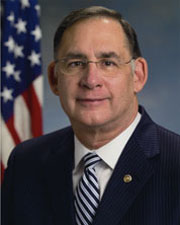
John BOOZMAN
Republican · Arkansas
Ranked #72 of 100 senators
Total Score30
Actions2
Avg/Action15.0
Era Comparison
Biden Term
Jan 2021 - Jan 2025
Score15
Actions1
Avg15.0
Trump 2nd Term
Jan 2025 - Present
Score15
Actions1
Avg15.0
Tactics Breakdown
UC OBJECTION1 actions (15 pts)
Action History
Loading filters...
Fri, May 9, 2025
UC OBJECTION15
Bill placement on calendar under Rule XIV procedures
This is a routine self-objection to place a bill directly on the calendar under Rule XIV, bypassing committee referral - a standard legislative maneuver, not obstructive.
View floor text
I now ask for a second reading, and in order to place the bill on the calendar under the provisions of rule XIV, I object to my own request. The PRESIDING OFFICER. Objection is heard. The bill will receive its second reading on the next legislative day. Congressional Record, Volume 171 Issue 77 (Thursday, May 8, 2025) MESSAGE FROM THE PRESIDENT A message from the President of the United States was communicated to the Senate by Mr. Hanley, one of his secretaries. Congressional Record, Volume 171 Issue 77 (Thursday, May 8, 2025) INTRODUCTION OF BILLS AND JOINT RESOLUTIONS The following bills and joint resolutions were introduced, read the first and second times by unanimous consent, and referred as indicated: By Mr. SULLIVAN (for himself, Mr. Daines, Mr. Cornyn, Mr. Cassidy, Mr. Tillis, Mr. Scott of Florida, Mr. Kennedy, Mr. Hagerty, and Mr. Grassley): S. 1670. A bill to amend the Investment Advisers Act of 1940 to require investment advisers for passively managed funds to arrange for pass-through voting of proxies for certain securities, and for other purposes; to the Committee on Banking, Housing, and Urban Affairs. By Mr. LEE: S. 1671. A bill to define ``obscenity'' for purposes of the Communications Act of 1934, and for other purposes; to the Committee on Commerce, Science, and Transportation. By Ms. LUMMIS (for herself, Mr. Risch, Mr. Crapo, Mr. Daines, Mr. Sheehy, and Mr. Barrasso): S. 1672. A bill to amend the Federal Water Pollution Control Act to clarify that a permit is not required under the National Pollutant Discharge Elimination System for a discharge resulting from the aerial application of certain products used for fire control and suppression, and for other purposes; to the Committee on Environment and Public Works. By Mr. MERKLEY (for himself and Mrs. Hyde-Smith): S. 1673. A bill to authorize the Secretary of Health and Human Services to make loans and loan guarantees for planning, constructing, or renovating pediatric or adult mental health treatment facilities and pediatric or adult substance use disorder treatment facilities, and for other purposes; to the Committee on Health, Education, Labor, and Pensions . By Mr. McCONNELL: S. 1674. A bill to modify the boundary of the Mammoth Cave National Park in the State of Kentucky, and for other purposes; to the Committee on Energy and Natural Resources. By Mr. CORNYN (for himself, Mr. Banks, Mr. Crapo, Mr. Daines, Mr. Ricketts, Mr. Risch, Mr. Scott of South Carolina, Mr. Tuberville, Mr. Justice, Mr. Tillis, Mrs. Blackburn, and Mr. Hagerty): S. 1675. A bill to amend title 18, United States Code, by adding an additional aggravating factor to be considered in determining whether a sentence of death is warranted; to the Committee on the Judiciary. By Mr. DURBIN (for himself and Ms. Smith): S. 1676. A bill to amend the Internal Revenue Code of 1986 to address the teacher and school leader shortage in early childhood, elementary, and secondary education, and for other purposes; to the Committee on Finance. By Ms. BALDWIN (for herself, Ms. Ernst, Ms. Klobuchar, Ms. Murkowski, Mr. Lujan, Mr. Tillis, Mr. King, Mr. Marshall, Mr. Reed, Mr. Grassley, Mr. Blumenthal, Mr. Booker, and Mr. Merkley): S. 1677. A bill to provide health insurance benefits for outpatient and inpatient items and services related to the diagnosis and treatment of a congenital anomaly or birth defect; to the Committee on Health, Education, Labor, and Pensions. By Mr. PETERS (for himself and Mr. Cornyn): S. 1678. A bill to increase the number of U.S. Customs and Border Protection officers and support staff and to require reports that identify staffing, infrastructure, and equipment needed to enhance security at ports of entry; to the Committee on Homeland Security and Governmental Affairs. By Mr. SCOTT of Florida: S. 1679. A bill to amend title 49, United States Code, to require passenger notification related to delayed flights, and for other purposes; to the Committee on Commerce, Science, and Transportation. By Mr. KAINE (for himself and Mr. Warner): S. 1680. A bill to designate additions to the Rough Mountain Wilderness and the Rich Hole Wilderness of the George Washington National Forest, and for other purposes; to the Committee on Agriculture, Nutrition , and Forestry. By Mr. KAINE (for himself and Mr. Warner): S. 1681. A bill to establish the Shenandoah Mountain National Scenic Area in the State of Virginia, and for other purposes; to the Committee on Agriculture, Nutrition, and Forestry. By Mr. CURTIS (for himself and Ms. Klobuchar): S. 1682. A bill to direct the Consumer Product Safety Commission to promulgate a consumer product safety standard for certain gates, and for other purposes; to the Committee on Commerce, Science, and Transportation. By Mr. BUDD (for himself, Mr. Grassley, Mr. Ricketts, Mr. McCormick, and Mr. Justice): S. 1683. A bill to amend the Higher Education Act of 1965 to provide for Workforce Pell Grants; to the Committee on Health, Education, Labor, and Pensions. By Mr. CRUZ: S. 1684. A bill to require audits of institutions with respect to disclosures of foreign gifts, and for other purposes; to the Committee on Finance. By Mr. SCOTT of Florida (for himself and Mr. Merkley): S. 1685. A bill to require the Secretary of the Treasury to instruct the United States Executive Directors at the international financial institutions to advocate for opposition to projects that make use of forced labor; to the Committee on Foreign Relations. By Mr. YOUNG (for himself, Mr. Warner, Mrs. Hyde-Smith, Mr. Wyden, Mr. Cramer, Mr. Kaine, Mr. Scott of South Carolina, and Mr. Coons): S. 1686. A bill to amend the Internal Revenue Code of 1986 to establish a tax credit for neighborhood revitalization, and for other purposes; to the Committee on Finance. By Mr. YOUNG: S. 1687. A bill to amend the Internal Revenue Code of 1986 to provide an exception to percentage of completion method of accounting for certain residential construction contracts; to the Committee on Finance. By Mr. BARRASSO (for himself, Mrs. Capito, Mrs. Blackburn, Mr. Lankford, Mr. Daines, Mr. Young, Mrs. Britt, Mr. Ricketts, Mr. Tuberville, Mr. Sheehy, Mr. Hoeven, and Mr. Cruz): S. 1688. A bill to amend the Internal Revenue Code of 1986 to permanently extend the allowance for depreciation, amortization, or depletion for purposes of determining the income limitation on the deduction for business interest and for other purposes; to the Committee on Finance. By Ms. HIRONO (for herself and Ms. Cortez Masto): S. 1689. A bill to amend the Public Health Service Act to provide for a national outreach and education strategy and reach to improve behavioral health among the Asian American, Native Hawaiian, and Pacific Islander population, while addressing stigma against behavioral health treatment amongst such population; to the Committee on Health, Education, Labor, and Pensions. By Mr. WHITEHOUSE (for himself, Ms. Klobuchar, and Mr. Van Hollen): S. 1690. A bill to amend the Internal Revenue Code of 1986 to increase funding for Social Security and Medicare; to the Committee on Finance. By Mr. MERKLEY (for himself, Mr. Kennedy, Mr. Markey, Mr. Marshall, Mr. Van Hollen, and Mr. Daines): S. 1691. A bill to limit the use of facial recognition technology in airports, and for other purposes; to the Committee on Commerce, Science, and Transportation. By Mrs. BLACKBURN (for herself and Ms. Cortez Masto): S. 1692. A bill to amend title XVIII of the Social Security Act to modify data collection requirements for appropriate use criteria for applicable imaging services, and for other purposes; to the Committee on Finance. By Mr. HOEVEN (for himself, Mr. Boozman, Mr. McConnell, Ms. Ernst, Mrs. Hyde-Smith, Mr. Marshall, Mr. Justice, Mr. Grassley, Mrs. Fischer, and Mr. Moran): S. 1693. A bill to amend the Federal Crop Insurance Act to provide premium support for certain plans of insurance, and for other purposes; to the Committee on Agriculture, Nutrition, and Forestry. By Mr. SCOTT of Florida (for himself, Mr. Budd, and Mr. Cruz): S. 1694. A bill to establish the Department of Homeland Security funding restrictions on institutions of higher education that have a relationship with Confucius Institutes, and for other purposes; to the Committee on Homeland Security and Governmental Affairs. By Mr. McCORMICK (for himself and Mr. Gallego): S. 1695. A bill to require the Secretaries of Housing and Urban Development, Agriculture, and Veterans Affairs to submit to Congress a report on improving collaboration in housing programs, and for other purposes; to the Committee on Banking, Housing, and Urban Affairs. By Mr. DAINES (for himself, Ms. Ernst, Mr. Cramer, Mr. Sheehy, Mr. Lee, Mr. Budd, Mr. Risch, and Mr. Crapo): S. 1696. A bill to prohibit the Administrator of the Federal Motor Carrier Safety Administration from issuing a rule or promulgating a regulation requiring certain commercial motor vehicles to be equipped with speed limiting devices, and for other purposes; to the Committee on Commerce, Science, and Transportation. By Mr. BOOKER (for himself, Mr. Padilla, Mr. Blumenthal, Mr. Van Hollen, Ms. Rosen, and Ms. Alsobrooks): S. 1697. A bill to amend the Internal Revenue Code of 1986 to provide a refundable tax credit for certain teachers as a supplement to State efforts to provide teachers with a livable wage, and for other purposes; to the Committee on Finance. By Mr. RISCH (for himself, Ms. Cantwell, Mr. Crapo, Mr. Bennet, and Mr. Peters): S. 1698. A bill to amend the Small Business Disaster Response and Loan Improvements Act of 2008 to require the Small Business Administration to coordinate with resource partners with respect to disaster planning activities, and for other purposes; to the Committee on Small Business and Entrepreneurship. By Mr. YOUNG (for himself, Mr. Schatz, Mr. Rounds, and Mr. Kelly): S. 1699. A bill to require the Secretary of Commerce to conduct a public awareness and education campaign to provide information regarding the benefits of, risks relating to, and the prevalence of artificial intelligence in the daily lives of individuals in the United States, and for other purposes; to the Committee on Commerce, Science, and Transportation. By Mr. KELLY (for himself and Mr. Gallego): S. 1700. A bill to amend the Low-Income Home Energy Assistance Act of 1981 to improve the formula for allotments to States; to the Committee on Health, Education, Labor, and Pensions. By Mr. BUDD: S. 1701. A bill to permit the use of health care workforce platforms during declared emergencies, and for other purposes; to the Committee on Homeland Security and Governmental Affairs. By Mrs. CAPITO (for herself and Mrs. Shaheen): S. 1702. A bill to amend titles XVIII and XIX of the Social Security Act to provide for coverage of prescription digital therapeutics under such titles, and for other purposes; to the Committee on Finance. By Ms. KLOBUCHAR (for herself and Mr. Sheehy): S. 1703. A bill to require the Administrator of the Small Business Administration to improve access to disaster assistance for individuals located in rural areas, and for other purposes; to the Committee on Small Business and Entrepreneurship. By Ms. KLOBUCHAR (for herself and Mr. Cassidy): S. 1704. A bill to amend the Internal Revenue Code of 1986 to conform to the intent of the Internal Revenue Service Restructuring and Reform Act of 1998, as set forth in the joint explanatory statement of the committee of conference accompanying Conference Report 105-599, that the National Taxpayer Advocate be able to hire and consult counsel as appropriate; to the Committee on Finance. By Mr. COTTON: S. 1705. A bill to require the Secretary of Commerce to issue standards with respect to chip security mechanisms for integrated circuit products, and for other purposes; to the Committee on Banking, Housing, and Urban Affairs. By Mr. MORAN: S. 1706. A bill to require aircraft operating in Class B airspace in the national airspace system to install and operate ADS-B In and ADS-B Out equipment, and for other purposes; to the Committee on Commerce, Science, and Transportation. Congressional Record, Volume 171 Issue 77 (Thursday, May 8, 2025) SUBMISSION OF CONCURRENT AND SENATE RESOLUTIONS The following concurrent resolutions and Senate resolutions were read, and referred (or acted upon), as indicated: By Ms. HIRONO (for herself, Ms. Cantwell, Mr. Markey, Mr. Padilla, Mr. Schatz, and Ms. Warren): S. Res. 208. A resolution supporting the designation of May 10, 2025, as ``National Asian American, Native Hawaiian, and Pacific Islander Mental Health Day''; to the Committee on Health, Education, Labor, and Pensions. By Mr. KENNEDY (for himself and Mr. Cassidy): S. Res. 209. A resolution commending Southeastern Louisiana University on the occasion of its Centennial and its years of service to the State of Louisiana and the United States; considered and agreed to. By Mr. MORAN (for himself, Mr. Blumenthal, Mr. Boozman, Ms. Duckworth, Mr. Hoeven, Mr. Warnock, and Mr. Cornyn): S. Res. 210. A resolution honoring and commending the 80th anniversary of the Blinded Veterans Association; considered and agreed to. By Mr. HEINRICH (for himself and Mr. Boozman): S. Res. 211. A resolution designating May 10, 2025, as ``World Migratory Bird Day''; considered and agreed to. By Mr. GRAHAM (for himself, Mr. Cotton, and Mrs. Britt): S. Res. 212. A resolution affirming the acceptable outcome of any nuclear deal between the United States and the Islamic Republic of Iran, and for other purposes; to the Committee on Foreign Relations. By Mr. TUBERVILLE: S. Res. 213. A resolution expressing support for the designation of May 2025 as ``Fallen Heroes Memorial Month''; to the Committee on Veterans' Affairs. By Ms. HIRONO (for herself, Ms. Duckworth, Mr. Kim, Ms. Collins, Ms. Baldwin, Mr. Bennet, Mr. Blumenthal, Mr. Booker, Ms. Cantwell, Mr. Coons, Ms. Cortez Masto, Mr. Durbin, Mr. Fetterman, Mrs. Gillibrand, Ms. Hassan, Mr. Kaine, Ms. Klobuchar, Mr. Markey, Mrs. Murray, Mr. Padilla, Mr. Reed, Ms. Rosen, Mr. Schatz, Mr. Schiff, Ms. Smith, Mr. Van Hollen, Mr. Warner, Mr. Warnock, Ms. Warren, and Mr. Wyden): S. Res. 214. A resolution recognizing the significance of Asian American, Native Hawaiian, and Pacific Islander Heritage Month as an important time to celebrate the significant contributions of Asian Americans, Native Hawaiians, and Pacific Islanders to the history of the United States; to the Committee on the Judiciary. Congressional Record, Volume 171 Issue 77 (Thursday, May 8, 2025) STATEMENTS ON INTRODUCED BILLS AND JOINT RESOLUTIONS ______ By Mr. DURBIN (for himself and Ms. Smith): S. 1676. A bill to amend the Internal Revenue Code of 1986 to address the teacher and school leader shortage in early childhood, elementary, and secondary education, and for other purposes; to the Committee on Finance. Mr. DURBIN. Mr. President, I ask unanimous consent that the text of the bill be printed in the Record. There being no objection, the text of the bill was ordered to be printed in the Record, as follows: S. 1676 Be it enacted by the Senate and House of Representatives of the United States of America in Congress assembled, SECTION 1. SHORT TITLE. This Act may be cited as the ``Retaining Educators Takes Added Investment Now Act'' or the ``RETAIN Act''. SEC. 2. PURPOSE. The purpose of this Act is to create a refundable tax credit for early childhood educators, teachers, early childhood education program directors, school leaders, and school-based mental health services providers in early childhood, elementary, and secondary education settings that rewards retention based on the time spent serving high-need students. SEC. 3. FINDINGS. Congress finds the following: (1) The shortage of experienced, qualified early childhood educators and elementary school and secondary school teachers is a national problem that compromises the academic outcomes and long-term success of students. (2) The shortage is the result of many factors including low pay, frequent turnover in school leadership, poor teaching conditions, and inadequate teacher supports. (3) The shortage is worse in high-poverty areas where the factors contributing to the shortage are particularly acute and have an increased negative impact on teachers of color remaining in the field. (4) A child's access to high-quality early childhood education is critical to supporting positive outcomes, and early childhood educators-- (A) play an important role in setting the foundation for future learning, and (B) promote the development of vital skills, habits, and mindsets that children need to be successful in school and in life. (5) In 2024, the national median pay of early childhood educators was a mere $37,120, with many early childhood educators relying on government assistance programs such as Medicaid, the supplemental nutrition assistance program established under the Food and Nutrition Act of 2008 (7 U.S.C. 2011 et seq.), or the temporary assistance for needy families program established under part A of title IV of the Social Security Act (42 U.S.C. 601 et seq.), and struggling to provide for their own families. (6) Studies have demonstrated that well-qualified, experienced teachers are the single most important school- based element contributing to a child's academic achievement and success. (7) In the 2023-2024 academic year, the average teacher salary in public elementary schools and secondary schools was only $72,030. When adjusted for inflation, the average teacher salary has declined by 5 percent over the past decade. (8) On average, public elementary school and secondary school teachers were paid 23.5 percent less than other college graduates working in non-teaching fields, and many teachers struggle with large amounts of student loan debt. (9) In the 2023-2024 academic year, the average teacher salary for a first-year teacher in a public elementary school or secondary school was $46,526. (10) An experienced, well-qualified education workforce must also be reflective of the diversity of the student body across race, ethnicity, and disability. (11) Higher pay for teachers can result in a more diverse teacher workforce, and minority students often perform better on standardized tests, have improved attendance, and are suspended less frequently when they have at least one same- race teacher. (12) Experienced, well-qualified school leaders and school- based mental health service providers are essential for providing strong educational opportunities and services for students and promoting teacher retention through improved professional supports and teaching conditions. (13) In 2024, the teaching profession experienced the lowest levels of employment in 50 years. SEC. 4. REFUNDABLE TAX CREDIT FOR TEACHER AND SCHOOL LEADER RETENTION. (a) In General.--Subpart C of part IV of subchapter A of chapter 1 of subtitle A of the Internal Revenue Code of 1986 is amended by inserting after section 36B the following new section: ``SEC. 36C. TEACHER AND SCHOOL LEADER RETENTION CREDIT. ``(a) Allowance of Credit.-- ``(1) In general.--In the case of an individual who is employed in a position described in paragraph (2) during a school year ending with or within the taxable year, there shall be allowed as a credit against the tax imposed by this subtitle for the taxable year an amount equal to the applicable amount (as determined under subsection (b)). ``(2) Eligible positions.--The positions described in this paragraph shall consist of the following: ``(A) An eligible early childhood educator. ``(B) An eligible early childhood education program director. ``(C) An eligible early childhood education provider. ``(D) An eligible teacher. ``(E) An eligible paraprofessional. ``(F) An eligible school-based mental health services provider. ``(G) An eligible school leader. ``(b) Applicable Amount.-- ``(1) In general.--For purposes of this section, the applicable amount shall be an amount determined based on the number of school years for which the individual has been continuously employed in any position described in subsection (a)(2), as follows: ``(A) Subject to paragraph (2), for the first year of employment, $5,800. ``(B) For the second continuous year of employment, $5,800. ``(C) For the third and fourth continuous year of employment, $7,000. ``(D) For the fifth, sixth, seventh, eighth, and ninth continuous year of employment, $8,700. ``(E) For the tenth continuous year of employment, $11,600. ``(F) For the eleventh, twelfth, thirteenth, fourteenth, and fifteenth continuous year of employment, $8,700. ``(G) For the sixteenth continuous year of employment, $7,000. ``(H) For the seventeenth, eighteenth, nineteenth, and twentieth continuous year of employment, $5,800. ``(2) First year.--For purposes of the first year of employment ending with or within a taxable year, an individual must have been so employed for a period of not less than 4 months before the first day of such taxable year. ``(3) Limitation based on total number of school years.--In the case of any individual who has been employed in any position described in subsection (a)(2) for a total of more than 20 school years, the applicable amount shall be reduced to zero. ``(c) Inflation Adjustment.-- ``(1) In general.--In the case of any taxable year beginning after 2026, each of the dollar amounts in subsection (b)(1) shall be increased by an amount equal to-- ``(A) such dollar amount, multiplied by ``(B) the cost-of-living adjustment determined under section 1(f)(3) for such calendar year by substituting `calendar year 2025' for `calendar year 2016' in subparagraph (A)(ii) thereof. ``(2) Rounding.--If any increase determined under paragraph (1) is not a multiple of $100, such increase shall be rounded to the nearest multiple of $100. ``(d) Supplementing, Not Supplanting, State and Local Education Funds.-- ``(1) In general.--A State educational agency or local educational agency shall not reduce or adjust any compensation, or any assistance provided through a loan forgiveness program, to an employee of the State educational agency or local educational agency who serves in any position described in subsection (a)(2) due to the individual's eligibility for the credit under this section. ``(2) Methodology.--Upon request by the Secretary of Education, a State educational agency or local educational agency shall reasonably demonstrate that the methodology used to allocate amounts for compensation and for loan forgiveness to the employees described in paragraph (1) at qualifying schools or qualifying early childhood education programs ensures that employees at each qualifying school or qualifying early childhood education program in the State or served by the local educational agency, respectively, receive the same amount of State or local funds for compensation and loan forgiveness that the qualifying school or qualifying early childhood education program would receive if the credit under this section had not been enacted. ``(e) Information Sharing.--The Secretary of Education and the Secretary of Health and Human Services shall provide the Secretary with such information as is necessary for purposes of determining whether an early childhood education program or an elementary school or secondary school satisfies the requirements for a qualifying early childhood education program or a qualifying school, respectively. ``(f) Definitions.--For purposes of this section-- ``(1) ESEA definitions.--The terms `elementary school', `local educational agency', `secondary school', `State educational agency', and `educational service agency' have the meanings given the terms in section 8101 of the Elementary and Secondary Education Act of 1965 (20 U.S.C. 7801). ``(2) Eligible early childhood education program director.--The term `eligible early childhood education program director' means an employee or officer of a qualifying early childhood education program who is responsible for the daily instructional leadership and managerial operations of such program. ``(3) Eligible early childhood education provider.--The term `eligible early childhood education provider' means an individual-- ``(A) who-- ``(i) has an associate's degree or higher degree in early childhood education or a related field, or ``(ii) is enrolled during the taxable year in a program leading to such an associate's or higher degree and is making satisfactory progress toward such degree, and ``(B) who is responsible for the daily instructional leadership and managerial operations of a qualifying early childhood education program in a home-based setting. ``(4) Eligible early childhood educator.--The term `eligible early childhood educator' means an individual-- ``(A) who-- ``(i) has an associate's degree or higher degree in early childhood education or a related field, or ``(ii) is enrolled during the taxable year in a program leading to such an associate's or higher degree and is making satisfactory progress toward such degree, ``(B) who has credentials or a license under State law for early childhood education, as applicable, and ``(C) whose primary responsibility is for the learning and development of children in a qualifying early childhood education program during the taxable year. ``(5) Eligible paraprofessional.--The term `eligible paraprofessional' means an individual-- ``(A) who is a paraprofessional, as defined in section 3201 of the Elementary and Secondary Education Act of 1965 (20 U.S.C. 7011), ``(B) who meets the applicable State professional standards and qualifications pursuant to section 1111(g)(2)(M) of such Act (20 U.S.C. 6311(g)(2)(M)), ``(C) whose primary responsibilities involve working or assisting in a classroom setting, and ``(D) who is employed in a qualifying school or a qualifying early childhood education program. ``(6) Eligible school-based mental health services provider.--The term `eligible school-based mental health services provider' means an individual-- ``(A) described in section 4102(6) of the Elementary and Secondary Education Act of 1965 (20 U.S.C. 7112(6)), and ``(B) who is employed in a qualifying school or a qualifying early childhood education program. ``(7) Eligible school leader.--The term `eligible school leader' means a principal, assistant principal, or other individual who is-- ``(A) an employee or officer of a qualifying school, and ``(B) responsible for the daily instructional leadership and managerial operations in the qualifying school. ``(8) Eligible teacher.--The term `eligible teacher' means an individual who-- ``(A) is an elementary school or secondary school teacher who, as determined by the State or local educational agency, is a teacher of record who provides direct classroom teaching (or classroom-type teaching in a nonclassroom setting) to students in a qualifying school, and ``(B)(i) meets applicable State certification and licensure requirements, including any requirements for certification obtained through alternative routes to certification, in the State in which such school is located and in the subject area in which the individual is the teacher of record, or ``(ii) is enrolled during the taxable year in a program leading to State certification and licensure as described in clause (i) and is making satisfactory progress toward such certification and licensure requirements. ``(9) Qualifying early childhood education program.-- ``(A) In general.--The term `qualifying early childhood education program' means an early childhood education program, as defined in section 103 of the Higher Education Act of 1965 (20 U.S.C. 1003), that, regardless of setting-- ``(i) serves children who receive services for which financial assistance is provided in accordance with the Child Care and Development Block Grant Act of 1990 (42 U.S.C. 9857 et seq.), the Head Start Act (42 U.S.C. 9831 et seq.), or the child and adult care food program established under section 17 of the Richard B. Russell National School Lunch Act (42 U.S.C. 1766), and ``(ii) participates in a State tiered and transparent system for measuring program quality. ``(B) Special rule.--Notwithstanding subparagraph (A), an early childhood education program that does not satisfy the requirements of subparagraph (A)(ii) shall be deemed to be a qualifying early childhood education program until September 30, 2025, if the program-- ``(i) satisfies all requirements of subparagraph (A) except for clause (ii) of such subparagraph, and ``(ii)(I) meets the Head Start program performance standards described in section 641A(a) of the Head Start Act (42 U.S.C. 9836a(a)), if applicable, or ``(II) is accredited by a national accreditor of early learning programs as of the date of enactment of the Retaining Educators Takes Added Investment Now Act. ``(10) Qualifying school.--The term `qualifying school' means-- ``(A) a public elementary school or secondary school that-- ``(i) is in the school district of a local educational agency that is eligible for assistance under part A of title I of the Elementary and Secondary Education Act of 1965 (20 U.S.C. 6311 et seq.), or ``(ii) is served or operated by an educational service agency that is eligible for such assistance, or ``(B) an elementary school or secondary school that is funded by the Bureau of Indian Education and that is in the school district of a local educational agency that is eligible for such assistance.''. (b) W-2 Reporting of Continuous Employment for Certain Positions at Qualifying Early Childhood Education Programs or Qualifying Schools.--Section 6051(a) of the Internal Revenue Code of 1986 is amended by striking ``and'' at the end of paragraph (16), by striking the period at the end of paragraph (17) and inserting ``, and'', and by inserting after paragraph (17) the following new paragraph: ``(18) in the case of an employee who is employed in a position described in subsection (a)(2) of section 36C, the number of school years for which such employee has been continuously employed in any such position.''. (c) Conforming Amendments.-- (1) The table of sections for subpart C of part IV of subchapter A of chapter 1 of subtitle A of the Internal Revenue Code of 1986 is amended by inserting after the item relating to section 36B the following: ``Sec. 36C. Teacher and school leader retention credit.''. (2) Section 6211(b)(4)(A) of such Code is amended by inserting ``36C,'' after ``36B,''. (3) Paragraph (2) of section 1324(b) of title 31, United States Code, is amended by inserting ``36C,'' after ``36B,''. (d) Effective Date.--The amendments made by this section shall apply to taxable years beginning after December 31, 2025. SEC. 5. DEVELOPING INTERAGENCY DATA SERIES. The Secretary of Labor, in coordination with the Secretary of Treasury, the Secretary of Education, and the Secretary of Health and Human Services, shall-- (1) develop and publish on the internet website of the Bureau of Labor Statistics a data series that captures-- (A) the average base salary of teachers in elementary schools and secondary schools, disaggregated by-- (i) employment in public elementary schools and secondary schools that receive assistance under part A of title I of the Elementary and Secondary Education Act of 1965 (20 U.S.C. 6311 et seq.), (ii) employment in public elementary schools and secondary schools that do not receive such assistance, and (iii) geographic region, and (B) the average base salary of early childhood educators, disaggregated by highest level of degree attained, and (2) update the data series under paragraph (1) on an annual basis. ______ By Mr. BARRASSO (for himself, Mrs. Capito, Mrs. Blackburn, Mr. Lankford, Mr. Daines, Mr. Young, Mrs. Britt, Mr. Ricketts, Mr. Tuberville, Mr. Sheehy, Mr. Hoeven, and Mr. Cruz): Mr. BARRASSO. Mr. President, I ask unanimous consent that the text of the bill be printed in the Record. There being no objection, the text of the bill was ordered to be printed in the Record, as follows: S. 1688. A bill to amend the Internal Revenue Code of 1986 to permanently extend the allowance for depreciation, amortization, or depletion for purposes of determining the income limitation on the deduction for business interest and for other purposes; to the Committee on Finance. S. 1688 Be it enacted by the Senate and House of Representatives of the United States of America in Congress assembled, SECTION 1. SHORT TITLE. This Act may be cited as the ``Growing America's Small Businesses and Manufacturing Act''. SEC. 2. PERMANENT EXTENSION OF ALLOWANCE FOR DEPRECIATION, AMORTIZATION, OR DEPLETION IN DETERMINING THE LIMITATION ON BUSINESS INTEREST. (a) In General.--Section 163(j)(8)(A)(v) of the Internal Revenue Code of 1986 is amended by striking ``in the case of taxable years beginning before January 1, 2022,''. (b) Effective Date.--The amendment made by this section shall apply to taxable years beginning after December 31, 2024. SEC. 3. INCREASE IN LIMITATIONS ON EXPENSING OF DEPRECIABLE BUSINESS ASSETS. (a) In General.--Section 179(b) of the Internal Revenue Code of 1986 is amended-- (1) by striking ``$1,000,000'' in paragraph (1) and inserting ``$2,500,000'', and (2) by striking ``$2,500,000'' in paragraph (2) and inserting ``$4,000,000''. (b) Inflation Adjustment.--Section 179(b)(6)(A) of such Code is amended-- (1) by striking ``2018'' and inserting ``2025 (2018 in the case of the dollar amount in paragraph (5)(A))'', and (2) by striking ``calendar year 2017'' in clause (ii) thereof and inserting `` `calendar year 2024' (`calendar year 2017' in the case of the dollar amount in paragraph (5)(A))''. (c) Effective Date.--The amendments made by this section shall apply to property placed in service in taxable years beginning after December 31, 2024. Congressional Record, Volume 171 Issue 77 (Thursday, May 8, 2025) SUBMITTED RESOLUTIONS ______ SENATE RESOLUTION 208--SUPPORTING THE DESIGNATION OF MAY 10, 2025, AS ``NATIONAL ASIAN AMERICAN, NATIVE HAWAIIAN, AND PACIFIC ISLANDER MENTAL HEALTH DAY'' Ms. HIRONO (for herself, Ms. Cantwell, Mr. Markey, Mr. Padilla, Mr. Schatz, and Ms. Warren) submitted the following resolution; which was referred to the Committee on Health, Education, Labor, and Pensions: S. Res. 208 Whereas the Asian American, Native Hawaiian, and Pacific Islander (referred to in this preamble as ``AANHPI'') community is among the fastest growing population groups in the United States and has made significant economic, cultural, and social contributions; Whereas the AANHPI community is extremely diverse in terms of socioeconomic background, education level, types of employment, languages spoken, cultures of origin, acculturation, and migration and colonization status; Whereas AANHPIs have among the lowest rates of utilization of mental health services, and 65.3 percent of the estimated 2,900,000 AANHPIs who meet criteria for a mental health problem do not receive treatment; Whereas, from 2018 to 2023, AANHPI youth ages 10 to 24 years old in the United States were the only racial or ethnic population in this age category whose leading cause of death was suicide; Whereas it is imperative to disaggregate AANHPI population data to get an accurate representation of the depth and breadth of the mental health issues for each subpopulation, so that specific culturally and linguistically appropriate solutions can be developed; Whereas language access continues to be a critical issue, whether due to the limited number of providers with the necessary language skills to provide in-language services or the significant language loss faced by Native Hawaiian and Pacific Islander communities due to colonization; Whereas there is a need to significantly increase the number of providers, including paraprofessionals, representing AANHPI communities and provide them with necessary training and ongoing support; Whereas historical discrimination and current racial violence toward AANHPIs increase trauma and stress, underlying precursors to mental health problems; Whereas there is a critical need to raise awareness about, and improve mental health literacy among, the AANHPI community to reduce the stigma associated with mental health issues; and Whereas May is both National Asian American, Native Hawaiian, and Pacific Islander Heritage Month, an opportunity to celebrate the vast contributions of this population to the society of the United States, and National Mental Health Awareness Month, recognizing the importance of mental health to the well-being and health of families and communities and connecting the importance of one's cultural heritage to good mental health: Now, therefore be it Resolved, That the Senate-- (1) supports the designation of May 10, 2025, as ``National Asian American, Native Hawaiian, and Pacific Islander Mental Health Day''; (2) recognizes the importance of mental health to the well- being and health of families and communities; (3) acknowledges the importance of raising awareness about mental health and improving the quality of care for Asian American, Native Hawaiian, and Pacific Islander communities; (4) recognizes that celebrating one's cultural and linguistic heritage is beneficial to mental health; and (5) encourages Federal, State, and local health agencies to adopt laws, policies, and guidance to improve help-seeking rates for mental health services for the Asian American, Native Hawaiian, and Pacific Islander community and other communities of color. Congressional Record, Volume 171 Issue 77 (Thursday, May 8, 2025) SENATE RESOLUTION 209--COMMENDING SOUTHEASTERN LOUISIANA UNIVERSITY ON THE OCCASION OF ITS CENTENNIAL AND ITS YEARS OF SERVICE TO THE STATE OF LOUISIANA AND THE UNITED STATES Mr. KENNEDY (for himself and Mr. Cassidy) submitted the following resolution; which was considered and agreed to: S. Res. 209 Whereas, on July 7, 1925, the voters of Tangipahoa Parish approved a bond issue that led to the creation of Hammond Junior College; Whereas President Linus A. Sims opened the college to 40 students, taught by 5 faculty members, establishing the foundation for an institution committed to academic excellence and community service; Whereas, in 1927, the voters of Tangipahoa Parish supported the purchase of the 15-acre Hunter Leake estate for the purpose of expanding the college's campus and allowing for future growth; Whereas, in 1928, Hammond Junior College became Southeastern Louisiana College and was adopted into the Louisiana State educational system under the State Board of Education, solidifying its place as a vital institution for higher education in Louisiana; Whereas, in 1934, a State bond issue provided for the construction of McGehee Hall, which became a historic centerpiece of the university and was placed on the National Register of Historic Places on January 18, 1985; Whereas, in 1970, Southeastern Louisiana College became Southeastern Louisiana University, reflecting its growth in academic offerings, student population, and regional impact; Whereas, as of the date of adoption of this resolution, Southeastern Louisiana University serves more than 15,000 students annually, offering a multitude of undergraduate, graduate, and professional programs through its 5 colleges and schools, fostering innovation, research, and career readiness; Whereas Southeastern Louisiana University has academically distinguished itself in education, business, nursing and health sciences, the arts, sciences, and other fields while remaining dedicated to public service; Whereas Southeastern Louisiana University has a strong tradition of intercollegiate athletics as a member of the Southland Conference, supporting student-athletes in their academic and athletic pursuits; and Whereas Southeastern Louisiana University has produced notable alumni who have made significant contributions in business, public service, education, health care, and the arts, strengthening the economy and cultural heritage of Louisiana: Now, therefore, be it Resolved, That the Senate-- (1) commends Southeastern Louisiana University on the occasion of its Centennial and its years of service to the State of Louisiana and the United States; (2) recognizes Southeastern Louisiana University for its dedication to higher education, research, and community service; and (3) respectfully requests that the Secretary of the Senate transmit an enrolled copy of this resolution to-- (A) the President of Southeastern Louisiana University, the Honorable Dr. William S. Wainwright; (B) the Provost and Vice President for Academic Affairs of Southeastern Louisiana University, the Honorable Dr. Tena L. Golding; and (C) the Vice President for University Advancement of Southeastern Louisiana University, the Honorable Ms. Wendy Lauderdale. Congressional Record, Volume 171 Issue 77 (Thursday, May 8, 2025) SENATE RESOLUTION 211--DESIGNATING MAY 10, 2025, AS ``WORLD MIGRATORY BIRD DAY'' Mr. HEINRICH (for himself and Mr. Boozman) submitted the following resolution; which was considered and agreed to: S. Res. 211 Whereas migratory birds are an essential part of ecosystems, providing ecological services such as pest control, pollination, and seed dispersal; Whereas over 350 species of birds migrate each spring through North America, connecting ecosystems, cultures, and economies; Whereas migratory birds face increasing threats from habitat loss, drought, invasive species, light pollution, collisions, and urban expansion; Whereas North America has seen a net loss of 3,000,000,000 birds in the past 50 years; Whereas World Migratory Bird Day is an annual global campaign dedicated to raising awareness for migratory birds and the need for international cooperation to conserve them; Whereas birdwatching and bird-related recreation contribute significantly to the United States economy, with nearly 100,000,000 Americans participating and generating $279,000,000,000 in total economic output; Whereas the 2025 theme of World Migratory Bird Day, ``Shared Spaces: Creating Bird-Friendly Cities and Communities'', highlights the importance of thoughtful city planning and adopting bird-friendly practices for the well- being of migratory birds; Whereas public education and community engagement are central to bird conservation efforts, with wildlife refuges, parks, zoos, aquariums, and community organizations hosting World Migratory Bird Day events across the United States each year; Whereas the North American Wetlands Conservation Act (16 U.S.C. 4401 et seq.) has promoted significant investments in wetland habitat conservation and restoration, which serve migratory birds; and Whereas the Migratory Bird Treaty Act of 1918 (16 U.S.C. 703 et seq.) remains a cornerstone of United States bird conservation policy, reflecting a century-long commitment to protecting migratory bird species: Now, therefore, be it Resolved, That the Senate-- (1) designates May 10, 2025, as ``World Migratory Bird Day''; and (2) encourages the people of the United States to celebrate and support the conservation of migratory birds and their habitats through education, stewardship, community engagement, and bird watching. Congressional Record, Volume 171 Issue 77 (Thursday, May 8, 2025) SENATE RESOLUTION 213--EXPRESSING SUPPORT FOR THE DESIGNATION OF MAY 2025 AS ``FALLEN HEROES MEMORIAL MONTH'' Mr. TUBERVILLE submitted the following resolution; which was referred to the Committee on Veterans' Affairs: S. Res. 213 Whereas, since the signing of the Declaration of Independence and the founding of the United States, more than 1,300,000 members of the Armed Forces have given their lives for the cause of liberty, both in the United States and around the world; Whereas the people of the United States owe a profound debt to those who served the United States in uniform and made the ultimate sacrifice so that their countrymen could live freely; Whereas the people of the United States have an obligation to honor the memories of the fallen and to commemorate those brave men and women who gave their lives to the cause of freedom; Whereas President Abraham Lincoln said, ``[A]ll that a man hath will he give for his life; and while all contribute of their substance the soldier puts his life at stake, and often yields it up in his country's cause. The highest merit, then is due to the soldier.''; Whereas, in an address to the Armed Forces in 1945, President Harry S. Truman said, ``Our debt to the heroic men and valiant women in the service of our country can never be repaid. They have earned our undying gratitude.''; Whereas the history of Memorial Day began 3 years after the American Civil War, with the Grand Army of the Republic establishing Decoration Day as a day for honoring the Civil War dead by decorating their graves with flowers, with the State of New York being the first to adopt it as a State holiday in 1873, and with all the Union States having adopted it by 1890; Whereas, in the aftermath of World War I and World War II, Memorial Day became a day to remember and honor all members of the Armed Forces who fought and died on behalf of the United States; Whereas Congress made the observance of Memorial Day, at the time still often called Decoration Day, a Federal holiday in 1971; and Whereas the over 1,300,000 members of the Armed Forces who over the centuries gave their lives in service to the people of the United States have earned the enduring respect and gratitude of the United States: Now, therefore, be it Resolved, That the Senate-- (1) honors the more than 1,300,000 veterans who gave their lives in service to the United States; (2) recognizes the families and loved ones of the fallen heroes of the United States and lifts them up in prayer; (3) urges the people of the United States to reflect on the contributions of those heroes and to honor the memory of those who paid the ultimate sacrifice in securing the blessings of liberty for the United States; and (4) requests that the President issue a proclamation-- (A) designating May 2025 as ``Fallen Heroes Memorial Month''; (B) affirming the everlasting gratitude of the United States for members of the Armed Forces who made the ultimate sacrifice; and (C) calling on the people of the United States to remember and honor the fallen heroes of the United States and to pay tribute to them through volunteering and supporting veteran service organizations. Congressional Record, Volume 171 Issue 77 (Thursday, May 8, 2025) AMENDMENTS SUBMITTED AND PROPOSED SA 2224. Mr. REED (for himself and Mr. Heinrich) submitted an amendment intended to be proposed by him to the bill S. 1582, to provide for the regulation of payment stablecoins, and for other purposes; which was ordered to lie on the table. SA 2225. Mr. REED submitted an amendment intended to be proposed by him to the bill S. 1582, supra; which was ordered to lie on the table. SA 2226. Mr. REED submitted an amendment intended to be proposed by him to the bill S. 1582, supra; which was ordered to lie on the table. Congressional Record, Volume 171 Issue 77 (Thursday, May 8, 2025) SA 2225. Mr. REED submitted an amendment intended to be proposed by him to the bill S. 1582, to provide for the regulation of payment stablecoins, and for other purposes; which was ordered to lie on the table; as follows: In section 3, strike subsection (b) and insert the following: (b) Prohibition on Offers or Sales.--It shall be unlawful for any person to offer or sell a payment stablecoin through the use of any medium or by any means of access in interstate commerce in the United States or to offer or sell a payment stablecoin to a United States person living in the United States unless such payment stablecoin is issued by a permitted payment stablecoin issuer. In section 3, strike subsection (c) and insert the following: (c) Safe Harbors.-- (1) By the board.--The Board shall issue regulations to safe harbor the offer or sale of payment stablecoins that were issued by a foreign payment stablecoin issuer that is subject to requirements in the issuer's home country that are determined by the Board to be comparable with the requirements applicable to permitted payment stablecoin issuers under this Act and regulations thereunder. (2) By the primary federal payment stablecoin regulators.-- The primary Federal payment stablecoin regulators may jointly issue regulations providing safe harbors from the prohibition under subsection (b) that are consistent with the purposes of this Act. In section 3(f)(1), insert ``or (b)'' after ``knowingly participates in a violation of subsection (a)''. In section 3(f)(2), insert ``or (b)'' after ``knowingly violated subsection (a)''. In section 3(h)(1), insert ``or'' after the semicolon. In section 3(h)(2), strike ``; or'' and insert a period. In section 3(h), strike paragraph (3). Strike section 18 and insert the following: SEC. 18. USE OF SANCTIONS AUTHORITIES UNDER THE INTERNATIONAL EMERGENCY ECONOMIC POWERS ACT WITH RESPECT TO BLOCKCHAIN-ENABLED SMART CONTRACTS. Section 203 of the International Emergency Economic Powers Act (50 U.S.C. 1702) is amended-- (1) in subsection (a), by adding at the end the following: ``(4) The President may exercise the authorities granted by this subsection with respect to blockchain-enabled smart contracts, or other similar technology, without regard to whether such contracts operate autonomously, can be modified, or are owned.''; and (2) by adding at the end the following: ``(d) In this section: ``(1) The term `interest' includes any interest of any nature whatsoever, direct or indirect, present, future, or contingent, and legal, equitable, or beneficial, or otherwise, without regard to whether such interest is legally cognizable. ``(2) The terms `person' and `national' include-- ``(A) any individual; ``(B) any entity, association, group, or other organization; and ``(C) any body of persons joined by common purpose or interest. ``(3) The term `property' includes-- ``(A) property of any nature whatsoever, real, personal, or mixed, tangible or intangible, even if such property is abandoned or ownerless; ``(B) services of any nature whatsoever; and ``(C) contracts of any nature whatsoever.''. ______