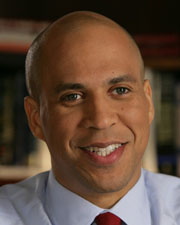
Extended speaking time consuming significant floor time with planned multi-hour speech covering multiple policy areas
Senator Booker explicitly indicates this is part of a planned extended speech covering multiple topics for hours ('enough to make it until tomorrow evening'), which is a classic obstructive tactic to consume floor time.
View floor text
Mr. President, one of those other programs that is now in crisis is what I want to switch to. I think my colleague was joking with me because we have--for anybody who is watching--we have a whole list of things we wanted to get to. My staff, now, seemingly very ambitious--Medicaid, Medicare, healthcare, Social Security is coming up now, tariffs and economic policy, education, national security, public safety, immigration, housing--chapter by chapter, each one about an hour or so. This would be enough to make it until tomorrow evening if I can stand that long and who knows? But we are behind schedule. So I am going to jump in to talk about Social Security. I want to start because, as I said earlier, I get to stand here. I get to come to this floor, but so many millions of people don't. I want to elevate their voices tonight. As I go across New Jersey, as I go across my Nation, I see Republicans, Democrats, Independents--there are so many people stopping me in airports, in the community, stopping me in the grocery store, wanting to tell me that they are afraid, that they are angry, that they are worried, that they believe we are in crisis, that our Nation is at a crossroads. Whom are we going to be as a nation? This topic, I don't know, maybe I will just let you all know that this topic--my mom chewed into me about this topic. She lives in a senior citizen retirement community, mostly Republicans. I visited her many times. It is a great community. I hate how we go to this idea of right or left. These are great seniors that live in a great community, and they are talking about Social Security. I want to read--start with this section by just reading--these are people sending to me. This is a small postcard, handwritten from somebody from Hamilton Square, NJ: Dear Senator Booker, I am writing to ask you if my Social Security is now in danger. Please let me know. It is very important to me. Thank you. I am going to try to answer that tonight fairly and candidly. Here is another person who writes. My staff is protecting their identity. I just want to say where they are from. South Plains, NJ: I am one of your constituents and a proud New Jerseyan. I am writing to let you know how upset, distraught, and worried I am about the current state of our country. I hope you will take time and read my letter as this is the first time I felt compelled to write a government official. I want to tell you, I am reading your letter again, and I am now reading it on national TV, if C-SPAN can be--the Presiding Officer may challenge me with a factual error, but C-SPAN is national TV, I think. I want to start by telling you a little about myself. I am 64 years old and I am currently working full time. I am a breast cancer survivor. My plan was to retire in the next 3 years, but with the current state of chaos and turmoil, I honestly don't see how I can retire. I am concerned about Medicare, which I will definitely need when I retire. I will also need a supplemental plan for whatever Medicare does not cover. I do not qualify for retirement benefits through my job. With the cuts being made to Federal programs, Medicare will not be enough. I would need a more expensive supplemental plan to cover these cuts. I am also concerned about Social Security. I have worked since I was 16, except for 9 years when I was home with my three children. I have worked hard and paid into Social Security and believed that the money was for my retirement. Now I hear that Social Security is a Ponzi scheme, and it may be privatized. This is so unfair for people like me that worked hard all their life and counted on this money to retire. I was planning to work past 65 to get my full Social Security benefits, but now I begin to wonder if it is worth it. So, at this point, I am in a holding pattern due to the unstable climate in which we are all living. As I said, I have three children who are all adults now. My son has been diagnosed with being bipolar. He has been hospitalized a few times for this. He is currently on medication that he needs to function and sees a therapist. He is in grad school and is on Medicaid. He works part time since he is a full-time grad student. So he does not qualify for benefits. I worry about what these cuts will do to my son and others like him. No one seems concerned with the people who rely on these programs to live their best life. Someone needs to look out and take an interest in helping people in these circumstances. My daughter is a teacher in a district that receives title I funds. She works very hard as a teacher and is devoted to her students. With the dismantling of the Department of Education, I am concerned about what this means to the education field, teachers, administration, and students. My daughter's school is making a difference in the lives of these students, and they need the funding that is received from both the State and Federal Government. Programs like the title I and other federally funded programs need to stay in place. On another topic-- This constituent is getting a lot into her first letter to a government official, and I appreciate it. On another topic, inflation: Increasing prices and the overpriced housing market is a huge problem. Placing tariffs on our biggest trade partners is beyond unfair. This drives the cost of goods up, and the consumer is the one who ends up paying the increase. A lot of families are food insecure, wondering where their next meal is coming from. A lot of parents go without so their children can eat. Food pantries and banks are scrambling to meet demand. Something needs to be done so families can survive. The housing market is also an issue. Owning your own home is now unreachable for most young people starting out. Interest rates are high, and housing prices in New Jersey are unaffordable. Thank you for reading my letter. I am asking you, as our Senator, please stand up for what is in the best interest of families, seniors, adults, and children in your district. Tariffs, dismantling Departments like Social Security, Medicare, Medicaid, Education, and other services that are important to the everyday person is not the answer. You are our voice in the Senate. Please do the right thing, and speak up, and continue to fight for everyday Americans. This is why I am standing up. This is why I will stand here as long as I am physically able. This is why I continue to tell story after story. But, first, a little important history: 90 years. Our country has made a promise to people that, if you pay into the Social Security Program your whole life, your money will be there for you when you retire. Franklin Roosevelt signed the Social Security Act into law 84 years ago, and this is his quote. He called it ``a cornerstone in a structure which is being built, but it is by no means complete.'' Social Security is still a cornerstone. It is still the bedrock according to FDR. It is the bedrock of an edifice being built in a nation where we belong to each other. We the people are building this. That is our cornerstone. He called it Social Security. Today, 73 million Americans count on Social Security. Millions more than that are planning on those benefits they earned being there for them. You heard from the first letters I read that people are really worried. The President of the United States stood up in the State of the Union Address and talked about rampant fraud because payments are going out. All from conservative papers to ones on the other side have shown that what he was saying was not true. But they are sowing chaos. They are attacking, delegitimizing it, and calling it a Ponzi scheme-- DOGE leader Musk and the President. There are 73 million Americans who are counting on Social Security benefits, and 1.6 million are in my State. Forty percent of the people who rely on Social Security--40 percent--have no other source of income. They live paycheck to paycheck--Social Security checks, excuse me. Social Security checks. Despite mocking Social Security and calling it a Ponzi scheme, people in communities like my parents'--my mom's--are beginning to worry. They actually took real actions to lay off thousands of Social Security employees, making it harder to process Social Security applications and troubleshoot questions from beneficiaries. They didn't roll out a plan to say: Hey, this is how we are going to show that we can give the best customer service ever. We are going to bring in some of the best private sector people to advise on how we can use technology and innovation to give the best customer service. Hell, roll in AI, and do all of these things. We are going to make a model of responsiveness to our seniors because we are a society that respects our elders, values them, wants them to retire in dignity and security and peace of mind. That is the big ambition. No, that is not what was said. Social Security employees, like many employees, got letters that they didn't expect, saying they were laid off. It didn't matter how well they performed, and it didn't matter what function they performed. It put in jeopardy just trying to contact Social Security, if you are retired or just trying to contact Social Security if you need to apply for benefits. They tried to eliminate service by phone, saying that they wanted to require in-person visits, which is absurd for many seniors who don't have access to transportation or who live in rural areas because--do you know what they are doing also? They are trying to close down many Social Security offices, and I will get to the specifics of that later. These actions are harmful enough, but they are just the beginning of what our President and Elon Musk are saying they want to do to a program that, for millions of Americans, is their only check a week. It is essential for them and for others. It is how they make their retirement secure. You don't protect the future by punishing the people who built this country. You don't fix America by throwing seniors or veterans or Americans with disabilities under the bus. That is not how we do things. That is not how we should do things. There are so many hard-working families who believe in this idea of, if I work hard all my life in America, I can make ends meet; I can raise my kids; and I can retire with dignity. Congress does have a responsibility to be good stewards of taxpayer dollars. We should do more of that. I want to do more of that. I want to help lead in that fight. But none of us were invited to the table when it came to this. This congressionally established program--FDR I read--but it was Congress that established it and is now not being included in the planning or in the procedures to try to improve Social Security or to make it more efficient or more effective. We haven't convened hearings or task forces in a bipartisan way to find out what we can do to better serve our seniors. Instead, lies are being proffered about Social Security making wrongful payments. Lies are being proffered by the highest office in the land and by the most rich person in the land, who does not need Social Security, who is calling it a Ponzi scheme, who is telling people who are relying on it that they are part of a Ponzi scheme. But remember this: Social Security is not the government's money to spend. It is the hard-earned savings of working Americans, and it belongs to Americans. The President and Elon Musk need to keep their hands off of it. It is not theirs to take, and it is not theirs to break. It is their scheme. They are the ones who have a scheme, and it is not about efficiency. It is not visionary. What we need in America now are visionary leaders who have bold, exciting visions for things like what Social Security can be. What they are doing is not only wrong, but it hurts people; it scares people. And it is not just people but our elders--the people who raised us, the people who built roads and highways, the people who served food, made food, who started small businesses, who raised generations. They are who we are disrespecting. So what happens in this context? Why am I standing here? It is because the people of New Jersey are saying: Why aren't you doing more? This is unacceptable, Senator Booker. It is unacceptable. Hear our voices. My phones have exploded with people whom the President and Elon Musk have made terrified about what is happening to the Social Security service and what is happening to their checks. My staff said that we were overwhelmed with phone calls and emails from people who were worried about the direction that the President is taking Social Security. The people who called were angry or terrified, and I want to share some of these calls from my constituents. Here is someone from the great Cherry Hill, NJ: I am very concerned that the President, along with his cruel and inept administration and DOGE, are working to privatize and ruin the Social Security Program. I am a constituent, Senator Booker. I live in Cherry Hill, NJ, and I am a senior who relies on Social Security income for my basic needs, food, and housing. The mere idea of not having those funds has caused me sleepless nights and wondering if I will become homeless. I am going to stop there for a second. I remember President FDR and growing up hearing that what he did was get on the radio not to stir up fear, not to stir up chaos, but to comfort people, to remind them that we are Americans, and you have no need to fear. But this President, just with his rhetoric alone about Social Security, is driving my constituents to write me notes like this. I continue with the letter from my constituent from Cherry Hill: I hope you will convince both Democrat and Republican colleagues to prevent this from happening. Trump lied when he promised during his campaign he would not touch the Social Security Administration, but now we see threats and already some actions toward making severe cuts and making the program less accessible. I urge you to continue to fight for us. (Mr. CRAMER assumed the Chair.) Pennington, NJ: My sister and I are older Americans who are each disabled-- one from a severe accident because of a drunk driver and the other from a life-changing illness. We are alone and take care of each other. For me, SSDI is my one and only income. I have a few years before I am at full retirement age. Even with my check and splitting rent costs between us, it is taking right under 50 percent of my monthly check for rent alone. Fifty percent. This does not leave much to cover even the bare necessities of health, vehicle insurance, utilities, food, medicine--even a tight budget, especially with costs on everything continuing to rise. Senator, as seniors, we are petrified about what is happening to SSA. I must ask you, Senator: What do we do if our monthly SSA benefits are interrupted? How do we keep a roof over our heads as disabled seniors? With very limited savings, it would only take a few months before the roof over our heads would be in jeopardy. We just spent a small fortune for us to move into a smaller, lower cost apartment because we could not afford significant ongoing rent increases. I realize we are far from alone in our fears, but that is of very little comfort as we spend our nights unable to sleep, fearful we do not lose our only income along with a roof over our heads. These are our elders. Here is a constituent from Egg Harbor Township: My husband and I live Social Security check to Social Security check. Without those checks we earned--without those checks we earned--we are dead. Please don't let this outrageous administration take our benefits away. This is a constituent from Runnemede, NJ: I am a 75-year-old New Jersey resident. I received my working papers in 1964, at the age of 14. I worked continuously until I reached the age of 70, in 2020. I enlisted in the U.S. Navy in 1967 and retired in 1999. I was on Active Duty from 1970 to 1977. I finished my career in the Naval Reserve. For 56 years, I paid my taxes and contributed to Social Security. I have collected my Social Security for 4 years, and as you are no doubt aware, the amount of money paid me monthly by the Social Security Act was calculated by them based on my contribution. I am currently a full-time, 24/7 caretaker for my invalid wife and do not have the luxury of earning a supplemental income. My sole income is from Social Security and a small Naval Reserve pension. My total healthcare comes from Medicare and TRICARE for Life. The contract I made with the United States Government was that they could use my money during my working life with the understanding that they would take care of me when I could no longer earn for myself. I have kept my part of this bargain for 56 years. Now, after only 4 years, the government is threatening to renege on our agreement. Please, sir, do not let this happen, Senator Booker. That is my money. I earned it. I earned my Social Security by my contributions, and I earned my pension by my service. Another constituent named Sara: I have been a teacher in Atlantic County for 26 years. My husband is a 100-percent disabled veteran who receives VA disability payments as well as SSDI. We depend on the VA and SSDI for approximately half of our income for our family of five. We are currently preparing our oldest for his first year at college and are awaiting financial aid packages from several schools. We are petrified that Trump and Musk's agenda is dangerous and will have life-altering consequences for families like ours. We are counting on you, Senator Booker, to do the hard work to protect the essential benefits. The destruction of the Department of Education is another completely horrifying situation. We need to protect our special needs students and Federal financial aid for college- bound students. We need to protect the idea that education is for all-- Education is for all. Education is for all-- instead of a few elites who could just afford it. Rosie is another constituent. She starts off proudly: I am a senior, 84 years old. God bless you, Rosie. My mom is 85. My only income is Social Security-- She generously gives me confidential information. My only income is Social Security, $1,179 per month, and I am terrified that the current gang of thieves in the White House will tamper with it under the guise of ``saving money.'' If Social Security is cut off, I am on the streets. I can't keep harping enough on the traditions of our country, where Presidents, whether you agree with them or not, whether they are from your party or not--Ronald Reagan didn't whip up fear in bedrock commitments like Social Security or health. Barack Obama didn't shake people so that Republicans and Democrats in my State would write me letters using words like ``fear'' and ``terror,'' would worry about losing sleep when they have enough things to stress over. Here is Debra: I am a retired widow. I depend on Social Security to pay bills each month. I am concerned about the reports that Elon Musk is to revamp and, in my opinion, ruin the Social Security Administration. I am worried that payments will be disrupted. There are many other things going on in the government today that I am also concerned about. I hope that the Senators and Congress people, along with the judicial system, can stand up to him and take back control of government. She says this is going to revamp and ruin Social Security. This is just somebody simply saying--it is like, be plain. Don't make up lies about false payments. Don't call it a Ponzi scheme. Give us a bold vision of how it is going to help more seniors, how you are going to serve more seniors, how you are going to improve the system, how you are going to make it better, how you are going to serve the dignity of our seniors. This is Holly. Holly is a constituent too. I am one of your constituents who is retired and relies 100 percent in order to live on my earned Social Security benefit in which I paid throughout my entire working career. I call on you to maintain the Social Security Program as it stood before the ascension of Trump and Musk. You must ensure that there are no missed earned benefit payments or late payments made to recipients; especially, accessible Social Security offices must remain open and fully staffed with trained, experienced Social Security employees in order to provide the kind of regular, necessary customer service by phone, online, and in person. And the Trump-Musk administration's endless terrorist threats of dismantling the Social Security Administration, insidiously calling it a Ponzi scheme, working in order to privatize it--it must cease and desist immediately. Moreover you, Cory Booker, must reverse and/or stop whatever draconian changes are being made to destroy the Social Security Administration with thousands of cuts to needed employees with almost no notice and no public input. Social Security is being dismantled by an unelected billionaire. At least for now, Musk and his band of DOGE boys--not a real government department--who have illegally and callously rifled through our most private, personal information and done God knows what with it, with their ultimate goal to risk and/or steal the retirement funds of older Americans by placing the Social Security Trust Fund in the hands of private corporate equity firms--seniors do not agree to this. Seniors do not agree to this. Such action is illegal and completely unacceptable! This constituent continues: Furthermore, I am deeply concerned that the ceaseless chaos will invite criminals to exploit confusion around identity verification. Ironically, while the administration claims these changes are meant to combat fraud, they may very well do the opposite. Hastily introducing new, unfamiliar technology and verification steps without any real public education campaign will create the perfect environment for criminals to deceive and defraud. This late and ill-conceived change also comes at a time when the Social Security Administration is already struggling with a customer service crisis, long hold times, low staffing, delayed callback systems, confusing announcements about possible office closures. This chaos has to be stopped now, Senator Booker. I urgently ask you to please use your congressional power to reverse these changes which are creating more confusion for older Americans. Senior Americans earned Social Security through a lifetime of hard, honest work. I know I did. The money is ours, and we deserve a properly run Social Security Administration which continues to be administrated honestly through the Federal Government, as established in 1935. In fact, the narrative of the Social Security Act running out of money could be easily fixed if Congress wrote laws that slightly increased the amount that high-net-worth individuals--the wealthiest of the wealthy--paid into the program. Holly, God bless you. My mother, in her senior community, is seeing this rise in scammers trying to steal people's money, and she is amazed at the technology they are using. The scams involve the voices of their relatives asking them for help during a crisis. All that technology and the wisdom of my mom--she is like, why aren't we using the technology and innovations to make Social Security easier to use and easier to engage with? Commonsense questions. Carli, a constituent from New Jersey: Please include disabled people when you talk about Social Security and Medicare, Senator Booker. You don't mention us every time. I paid into Social Security for 16 years. I worked full time. I was sick almost every day. I finally had to leave my job in 2015. I was granted SSDI, and I am on Medicare. And until I was injured last year, I had a part- time job, where I continued paying into the system. I fear that the first people they will go after are the disabled. We are not as capable of fighting. People see us as lazy or fakers, and we are almost never included in the conversations about marginalized communities. Please don't let me be erased. Carli, you are not. I see you, and I am standing here for as long as I physically can so that I can elevate your voice and others'. Patricia, a constituent from New Jersey: I am 65 years old, a senior. I have worked my whole life and paid into Social Security. Will you please work hard and push back to preserve these benefits? Without Social Security money and Medicare as well, I will not survive. I am outraged-- Patricia writes-- to see what is happening recently. Help. If there is anything you request of me-- My constituent says: If there is anything you need of me, please let me know. That is one of the most beautiful sentiments in America, is that people in crisis who are racked with fear and worry still are standing up to volunteer, retired seniors. I am always moved when a constituent not only tells me what is on their mind, how they are angry, how they are worried, what their concerns are, but they also say: Let me help you. Let me help you. Patricia, it is late at night, and you are probably sleeping, but you helped me tonight at 12:41 a.m. The goodness and the decency of our seniors, the kindness and generosity of our communities, and what does our President do to these people? He spends time in the State of the Union Address not calling us together, not calling us to a common cause, not reminding us that we share common values and common virtues; he spreads lies about Social Security and unleashes the wealthiest man in the world to cut before he even understands the Agencies he is cutting--a guy who, with the same kind of cynical nature--I can't even fathom being as wealthy as he is; it is not what I have sought in my life--he calls it a Ponzi scheme when constituent after constituent tells me that is their only source of income, that they paid into it all of their lives, and now the most powerful person on the planet and the richest person on the planet are striking fear and worry into seniors. Yet, with all of that power, all of that money, a constituent from New Jersey tells me about what she is concerned with and then says: If there is anything you request of me, please let me know. I am here to help. ``I am here to help.'' That is the country I know and love, not the fearmongers and the demagogues and the spreaders of lies but the good decency of Americans who, even in their time of crisis, ask the question: How can I help? How can I help. Helen from New Jersey: Senator Booker, please stand up to Musk and Trump to save, protect Social Security and Medicare. My life and my husband's life depend on it. We are senior citizens who worked and paid our share of taxes for over 50 years. We now need those benefits to survive. Here is Janet, one of the hundreds--I am sorry to my staff--thousands of people who have written, emailed, and called. One more. Janet: I oppose the closing of Social Security field offices. If anything, more field services should be opened if phone support is cut back. In 2022, while living in Wyoming, I started on Social Security. There were issues, and thank God for the local field office in Cheyenne because they were the only people who could physically look at my documentation, realize what was happening to me, submit corrections, and enter notes in the system that the Social Security phone support could see. It took four or five trips to my local field office to resolve it. I had previously gotten nowhere with Social Security phone support. Today, I read the list of field offices that are slated to be closed, and they appear to be in rural areas. The people who live there might have to drive a full day's drive several times to apply for and follow up on their benefits. It is not fair. It is not fair. It is not fair. It is not fair. Across the country--my office hears from--it is not just New Jersey. Across the country, people are frustrated and feel like nobody listens. We get calls from across the country. My staff doesn't say: You are not from New Jersey, so we are not going to talk to you. My staff is just incredible people I have surrounding me in the office who remind me of the values I treasure. So they wanted me to include tonight people not from New Jersey because, again, we hear from thousands of people in my State and so many around the country. Here is Maria Caranci from Springfield, Delaware County, PA: My name is Maria Caranci. Forgive me, Maria, if I am pronouncing your name wrong. I am 78 years old and live in Springfield, Delaware County, PA. When I was 16, I received my first paycheck and saw money was taken from my earnings. I learned that about FICA, the special government savings account that I would put part of my earnings into until I retired. This was how I could pay bills in my old age. It was something I could always count on. My earnings history shows the good and bad times, including the gaps when I received unemployment. My chosen career was in mortgage banking. Banking mergers, dramatic changes to interest rates, and even bank lending regulations meant times of unemployment with few options or jobs or accepting temp employment. I had to make the choice. Every paycheck withheld FICA. I was almost 65 when I began my career at the bank offering decent pay with overtime. It was 2010. I had two goals to meet for my retirement: a mortgage-free home and working until I was 70, earning the maximum benefit. Underwriters that I worked with had shown me what they felt added security to my personal finances. So I was diligent with setting up my emergency savings account. It would be there for anytime my Social Security check didn't cover my expenses on my home or me getting older. So I often worked until 10 p.m. at night, delayed taking days off, making goals possible. The Social Security Administration sent information about my future benefit payments, so I made a budget and determined my escrow for taxes, insurance, and home maintenance to be taken from my benefit. I knew how much I would have per week for my living expenses once my mortgage was paid. I used the overtime income from my emergency savings account. Everything relies on my receipt of my monthly check from Social Security. The recent assault on Social Security has me terrified. People who were not elected, vetted, or made to swear an oath to protect our U.S. Constitution have taken our personal data, saying that they are searching for fraud. Errors are being made with this new regime and no clear resolution in sight. Why do they need my personal information that includes my Social Security number, work history, and bank information? In February, my identity was stolen. When thieves moved my mail using a postcard sent to USPS, my bank statement and a copy of my paycheck were forwarded to the thieves before I got the USPS notice of the change. I froze my credit then and have done so later since TransUnion has the Bose address listed as a fraudulent one on part of their report but also has another address for mail that have to be returned to the sender. I have quit fighting the data entry mistake, but I remain diligent and alert if mail is due and doesn't arrive. What can I do about this new group of identity thieves known as DOGE? Until recently, I had confidence in my ability to provide for myself because I lived in the United States of America, a republic governed by the people, for the people. My parents were children of the Great Depression. So they instilled in me how to be financially solid and survive. Now, at 78, I am learning everything that I hold dear is to be attacked by the 47th President using a contributor to his reelection as his adviser and the leader of a group named DOGE. I do not feel safe, due to cuts in so many that have kept us safe--cuts in the CDC; cuts in the FBI; cuts in the EPA; cuts in the FAA and Social Security. I worry about losing our foreign allies and the release of convicted domestic terrorists pardoned by the President while suspected immigrants might be whisked away before anyone even knows they are. Everyone I know receiving Social Security benefits relies on those payments for their daily life. As prices increase under President Trump's leadership, many are not as fortunate as me who had a solid plan for increased expenses. We worked, putting into FICA with every paycheck that we received. The thought of delaying payments or making errors so that anyone must prove their right to receive their benefit is stealing from people. Are we still the land of the free and the home of the brave? I am counting on our elected officials like you and the courts to preserve it. Lisa Bogacki, Fleetwood, PA: Hello. My name is Lisa. I live in Fleetwood, PA. 15 years ago, my healthy 42-year-old husband was found deceased on our couch by our then-13-year-old son. Our 10-year-old and 3- year-old stood quietly crying on the stairs. Sudden cardiac death was the cause. The same day, my daughter asked if we would need to move to another house. I promised her--promised her--that I would do everything I could to keep them in the only home they had ever known. Those early days remain blurred in my mind. I remember my father taking me to the Social Security office, and shortly thereafter, survivor's benefits for my children began showing up in the bank account to assist with their care. If not for these benefits, I would not have been able to keep my promise to my children. It is not much money, amounting to roughly the salary of a minimum-wage job. Yet it was a lifeline to some piece of normalcy for my family, not a Ponzi scheme. My kids have now aged out of the system. I am about to begin widow's benefits as my body cannot continue multiple jobs as a physical therapist, which I needed to do to make ends meet for myself and family. Social Security benefits were essential to the care and being of raising my children. It was a promise from their father who had paid into the system his entire working life. We must work on continuing to expand these essential benefits and never consider dismantling or privatizing them. Thank you, Senator Booker. Here is Kayanna Spooner from Chippewa Falls, WI, who writes me: My name is Kayanna Spooner, and I live in Chippewa Falls, WI. I am 63 years old. My husband Joe and I have five children and three grandchildren and live a wonderful life as our family is growing. God bless you and your family. We own businesses and work to contribute Social Security for ourselves and our employees. We did all the things we could do to secure our future and contribute to the larger community of those in need. We felt that we were living the American dream until one day in 2012-- I know this personally--my dad. I feel for you, Ms. Spooner-- until one day in 2012, I was diagnosed with Parkinson's disease. Parkinson's disease is a degenerative brain disease that progresses over time. Sorry. I am thinking about my dad. It is unrelenting and affects motor and nerve processes. Loss of benefits will have a direct and daily effect on me and my family as we navigate the medical needs we will be facing. I will need comprehensive care as I age. I will need medication every single day of my life, and I will need the security of a generous society to care for me. Millions of others join me there. Please, Senator Booker, please protect my Social Security. I just thank God that my mom had the resources to take care of my dad, and I watched that degenerative disease take from his life 20 years and how much it cost--the thousands of dollars it cost my mom to take care of him. I know my friend Andy Kim, who is in the Senate right now, is facing health challenges with his father. I know so many people personally whose parents have Alzheimer's. I know so many Americans who are not powerful. They are not rich. I know so many Americans who live in fear every day that one little thing will happen to them that will destabilize their financial well-being. And now those millions of Americans, because a President and a man named Musk are striking fear into them, are whacking away the people that answer phones, are firing the people in an Agency that already was struggling with wait times, already was struggling with slow response times--these people who are hanging on by a thread in their lives or are facing the people they love the most who are struggling with the diseases that so many of us in this body have been affected by, they are now worried. They are writing me letters with words like ``fear'' and ``terror.'' They are talking about staying up at night and not being able to sleep because they don't have a President who comforts them. They have a President who talks down to them, who lies about the services that they rely on. What is this? It is not normal. It is not normal. This is America. How can the most powerful people in our land not comfort others, not tell them they have nothing to fear, but fear itself? Not tell them to have malice toward none but have charity toward all? What kind of man is in our White House that makes fun of the disabled, who lies so much that the fact-checkers lose count, who minimizes the pain and the suffering? We have Cabinet Secretaries who say--the billionaires themselves who say: If my mom misses a Social Security check, ah. But if somebody else complains about it, they are probably a fraudster. These people are not fraudsters. They are hurting. They are afraid. They are worried. For God's sake, this is America. Every one of our Founders' documents is riddled with words that speak to our commitment to each other. Yeah, they were imperfect geniuses, but they were people that aspired to virtue. They read the greatest philosophers of their times. They said: What does it mean to be good to one another? What does it mean to create a society that is not run by despots and dictators who are so disconnected, who talk down, ``let them eat cake''? They dreamed of a different country than this, folks. They dreamed of a different country than this. They dreamed of a country that stood for not just ``get all I can for me,'' the biggest tax cuts possible to the wealthiest people. They dreamed of a nation where any child born in any circumstance from any place could grow up and have their American dream. And God, it gut-wrenches me when I hear people not as privileged as me--and I am not Musk and DOGE--but my mom had the resources and the family to support her as she watched my dad die of Parkinson's disease. But this person who is writing in, she herself has Parkinson's. She underlines and bolds the part of her letter. She says--and I will read it again because, Ms. Spooner, I want you--from Chippewa Falls, WI--to know you are seen, to know you are heard, to know that maybe the President will talk down and cut and malign your only paycheck, your only hope, but I won't. I won't. I see you. I feel you. You can't lead the people if you can't love the people. And I am sorry our President is not showing that. He may be saying those words. She writes, with Parkinson's--I still remember my dad telling me he had it. She writes about Parkinson's: It is unrelenting. It affects my motor and nerve processes. Loss of benefits will have a direct and daily effect on me and my family as we navigate the medical needs we are going to be facing. I will need progressive and comprehensive care as I age. I will need medication every single day of my life. I know this. I know you will. I will need the security of a generous society to care for me. A generous society to do the basic for families in this kind of struggle. Millions of others join me there. Protect my Social Security, Senator Booker. I tell you, I am going to fight for your Social Security. I am going to fight to protect the Agency. I am going to fight against unnecessary cuts that hurt the service it gives. And today into tomorrow, I am going to stand as long as I can. As long as I can, I am going to stand and read stories like this because you are seen; you are heard. Your voices are more important than any of the 100 of us. More of your stories should be told on this floor. People that are scared right now, terrified right now, people living in rural areas that see their local Social Security Agency on a list that Elon Musk made of places he is going to sell away to the private sector, and you are going to lose your Agencies. Well, I will fight. I am sorry. Margaret Hebring from Chippewa Falls, WI. Chippewa Falls, two letters, my staff is keeping me on my toes. This is another person from Chippewa Falls, WI. My name is Margaret Hebring, and I live in Chippewa Falls, Wisconsin. I am 77 years old, and I am a member of the Lac Courte Oreilles band of the Lake Superior Ojibwe. My husband is a veteran and who is currently-- I am sorry, so sorry. My husband is a veteran who currently has cancer, and he is receiving chemotherapy at the VA hospital, which we have to travel to, which is over 100 miles away. And without our Social Security, I am not sure what would happen to us. We would, for sure, have to sell our home. I have savings that will last me one month. I have savings that will last me one month right now. We live paycheck to paycheck. So please, please protect our Social Security. This is Judith Brown. We are moving away from the great State of Wisconsin. We are going to the great State of North Carolina, where my dad is from, up in Hendersonville--no, Asheville. But this person, Judith Brown, is from Charlotte, NC, one of my top five favorite non- New Jersey States. I don't know if my friend Andy Kim has his top five favorite non-New Jersey States. New Jersey is obviously the best. Don't look at the Senator from Connecticut, and I hate to tell him that Connecticut is not on my top five non-New Jersey States, even though I got educated-- Mr. MURPHY. You lived in Connecticut. Mr. BOOKER. I am sorry about that. I am sorry about that. The Presiding Officer is such a good man. His State is not on my top five non-New Jersey States, but North Carolina is. And I am going to read a letter from Judith Brown. My name is Judith Brown. I live in Charlotte, North Carolina. I was 17 when I started working and worked for another 20 years as an administrator until I had to be declared disabled. Without disability, I would not have been able to see my specialist, get eye care, or any of the other needs that I had. I was also the mother of two young sons who are on the autism spectrum. Without disability, I wouldn't have been able to take care of them and get the care they needed to be independent young men. God bless them. I hear that they want to close the field offices and change the customer service line. As a person with mobility and vision impairments, this is outrageous. I need to be able to access it the best way I can on the times that I can access it. Please, Senator, fight to protect Social Security for a senior like me and for young people with disabilities like my son. Thank you. No, thank you, Judith Brown. Thank you for writing a letter. Thank you for speaking up. Thank you for not being silent. Thank you for advocating, not just for your family but for the millions and millions of other Americans who lean heavily not just on their Social Security checks but on the incredible public servants that keep that Agency working and who wish to have a President that said: I am going to bring the best of business experience to my customer service. I am going to bring the best of caring and technology and innovation. I am going to call the best computer technologist scientists in the country. We are going to make this the best Social Security in the history of our country. And you know what, my friends, the billionaires I had on stage with me when I was inaugurated, I am just going to ask them to pay a little bit more, .00001 percent more of their net worth to make sure Social Security is safe forever. I am sorry. It is crazy. I am going back to Pennsylvania. I mean, it is almost like you can't make this up, honestly. I just know my country. I know our character. I know how good of a people we are. I know how much we love one another. I know our faith in red States and blue States and right and left. I have sat next to people on planes who introduced themselves to me as Republicans from a red State, and by the end, we are laughing and talking and sharing stories. We are a good nation. Together, we can be so great and show them that. But how can we have a President that in 71 days drives this much fear into our country? It is absurd, everybody. It is absurd. This is why I can't let this be normal anymore. Michelle from Lancaster, PA: My name is Michelle Gruver-- I love your last name, Michelle-- from Lancaster, PA, and I would definitely be impacted if something would happen to my Social Security-- Michelle also has Parkinson's-- and I am on disability, and the money that I have goes pretty much to most of my medications and foods that I need to eat to keep myself going and strong. That is how it would impact my family. I wouldn't be able to afford also my insulin for my diabetes. Parkinson's and diabetes. So it is a challenge every month as it is even with the amount that we have because of the cost of pharmaceuticals and things to keep us going. Yes. So that is why Social Security is really important to us as a family. It helps us get by every day. Thank you. This is Patricia Heaney Porter from Johnstown, PA: My name is Patricia Heaney Porter. I reside in Johnstown, Pennsylvania. My work is varied. I have been employed as a secretary in the private sector, as a statistician for a government agency, as a real estate agent, and most recently as a legal secretary. This is my story of how Social Security has affected my life. My mother passed away in 1956. My sisters and I-- God bless you-- were 8, 10, and 11. My maternal grandparents stepped in, and they raised us with the help of Social Security survivor benefits, resulting in good education and other needs to be met. We had almost normal lives due to these benefits. While raising two children, I worked as a real estate agent. My income was based on commissions rather than salary, so I made entire Social Security payments based on my income. We had a roof over our heads, healthy food on the table. One of my children had serious medical issues. And I paid for her bills out of pocket, never asking for a penny from any government agency. These expenses were paid for from my income, and I paid taxes every year. I waited until I was 70 to collect my Social Security benefits as I realized the later you collect, the better the benefits. I have no pension, and I live almost entirely on Social Security benefits. I am always looking for part-time work, but few people want to hire me as I will be 80 in June. God bless you, God bless you. Based on the benefits I receive, I am able to pay my mortgage and all monthly expenses. I receive Medicare which helps pay the medical bills. Should Social Security and Medicare be taken from me, I will likely lose my home. I could no longer afford medical costs, groceries. I have a medical condition which requires regular visits with a specialist who is 70 miles away. Without Social Security and Medicare, I would no longer be able to see him, and my condition would result in death sooner rather than later. Thank you for all you are doing to see that the benefits received from Social Security, Medicare and Medicaid will continue. Senator Murphy and I were talking. It is all interrelated, right? This is somebody on Social Security, but they have to drive for medical attention. We are in a hospital crisis in America. There are so many rural areas where rural residents of our country have to drive so far just to get to a hospital. And cuts in Medicaid, we heard it from the letters I read in the last section, will endanger those hospitals' survival. Charlotte, NC, again, Kevin Woodson. I get a lot of letters, my staff, from Wisconsin and Charlotte, NC. OK. My name is Kevin Woodson. I am a 69-year-old retiree living in Charlotte, North Carolina. I worked 38 years for two Fortune 50 companies, and I thought that I would have a fully funded pension plan to live off of in my retirement. However, I never got to 25 years in, so only got partial pensions. This is why I need Social Security. It covers the holes the pensions don't cover in terms of medical benefits. It allows me the freedom to enjoy my life, take care of activities that I need in order to keep myself healthy. Social Security is dependable, something I rely on-- Not a Ponzi scheme-- and I hope that we don't touch Social Security and we don't have any issues trying to keep that money flowing. It is money I paid into. Margaret Silva from Surprise, AZ. I love that name. Surprise, AZ. Hello, my name is Margaret Silva. I live in Surprise, Arizona, with my husband. I started working at the age of 15 doing volunteer work as a candy striper at the hospital where my mother worked. I did not get paid. After that, I started working as a waitress earning .50 cents an hour. After graduating from high school, I took various jobs earning a little more, and then I started working at Mountain Bell, and I retired after 30 years from Qwest. So if they do Social Security cuts, I don't know what I am going to do. I will be forced at the age of 74 to look for a job. So those are my hard-earned benefits, I worked for that. More than 30 years I worked for that. Thank you. Wayne Behnke from Chippewa Falls, WI. I need to go to Chippewa Falls, WI. This is the third letter you guys are having me read, including people reaching out to me from Chippewa Falls. God bless you. I need to visit your community. Hello, I am Wayne from Chippewa Falls. Soon to be 69 years old. I have been on Social Security for a couple years, my wife and I. I spent years in the service, Navy, and, again, like I said, my wife and I are going to have been on Social Security. Saying that, we would, if we lost our Social Security tomorrow, we would lose our house, our cars, and pretty much our livelihood because this is what we have worked for, and we don't need to lose it. Why do you work for 55 years and pay into Social Security and then lose it? Recently, I tried to get back online and get on my Social Security account. I wasn't able to. Because of that, I went down to the Social Security office in Eau Claire, Wisconsin, and they said they couldn't do anything for me that I had to set up an appointment. So I come home later, called, set up an appointment, and it is still three days out before I can get my appointment. And they don't know if they can help me. So at this point in time, I really need to know what is going on with Social Security, Senator Booker, because if we lose it, everybody else that is on it loses it. We are going to be in a really sorry state. Those folks who answer phones and set appointments, they are sure important. When somebody is in crisis, they have to wait a few days, their check is missed, and it is real consequences for real people. Hello, my name is Manuel. My wife and I live-- Surprise, surprise-- in Surprise, Arizona. We are both on Social Security. That is what we depend on to live our lives in our retirement years. We have to pay our bills, we have to buy food, we basically have to live off of that. So if they take our Social Security, what are we going to live off? Are you going to take care of us? You know, we are American citizens, and we deserve, and we have paid into it, and we have earned it. And it is not just something given to us. So leave our Social Security alone. Let us live our lives. Let us live our lives out the way they should be. And we are supposed to be in our golden years, so it is important to us. It is important to all Americans out there that are seniors. Let us live our lives. Thank you very much, Senator Booker. Patricia Naughton from Pittsburgh, PA, I lift your voice. My name is Patricia Naughton, and I am from Pittsburgh, Pennsylvania. I have been paying into Social Security since I was 16 years old. I am currently 70 and have been collecting Social Security for the last 5 years. Without Social Security, I wouldn't be able to pay my mortgage, utilities, food, medicine, copays, and many other things. I would not be able to survive without Social Security. There is no reason that seniors should be held hostage over Social Security. This is our money, our money that we put into the Social Security system for many years. We deserve not to be threatened by the loss. Thank you. Kathleen Woverding, from Hanover, PA. Hello, my name is Kathleen Woverding, and I currently live in Hanover, Pennsylvania. I am originally from New Jersey and taught in the public school system for 29 years as a school librarian. When I retired, I decided to move to Hanover, Pennsylvania-- Kathleen, you are missed in New Jersey-- and at the age of 62, I started collecting Social Security because of COVID. I needed the extra stability that Social Security provides. I no longer have to work a full-time job because of Social Security, although I do work a part-time job and still pay into the system. Social Security provides me with stability, financial stability. It helps pay the bills, and I really don't have to worry about my finances because it is Social Security. If Social Security is taken away, I will lose everything I have worked for the last 60 years. I feel that Social Security is a godsend. Protect it, Senator Booker. Thank you. Cynthia Marino from Pennsylvania: My name is Cynthia Marino. I am a retired registered nurse from Lancaster, PA. My husband-- I am sorry, Cynthia. My husband died in 1990, and two of my children received survivor benefits for 8 years, during which time I was able to get my bachelor's degree in nursing and work part-time. All three of my children went on to get college degrees. When I was 61 years old, I went on Social Security disability, having a hip replacement. I was switched to regular Social Security when I turned 65. I now depend mostly on Social Security for my husband and myself, with small pensions from both of our jobs supplementing Social Security. I am now able to live independently in a handicap mobile home thanks to the money from Social Security in the past and present. It is much cheaper than Medicaid funds to keep me in a nursing home. Thank you, Senator Booker. Protect it. Thank you, Cynthia, for your story. These are just some. These are just some. I lift their voices. I lift their voices with mine. I want to go to the Detroit Free Press, but before I read this article, I know my Senator from New Jersey is here. I am going to read this article, and if he is interested in our sixth hour, if he has a question, I will yield for a question while retaining the floor. But I am going to read this article, and then we will go. This is from the Detroit Free Press. My mom was born in Detroit. I love the city. My family owes it a lot. It is where my grandfather went to find a job on the assembly lines in Detroit, building bombers during World War II. It says: Kathie Sherrill has been retired for about 10 years now and typically didn't think twice about whether she'd receive her Social Security payments on time. For the first time ever, the 74-year-old Troy retiree went online in March on the very day that $2,800 was to hit her bank account through direct deposit. She suddenly felt compelled to make absolutely certain that her Social Security money was there when it was supposed to be. Sherrill and other retirees are on edge. Big. Time. Call it Social Security insecurity. ``I have never really worried about it as much as I have this year,'' Sherrill said. The money, thankfully, was sitting in her account in March and she knew her checks and payments for her ongoing bills would not start bouncing. ``I think anybody, future or current people on Social Security, are definitely targeted,'' she said. ``It's a worry that I'm sure everybody is having right now.'' I know it because I heard from my mom and her whole senior community. Seniors are uncertain of what is next for Social Security. Since early February, AARP has seen nearly double the calls to its customer care line at 888-687-2277 as more people began being troubled about Social Security, and it has shown no signs of abating, according to an AARP spokesperson. Since Feb. 1, AARP said it has been receiving more than 2,000 calls into its call center per week on concerns relating to Social Security. ``Social Security has never missed a payment and AARP and our tens of millions of members are not going to stand by and let that happen now,'' said John Hishta, AARP senior vice president of campaigns, in a statement last week. While those words sound reassuring, it's frankly not comforting to realize that seniors need to hear that their monthly Social Security payments will arrive as usual. I don't imagine anyone had this one on their bingo cards for March 2025. This kind of worry and stress. On social media, I spotted one comment that said: ``Folks, the federal workers began advising last month that all Americans remove all funds from the account where they normally receive any federal payments (Social Security, federal tax refunds and the like). Keep the account but only use it as a place for feds to transfer money. Immediately move all transferred cash to a separate account.'' The concern, according to the post: ``DOGE can declare you dead and force your bank to send back any funds paid to you.'' Whoa, a lot of retirement angst there and, yes, some wild notions and really bad advice. Moving Social Security money around to hide it in another account, different from where it's directly deposited, actually could put more of your money at risk when it comes to some debt collection. Anyone who has tracked retirement policy, as I have, knows that the potential unraveling of the Social Security system has been discussed for decades. Many retirees just never imagined a convoluted scenario where someone would think Social Security, possibly, could implode in a few days. The health of Social Security, which marks its 90th anniversary this year, isn't all that makes many retirees and those about to retire nervous. Their anxiety can go into overdrive watching the stock market slide on Trump tariff news--and seeing all the political ping-pong with Social Security money that belongs in their pockets. The Trump administration has maintained that it wants to cut costs and fraud when it comes to the Social Security program, not benefits. But people remain skeptical, and some commentary isn't helping. Acting Social Security Commissioner Leland Dudek in interviews last week, including one with Bloomberg News last Thursday, actually threatened to temporarily shut down Social Security after a federal judge temporarily stopped members of Elon Musk's Department of Government Efficiency from digging through personal data at the Social Security Administration. The DOGE operatives, according to the court, will first need to receive proper training on handling sensitive information, which some might say is the least they could do. The American Federation of State, County and Municipal Employees, or AFSCME, Alliance for Retired Americans, and the American Federation of Teachers filed a motion for emergency relief on March 7 to halt DOGE's ``unprecedented, unlawful seizure'' of sensitive data regarding millions of Americans. No surprise, Dudek soon found it politically prudent to back off from his threat. ``I am not shutting down the agency,'' Dudek said in a statement, indicating he had received clarifying guidance from the court about the temporary restraining order. President Trump supports keeping Social Security offices open and getting the right check to the right person at the right time,'' [Dudek said]. Financial tech CEO Frank Bisignano, who was nominated by President Donald Trump to lead the Social Security Administration, ended up being grilled by Democrats about the bedlam during confirmation hearings before the Senate Finance Committee on Tuesday. The angst isn't about to go away, particularly if people continue to face even longer waits on the phones or see Social Security offices closing in their communities, thanks to some key changes being made now [by Trump's administration]. Customer service is on the chopping block, as the Social Security Administration reduces the number of employees, restricts what services can be handled by phone and shutters some local offices where people could talk to someone face- to-face. On Wednesday, the Social Security Administration announced that it would initiate a two-week delay for implementing a highly criticized move to end phone services and require in- person visits for some services. ``In-person identity proofing for people unable to use their personal `my Social Security' account for certain services will be effective April 14,'' according to the announcement. But individuals applying for Medicare, disability and Supplemental Security Income who cannot use a personal ``my Social Security'' account can complete their claim entirely over the telephone without the need to come into an office, according to the March 26 announcement. That's good news for many. Even so, merely delaying the change doesn't help others and, frankly, customer service could still suffer longer term. And it will get very ugly if current Social Security recipients miss out on even one dime of their benefits. At one point last week, U.S. Commerce Secretary Howard Lutnick suggested that his 94-year-old mother-in-law wouldn't complain about missing a Social Security check for a month or so. Only fraudsters would call, he said during an ``All-In'' podcast. My thought: Have you ever watched an exchange where someone on Social Security is being denied a coupon or a senior discount at a store or restaurant? It is not pretty. Worse yet, has Lutnick ever talked with a friend or relative in his or her 70s or 80s who depends on Social Security to cover basic bills? Social Security provides retirement, survivor and disability payments to 73 million people each month. That number includes about 56 million people who are age 65 or older. Some people--and even Sherrill includes herself in that group--are better off than others. They won't miss paying an electric bill or the rent because they can turn to retirement savings or money from a traditional pension. Even so, Social Security remains an integral source of income each month for all retirees and others who receive benefits. ``I'm concerned about my financial future,'' Sherrill told me. Social Security now represents about half of her monthly income. She never imagined that any Social Security fix would involve cutting benefits for existing retirees. . . . Some GOP proposals have suggested increasing the age for full retirement benefits from 67 to 69 over an eight-year period beginning in 2026. But she now fears that it's possible her benefits could get cut at some point down the road. Overall, Sherrill has had fun in retirement. She has nine grandchildren and 12 great-grandchildren and wants to spend more time with them, not less. Sherrill and her friends who are retired are cutting back on eating out and entertainment, just in case something happens to Social Security. Higher prices for many things put pressure on fixed incomes, too. She wants to take less money out of her retirement savings now, so she has more money sitting on the sidelines in case her Social Security benefits are cut in the future. Even so, she's staring at an unexpected $600 new monthly car payment ahead because she needs to replace a car that was in an accident a few weeks ago. If her Social Security payments are cut or stopped . . . ``I may be selling it.'' The wild swings for the stock market--and 401(k) plans-- only created more jitters. The economy seems uncertain. Consumer confidence is in worse of a place. Leaders are threatening Social Security services. Offices are being cut. People are being laid off. So people are worrying. Taking a rough guess, she estimates that she has lost about $30,000 on her retirement investments as the stock market tumbled in early 2025. Over the years, she said, cuts to Social Security were always part of the political realm. But she felt that Congress provided a stopgap to any drastic moves. And she doesn't believe that's true anymore. ``I'm hoping that Congress wakes up, looks in the mirror and decides they don't like what they see,'' she told me. One big problem with fueling an atmosphere of chaos is that many people do start worrying about everything, including the possibility that Social Security isn't a system that they can depend on anymore. Sherrill said she just took a call from her college roommate who mentioned that she was going to look at her bank account online to see whether her monthly Social Security payment was stopped or had arrived as usual. ``I said, `You're OK. I got [mine] this month.' '' So many people are afraid right now. Mr. KIM. Will the Senator yield for a question? Mr. BOOKER. Yes, I will yield for a question while retaining the floor. Mr. KIM. Thank you, Senator Booker, and thank you for coming to the floor tonight and speaking up. I have a few questions for you. So why don't you catch your breath. I wanted to start by saying how proud I am of you to represent our great State of New Jersey, alongside each other. And it is not just me. I want to tell you--because I know you have been here in this Chamber nonstop for hours--but I want to tell you that people are paying attention, and they join me in thanking you in this moment. In fact, I saw a few posts I thought I would share. Stacy from Bayonne said on Facebook: I couldn't be prouder to be a life-long New Jerseyan than I am tonight. Keep it up. Get in that good trouble. Lead the way and hopefully others will follow. Janie in Princeton said: Thank you. Proud that you are my Senator and that you are bringing ``Big Jersey energy'' to DC tonight. Vicki in Ewing said: We are sending our strength to you. Medicare and Medicaid should not be touched. And someone on Reddit even said: I hope he wore the most comfortable and supportive shoes he could find. In your opening, you said something that resonated with me. You said: Our constituents are asking us to acknowledge that this is not normal, that this is a crisis. I can't tell you how important it is to internalize it. That is why we are here at this late hour in the U.S. Senate. That is why you are leading here to make the case to the American people that this is a crisis. That resonated with me because I hear this over and over again. I hear it from people all over our home State, whether at townhalls or other rooms that are packed with people saying this moment is not normal; this moment constitutes a crisis. I am glad you are speaking on the floor and said that because what you said isn't just Cory Booker saying that; it is that millions of New Jerseyans we represent are saying it. And you are lifting up their voice. It is not just you are saying that; it is that millions of Americans who see something fundamentally wrong, and they are angry about it. I have some questions for my colleague. But I want to add some context for this because I want to dig in a bit on why people are so angry at this moment and why what with we are seeing from Donald Trump and Elon Musk isn't in response to that anger; it is the cause of it. A common refrain in the townhalls that I held are that people feel like nothing is working for them. There is a promise, a uniquely American promise that is simply going unfulfilled for too many. That promise is simple: Your government will work for you; your economy will allow you to advance if you work hard and give your kids a better future; and your country will keep you safe by ensuring the world is stable and secure. Senator, you and I are here because we know that this promise is going unfulfilled. To say that the American promise is going unfulfilled would be a tragedy in its own right. It would be something that we as a Congress should put our entire focus into restoring. But the sad fact is that this isn't just about a promise unfulfilled; it is about a promise that has been hijacked. It is about a promise that has been distorted to work for those who have been paid to play to be denied for everyone else. Let's start with the promise that your government will work for you. This is the basis of our democratic Republic. We are public servants in that we serve the people. It is the people's priorities that we put first. It is their lives that we work to make better every day. It is their futures that we are endeavoring to brighten. But when the people look at Donald Trump and his administration, they don't see that. They see Elon Musk who donated nearly $300 million to buy his way into a seat in power. The world's richest man has been handed the keys to our government. And the same person who has been handed nearly $40 billion in your taxpayer dollars to prop up his corporations is now working to fire veterans from their jobs, make the Social Security Administration less responsive to seniors, and make it harder for your government to work for you. That is what we have seen in the collection of billionaires that buy their way to fulfill their own American promise--a government that works for them and only them; a government that keeps them rich and at a cost to your Medicaid, to your Social Security, to the food you put on the table; government where they pay and they benefit and if you can't, you are left behind. That is not the government our parents were promised. That is not the government we were promised. That is not the government we want to pass down to our kids. As Senator Booker mentioned, our Nation is in crisis. Bedrock commitments are being broken. That starts with the first American promise. We can rebuild and restore that promise by actually working to make our government work for the people. Where we see corruption, we must call it out and combat it. And the corrupting power of money in our politics is one example. And the extreme wealth of billionaires like Elon Musk is drowning out working Americans, and that must be addressed. And as we approach the 250th anniversary of the independence of our country, we have an opportunity to remind people that the promise of America is something bigger than ourselves. And that public service, not private enrichment for those at the very top but public service is core to what makes this country special. So let's talk about that second American promise. This is the promise of the American dream, that Rockwellian notion of the house and the white picket fence and the kids in the yard only works if you can pay for that house. It only works if you can afford childcare and healthcare for those kids. It only works if you can work hard and deliver something bigger and better than you are handed. And right now, that is not happening. While we are fighting to bring change to our economy to make life more affordable and the middle class more accessible, what we are seeing from Donald Trump and Elon Musk is another promise hijacked for those at the very top. Senator Booker, I want to just take a step back as I get into these questions here because you are talking about Social Security, talking about Medicaid, talking about so many of these other issues here. But in that broader context, what we have situated here is the recognition that we live in the time of the greatest inequality in our Nation's history. So it isn't just about these programs and how we rely on them, it is that we are seeing the wealth gap widening, and it is happening faster and faster. In many ways, I consider this to be the great fragility of America right now. We are the greatest, richest, most powerful country in the world but not for everybody. And what we see right now, it is not just about Social Security; it is not just about the checks, but as you mentioned, Social Security offices are closing, worry about customer service, people call on the phone lines. And it feels like efforts are on the way to try to sabotage our Social Security, our Medicare, our Medicaid, and then have people say: Hey, look, it is not working, and that is why we need to get rid of these things. And that sabotage is something people see right before their very eyes. I mean, you heard the Commerce Secretary talk about how seniors won't mind if there are late payments. He said those that complain are fraudsters, as you mentioned. That is directly trying to undermine people who are working hard over the course of their lives. I have to say, it is a great irony in many ways, this idea that the richest man in the world is criticizing the hard-earned savings of seniors that are just getting a little bit every single month for them to just try to get by, and then he calls it a Ponzi scheme. My father, as you mentioned, is one of those that depends on Social Security for his entire livelihood right now. I heard another person at a townhall describe the feeling that she has right now, and I think you can connect with it. She says it feels hard to breathe right now because there is so much anxiety in the American people. I am glad you are shining a light on this because people are scared and they are worried and they want to know what comes next. My question to you here is something that was actually shared by a constituent of both of ours talking about all the concerns of Social Security of this time. But I thought it was very poignant in pointing out that what we also need to put forward to the American people right now is a vision going forward of how to not just restore and protect this promise but how we take it to the next step. If we live in a time of the greatest amount of inequality, not just to think about how we hold on to a receding tide but how to try to put forward some vision that can try to inspire the same way that Social Security did and put forward generational change--I wanted to ask you that sense. Do you believe in that sense that right now, more than ever, as people are faced with this anxiety that is hard to breathe, that, yes, we will stand here on the floor of the Senate and do everything we humanly can to be able to protect what they have. But do you agree that we also have to put forward that positive vision of where do we take Social Security, where do we take Medicaid, Medicare; where do we take our economy to better work for everybody so we are not just trying to figure out how to better divide and hold on to the pennies that the billionaires are willing to share with the rest of us while they don't give us anything else to be able to move forward on. And how do we come up with a vision that tries to shrink that inequality and live in a society that is willing to share that wealth and recognize there is more than enough to go around? And that is not zero-sum and that we can be stronger together in that way. I would love to hear how you can paint that vision for the American people. Mr. BOOKER. I will answer your question. But knowing that my mom is watching right now, before I answer the question, I want to tell the folks who may not know about the relationship with my other Senator from New Jersey--it is probably one of the more interesting relationships in here. I always tell New Jerseyans, I voted for Andy Kim before anybody else did because I was on an interview committee for the Rhodes Scholarship in New Jersey. I was a former Rhodes, and I really wanted the experience of what it was like to be on the other side because my experience was quite interesting. These incredible folks came in, young people from New Jersey who were amazing, applying for this extremely competitive scholarship. Andy Kim was one among that number, and he blew the committee away. So way back--I am going to retain the floor but ask you a question. What year was that? Mr. KIM. That would have been 2004. Twenty-one years. Mr. BOOKER. How many years? Mr. KIM. Twenty-one. Mr. BOOKER. Twenty-one years ago. In 2002, I lost a run for mayor and in 2006, I ran again. I was in between trying to do my work in Newark. Andy blew me away. I knew then that he was this extraordinary man of character and brilliance, this great mix of heart and head, this great mix of honor, and a fierce ambition to make a contribution to the world. And if you follow Andy's career, he has been a public servant in some of the highest levels of the administration. But then he ran for Congress, and I remember that race. You electrified, not just the district you represented but really the whole State of New Jersey. And then he came here. But the moment that I remember most was during the January 6 attack. I was here on the Senate floor in this very seat. I will never forget how back here, Mark Kelly, an unbelievable Senator--he and I were two of the last people off the floor, along with one of our Republican colleagues, trying to make sure if anybody broke through we would be there. I can't believe as a Senator I was thinking how to fight my way off the Senate floor. But I remember we got to an undisclosed location. A lot of Senators were in safe spots, a lot of House Members were in safe spots debating about what to do. I am so happy we came back late and continued the business of government, transfer of power. While all these Senators were dealing with big issues, whatever, Andy Kim took a broom, plastic bags, and began cleaning up under the Capitol dome--remarkable humility shown in a humble gesture about his love of country. Now, here we stand on the Senate floor at the earliest hours of the morning, closing in on 2 a.m. You asked me this question I didn't expect which is: Hey, Cory, this now seems to be a time where Democrats are finding themselves about what they are against; shouldn't we be talking about a vision of what we are for? I am very upset watching what is happening to Social Security, watching what is happening to insinuate fear amongst seniors who should be retiring with security and peace, cuts undermining thousands of people being laid off--all of that is worthy of us standing here and the things we are reading. But what I think Senator Kim is really pointing to is the fact that there are bold visions for whom we are going to be as a country. He is one of these big believers that we can be a nation that boasts about we are a country where somebody doesn't retire and lives on such a meager check that they are technically at the poverty line. ``Senator Booker, we have more wealth than nations all around the globe--stratospheric wealth in this country, GDP growth, and can't we design a system that doesn't have seniors stressed out and living--those that live off of their paychecks--living there?'' The other thing I know you know about--and I recently did a talk with a Republican friend of mine, Senator Young--we worked on a bill together because we both recognize we are in a grip with seniors--that generation, baby boomers, a generation ahead of me--I almost said us, but you are technically a millennial. Mr. KIM. That is right. Mr. BOOKER. I am an Xer. But the generation ahead of me is so big that we are seeing this massive group of Americans, soon to be retiring, and lots of people recognize it, calling it the ``great retirement crisis,'' not because Social Security checks won't be there. You were asking me: Cory, what is the great vision for them to be there? But because just the reality that the Social Security checks themselves are so meager, and many other people don't have jobs where they have 401(k)s and the like. Senator Young--again, this is not a partisan speech. Later, I will be quoting from the Cato Institute, the Wall Street Journal, where there are lots of conservatives who point to this not being a normal time in America; this being a crisis moment in America, not just people on my side of the aisle but Republican Governors, Republican thought leaders--a lot of folks are saying there is a real crisis in our country being caused by the current President, who, in 71 days, most people can't say yes; most people say no to the question, Are you better off than you were 71 days ago? So I want to answer your question by saying this: Everyone should retire with a secure Social Security. I believe there are ways to secure the programs by asking the wealthiest people who pay the smallest percentage of their income into Social Security to pay a little bit more in Social Security taxes on their income, which is minuscule. As you said, there is a gravity of wealth that is being created in this country, which is, again, something I am not against in terms of just being successful. But this idea that we have a system that creates a fair retirement is one thing we can do. I think, also, one of these things we should be talking about right now is how do we make the Social Security system not frustrating for people who complained before Donald Trump laid off tens of thousands of people with Musk, who complained about wait times, and other things. There are ways we can improve Social Security services as well. So I think we can do things to secure Social Security in the long term with a simple fix, not by raising the retirement age for people who are struggling but by doing things by simply saying: Do you know what? Social Security taxes are already regressive because they cap out at a certain amount. Maybe skip some of the people in the middle, under $400,000 or $500,000 a year, and make people who are the wealthiest in the country pay a little bit more. That would be my vision. A very small amount would create a secure system. I think we can also do a lot to improve the Social Security services. Then what I did with Senator Young--this is what is special about this place when it happens. It is for people to reimagine what economic security could be about. I am now very quietly--I think I have told you about this. I have this great idea that I have been talking about for years called baby bonds, or that every child born in America--and this is not a new idea. We actually scraped it from people years and years ago on both sides of the aisle in here, who had this idea that why not in a capitalist society have every child be born with a savings account--excuse me--a growth account. The government seeds it with some money, and through their entire lives, people can contribute into that tax-free, and it can grow, so that by the time--not by retirement--but by the time they are 20, 25, 30, they have thousands, if not tens of thousands, of dollars to invest in things that create wealth, because, right now, lots of people are working paycheck to paycheck and don't have stock accounts or the kinds of things that could actually produce a lot more wealth. I am just throwing that out as one idea, Andy. I am going to pause because I know you have another question, and I am going to yield to a question while retaining the floor. But I just want to say there are so many bipartisan ideas with which to deal with wealth inequality. I mean, the child tax credit was, unfortunately, not made permanent. It cut child poverty in America in half. It worked for an entire year. I remember some of my colleagues, from Marco Rubio to Mitt Romney, talking about: Hey, we should be expanding the child tax credit. We should be having a bolder vision for America--for retirement security, for wealth creation, for economic security. But we are not talking about those bold ideas. We have a President who has come in, and one of the first things he has done in 71 days is insinuate fear and insecurity about Social Security by threatening it, by creating and telling lies about it, and by having somebody like Elon Musk calling it a Ponzi scheme. That is why we get fear. Then they take a hatchet to the actual Agency that undermines its ability to deliver service in a good way. Mr. KIM. Will the Senator yield? Mr. BOOKER. I will yield to a question while retaining the floor. Mr. KIM. What you raised is absolutely right, and it is front and center in everyone's mind. You know, when my parents immigrated here 50 years ago, they didn't know anybody in the entire Western Hemisphere of planet Earth. But America called them. It inspired them. I asked them once: What was it that drew you here? And they said that they felt that, here in America, they could guarantee that the family that they raised, that their kids--me and my sister--would have a better life and more opportunities than they did, and that was the sense of that generational progress that is made. But now, you know, I am standing here with a 7-year-old and a 9-year- old--I am hoping fast asleep right now--and I don't know if I can make that same promise to them right now, that I can guarantee them that they will have a better life and more opportunities. So, you know, there is that growing cynicism and pessimism about that American promise I talked to you about, and I just feel like there is an unraveling happening here, where we see this sense of concern, and it is being weaponized by some who create that sense of zero sum to push us away from this idea that we are a part of something bigger than all of us and that we can all lift each other up in that great American project. It is sad because, as we were getting to that 250th anniversary, you know, it should be a time when we rededicate ourselves to the American project--right?--like recommit ourselves to what the next 250 years will be. But we are entering it now with a sense of pessimism on that front. So, you know, I guess my question to you here is, how do we break out of that tailspin on that front? Mr. BOOKER. So, Andy, you have gotten me really excited-- Mr. KIM. Yes. Mr. BOOKER.--because I love that you are a millennial. I am X generation. I love the baby boomers, but they are quickly leaving Congress. This is the last baby boomer President you will ever have. I am confident of that. And new generations are coming forward to lead in America. It is time that we dream America anew. It really is. It is time that we revive and redeem the dream. I just am one of these people who thinks, like: OK, guys, we have some of the brightest minds on the planet Earth. Some of our Founding Fathers said we need a little revolution every once in a while, like we need new thoughts and new ideas and new visions that energize people, that take a lot of the old divisions in our country and erase them and remind people we have common cause and common purpose. I want to get people excited again about the American dream. I want to renew the dream, to redeem the dream. We can do that. I am so excited about it. And on financial security, it is absurd that we don't have the greatest plan to create wealth, not for the favored few simply--again, the top quartile in America has crushed it over the last 25 years. Under Obama alone, the stock market doubled. But most Americans don't own stocks. So people who are sitting on passive wealth were able to grow and grow and grow and grow, while working Americans saw their prices going up, housing becoming unaffordable, and the idea of the American dream under assault. It ticks me off that other countries are trying to out-America us. They are trying to take our secret sauce that we seem to be turning our back on: affordable higher education, apprenticeship programs. I mean, with some of our European competitors, a job just appears before you, and you can go right into an apprenticeship program where you can earn and learn and end up in a career that gives you not just success but that you thrive in. There is no idea that we can't conceive of as a country. This is an idea and a time that I just think that we need to start being bold again in our visions for collective prosperity, for everyone to thrive--not just the favorite few but the many. I am telling you that those ideas are out there, whether it is baby bonds or the child tax credit or investing in science and research. There are so many things. But you are--can I say this to you affectionately? You are a nerd as am I. We are two guys who love to read, who love American history. We are two guys in this body--go back a century. They never imagined that we would be here. OK? One of my favorite speeches of all time was when Daniel Webster got on Bunker Hill, and he delivered a speech--I am going to read the introduction to it--to commemorate the 50th anniversary of the Revolutionary War battle at Bunker Hill, in which the outnumbered colonists inflicted such heavy losses on the mighty British forces attempting to invade. I love one of the quotes. I can't remember it exactly, but the general--the person who was leading the British attack--wrote in their diary. He wrote back to the King: We won the battle, but a few more victories like this and we are going to lose the continent. That is how great these people were, and this is what I want you to know: It is a new generation, right? Mr. KIM. Yes. Mr. BOOKER. Those leaders are no longer around. I read this, and I get excited by the possibility for our generation and for the new leaders who are emerging in America. They have to. It is their obligation to not let the dream die and to redeem the dream. So here it is. I am just dying to read this to you. Here it is, Andy. I don't want to read too much of it to you. OK. Here we go: If in our case the representative system is ultimately to fail, this idea of a democratic government, popular governments must be pronounced impossible. He is saying: We have an obligation to make a more perfect Union. No combination of circumstances more favorable to this experiment can ever be expected. The last hopes of mankind, therefore, rest with us. Can we make this democratic experiment work? And it should be proclaimed that our example had become an argument for the experiment. The principle of free government adheres to this American soil. It is bedded in the soil. It is as movable as this Nation's mountains. And let the sacred obligations-- This is the part, Senator Kim. And let the sacred obligations which have devolved on this generation, and on us, sink deep into our hearts [the sacred obligations]. Those are daily dropping from among us who established our liberty and our government. The generation that established this Nation are now dying. The great trust now descends to our hands. Let us apply ourselves to which is presented to us as an appropriate object. We can win no laurels in our generation in a war for independence. Earlier and worthier hands gathered [all of those laurels]. Nor are there places for us by the sight of Solon and Alfred and other founders of our state. Our fathers have filled them. But there remains to us a great duty of defense and preservation, and there is open to us also that noble pursuit to which the spirit of the times strongly invites us. Our proper business is improvement. Let ours be the age of improvement. In a day of peace, let us advance the arts of peace and the works of peace. Let us develop the resources of our lands, call forth its powers, build up its institutions, promote all its greatness, and see whether we also, in our day and generation, may not perform something worthy to be remembered. Let us cultivate a true spirit of union and harmony. In pursuing the great objects which our condition points out to us, let us act under a settled conviction, and an habitual feeling, that these twenty-four states are one country. Let our conceptions be enlarged to the circle of our duties. Let us extend our ideas over the whole of the vast field in which we are called to act. Let our object be our country, our whole country. . . . And, by the blessings of God, may that country itself become a vast and splendid monument, not of oppression and terror but of wisdom, peace, and liberty upon which the world may gaze with admiration for ever! That is a bold vision--this bold vision that doesn't give up on America, that doesn't surrender to cynicism about America. That is who you are, Andy Kim, and that is what gets me excited. Right now, we are fighting against what I think are tyrannical forces. I am sorry. When a leader stands up not with humility like in George Washington's Farewell Address or like some of the great Founders in their inaugural addresses, but who stands up and says, ``Only I can solve these problems,'' but who doesn't use his speeches to heal and to comfort but to talk about the enemies he is going to pursue--and those enemies are not the adversaries who seek to destroy us but are the enemies who are other Americans--and to create an environment where our seniors, who should be retiring in security, are fearful that their Social Security or their Medicaid or their Medicare is going to be under threat, that is insidious to me. This is an un-normal time. This is why I am standing here. But you, my friend, my partner in the Senate--God, this partnership. I am so excited about the future. I am so excited about the promise. Let us fend off all attempts to cut Social Security and Social Security services. Let us fend off all attempts to cut Medicaid and Medicaid care and CHIP and all the other things that we rely on. But let us also not forget that our obligation is not to defend what it is but to have a vision for what can become. We now, when so many people are giving up on the American dream, on the idea of America, on which you said so wonderfully that my children will do better than me-- that basic bedrock that our children, generation after generation, will do better and better and better--it is time to redeem the dream and dream America anew with bold visions. It is not how we will just help people survive in retirement, but they are visions of how we can all thrive in this great Nation that has enough resource and enough abundance--abundance--to provide for everyone's hopes and dreams. (Mr. McCORMICK assumed the Chair.) Mr. KIM. Thank you so much. Keep up your energy. I yield the floor. Mr. BOOKER. Thank you. You have given me energy. I am sourcing my energy from you. I don't want to just cast aspersions on--and we are saying things that I just want to back up in fact. All of those letters--all of those letters from seniors--I see my dear friend from Pennsylvania is now the Presiding Officer. He missed all of the letters I read from Pennsylvania. In all of those letters, people were using the words ``Ponzi scheme.'' Where did that come from? I just want to read from ``The Joe Rogan Experience.'' I actually liked it. I enjoy listening to Joe Rogan. Elon: Social Security is the biggest Ponzi scheme of all time. Now, that is a big statement. It is the biggest Ponzi scheme of all time, Elon says. And Joe Rogan says: Why? Explain that. Elon says: Oh. So, well, people pay into Social Security, um . . . and--and the money goes out of Social Security immediately. But the obligation for Social Security is . . . uh . . . your entire retirement career. So you're . . . you're paying . . . uh . . . with your, the kind of people . . . you're paying . . . And I am reading this verbatim. You're paying . . . uh . . . with your, the kind of people . . . you're paying . . . like--like--if you look at the future obligations of Social Security, it far exceeds, uh, the--the tax revenue--uh . . . far. If you've looked at the debt, the debt clock. Rogan says: Yes. OK. There's, there's, there's-- Three ``there's.'' I am reading it verbatim-- our present-day debt, but then there's our future obligation. So when you look at the future obligation of Social Security, um, uh, the actual, uh, national debt is, like, double what--what people think it is because of the future obligations. Rogan: Uh. Elon: So, uh, basically, people are living way longer than expected. That was the evidence of a Ponzi scheme. Now, let's correct something. The reason why we have a massive debt in America--lots of people should take ownership over it. But the biggest debt creator in the last, say, 25, 30 years, is the President of the United States, the current one, in his first term, by blowing massive holes in our deficits to give tax cuts that went way disproportionately to the wealthiest Americans and corporations. And he wants to renew those tax cuts that independent budget folks are saying could add trillions of dollars to our national deficit. So if he is talking about the debt clock or whatever he is talking about, he is part of an administration--even though he is not elected and not approved by Congress and whatever, he and his President--the richest man in the world and the most powerful man in the world-- together they are driving an agenda that is going to drive this deficit much bigger. And they are going to try to pay for some of it--not all of it because it is trillions of dollars of projected debt. They are going to try to pay for some of it by cutting NIH grants, by cutting Medicaid, by cutting staff at Social Security. So, no, Social Security is not a Ponzi scheme. People paid into it. And as Andy Kim and I just talked, there are ways to preserve it, strengthen it, and make it better. It is a program that pays benefits after a lifetime of work. It has never missed a payment. It has never run out of money. It is an insurance program. But don't take my word. Here is Current Affairs magazine editor Nathan Robinson writing on March 7: ``Why Social Security Is Not a Ponzi Scheme.'' That is a great title. Old age insurance is not a scam, and it's not destined to collapse. Proponents of privatizing or eliminating Social Security are constantly telling lies about it. Here is the article: Elon Musk has called Social Security a ``Ponzi scheme,'' comparing it to a scam in which a con man must keep finding new suckers in order to disguise the financial unsustainability of his enterprise. [The] term has also been used by libertarian commentators at Reason and the Hoover Institute, who try to convince people that the program is fundamentally broken and unsustainable. Because both Social Security and Ponzi schemes take money in from new contributors which they pay to old ones, it is easy to craft a superficial resemblance between [the two]. But Social Security is not a Ponzi scheme, and it's important to understand why, because the comparison is used to generate the illusion of a Social Security ``crisis'' that can be used to justify major benefit cuts or even the elimination of the program altogether. [Under the Ponzi scheme,] the differences between old age insurance and Ponzi schemes, we can train ourselves mentally to resist the propaganda that is used to try to convince the public to support undermining one of our most important social welfare programs. Let's think about a few different cases in which money is pooled and paid out. First, let us imagine a company has a pension scheme. (I realize this may be difficult to imagine these days, but stick with me for a minute.) Workers pay 5 percent of their income. The employer pays in an amount equivalent to 15 percent of the worker's income. When the worker retires, they get a fixed benefit every year for the rest of their life, equivalent to some percentage of what their salary was. [Let's call that] Scenario A. Now let us imagine a different scenario: Five (uncommonly astute) middle schoolers create a rudimentary insurance scheme to guard against being punished by their parents. The children all go to the mall every week to play arcade games together. They each get an allowance of $10 per week, which they spend at the arcade. What they decide to do is spend $9 each week instead and put $1 per week into a fund. If one of them has their allowance taken away by their parents, the fund will pay their arcade money for the week. That way, nobody in the friend group is ever deprived of the ability to go to the arcade. We are going to call [that] Scenario B. Finally, let us imagine a scenario in which a fraudster tricks a group of old people into giving him their money. He says that if they invest their retirement money with him, he can guarantee them a 20 percent per year return, risk-free. They invest. He provides them with statements showing that their money is indeed growing at 20 percent [a] year. When they ask [him] to pull a portion of their money out so they can spend it, he disburses it. But what he [is actually] doing is spending all of their money and providing fake statements. He is able to keep paying withdrawals because he is constantly recruiting new suckers, just enough to cover what people are withdrawing. Eventually, people get suspicious, too many try to withdraw their money at once, and he flees the country. This is a Ponzi scheme, named after the Italian con [man] Charles Ponzi, who fleeced people in this way. We will call the Ponzi scheme scenario C. Notice that there are similarities and differences between [the] three scenarios. A similarity is that there is a fund that some people are paying into while others are being paid. Another similarity is that all three are potentially unstable. . . . In Scenario A (company pension), employees start living a very long time in [their] retirement, the amount of money in the pension fund might not be able to cover the promised benefits, necessitating an adjustment of the contributions from the next generation of workers. . . . Or if, in Scenario B (middle school arcade . . . insurance), one of the kids might be so unruly that his parents are suspending his allowance every other week, requiring an adjustment of the rules for payouts or contributions . . . to keep the fund sustainable. Scenario C [the] (Ponzi scheme) is the most unstable of all, because it depends on an elaborate fraud, on fake accounting that disguises the fact [that] nobody has the amount of money that they are being told they have. It . . . only last[s] until people try to actually use the money. . . . But scenarios A and B could also collapse if they are not managed well. We can see that despite the commonalities . . . there are fundamental differences between scenarios A . . . B and scenario C. The first two are legitimate ways for people to pool and distribute money, and they can work just fine . . . accomplishing their intended purpose. The third is a fraud in which people's money is being stolen. The difference is more important than the similarities. I have laboriously laid out these examples in . . . hopes that we can better understand why Social Security can be made to look like a ``Ponzi scheme'' but [it] isn't . . . one at all. ``Social Security is the biggest Ponzi scheme of all time,'' said Musk. ``People pay into Social Security, and the money goes out of Social Security immediately. But the obligation for Social Security is your entire retirement career.'' Now, it's true that in an insurance system, the incoming payments from new people might be used to fund outgoing payments to people who were already part of the [Ponzi scheme.] But that's not what makes a Ponzi scheme a Ponzi scheme. Musk, not for the first time, doesn't know what he's talking about. One of the reasons Social Security can be made to seem like a Ponzi scheme is [because] people may misunderstand how it works. People might think that Social Security saves their money over time, and then when they retire it pays ``their'' money back. That is not how it works. It's not like a savings account. The money I pay in is not saved up for me, it's paid out to today's beneficiaries. When I retire, my benefits will be paid by the money coming in from the next generation of workers. Discovering this fact can make people think [that] Social Security is [a Ponzi scheme, but it is not.] . . . . a Ponzi scheme is a fraud in which the returns are fake. There is nothing fake about Social Security. As long as enough money is in the pool to pay out the beneficiaries, the operation is sustainable, and perfectly honest. The only reason it matters that retirees do not pay for their own benefits, but depend on the payments of the next generation of workers, is that if there isn't a next generation of workers, we . . . have [got] a problem. But fortunately, there is every reason to believe that human beings will continue to exist, work, and pay Social Security taxes. Now, what Musk and others who claim Social Security is a ``scam'' or in ``crisis'' say is that in the future, there will not be enough workers [to pay] retiree[s] . . . the promised benefits. Musk says: ``If you look at the future obligations of Social Security, it far exceeds the tax revenue . . . There's our present-day debt, but then there's our future obligations . . . So, when you look at the future obligations of Social Security, the actual national debt is like double what people think it is because of future obligations. . . . Basically, people are living way longer than expected, and there are fewer babies being born, so you have [many] people who are retired and that live for a long time and get retirement payments . . . However bad the financial situation is right now for the federal government, it'll be much worse in the future.'' But while he's trying to get you to think this is a major problem or some deep fundamental flaw with . . . Social Security, it isn't. Every insurance plan has to make adjustments over time. If there are a lot of wildfires burning down houses, a company selling fire insurance might have to raise premiums. . . . The increased premiums might be small, but without them the program would go bankrupt. [This] doesn't mean, however, that we'd be justified in saying . . . fire insurance plans are a ``Ponzi scheme'' destined to go bankrupt. The adjustments needed to make Social Security sustainable in the long term are minor. Yes, people are living longer and having fewer babies. That means there ultimately has to be some kind of adjustment to either how much is being paid in, how much is being paid out, or both. Republicans want to cut benefits. Defenders of Social Security, instead, want to raise the money going into it by increasing taxes paid by the wealthy. It is so interesting that we just saw that in the dialogue with my ideas with Andy Kim. The amount of taxes that would need to be raised in order to make Social Security solvent is negligible (the Social Security Administration has estimated that ``increase in the combined payroll tax rate from 12.4 percent to 14.4 percent'' to make the program sustainable for the next 75 years). As Dean Baker and Mark Weisbrot put it in the introduction to 1999's Social Security [book entitled]: The Phony Crisis: ``The only real threat to Social Security comes not from any fiscal or demographic constraints but from the political assaults on the program by would-be `reformers.' If not for these attacks, the probability that Social Security `will not be there' when anyone who is alive today retires would be about the same as the odds that the U.S. government will not be there.'' Of course, in the 25 years since this was written, the chances that the U.S. government itself someday ``may not be there'' could conceivably have gone up. This is a funny author. Musk is certainly trying to make sure as little of it remains as possible. But the point remains. The theory behind Social Security is sound. It is not . . . like an unsustainable con, although it's also not like a savings account. It can easily be sustained indefinitely, with some minor adjustments to ensure that enough money is coming in to keep it going. (It is also the case that even the need to keep enough money flowing in is artificial. As Stephanie Kelton explains, the restrictions on Social Security's ability to pay out are created by a legal choice, not an actual financial constraint facing the U.S. government, which could keep paying benefits even when Social Security's funding ``runs out'' if it was authorized by Congress to do so.) Beware the rhetoric of those who describe it as in a ``crisis'' or being a scam. They either do not understand the fundamentals of how it works or they are deliberately trying to deceive you. (I cannot say for certain whether Musk is knowledgeable enough to understand the basics and is lying or simply cannot wrap his head around the basic way an old age insurance program works.) The author continues: As Alex Lawson of Social Security Works explained to me, the right has been trying to destroy Social Security since its inception. This is for a few reasons. First, a lot of vultures stand to benefit from privatization, just as the privatized ``Medicare Advantage'' program has enriched insurers like UnitedHealth. Second, the right, believing that individuals should be responsible for their own fates, has an ideological opposition to government social welfare programs--even if this results in a bunch of old people being poor. They see Social Security as an offensive ``Big Government'' intrusion into the free market, something that compels people to put money into a retirement program whether they want to or not. The problem is that most of the public doesn't share this hatred for the concept behind Social Security, and the program is overwhelmingly popular [on both sides of the political aisle.] Because they have failed to win the ideological argument, the right must therefore convince the public of a different argument: That the program is collapsing and doomed and can only be ``saved'' through major benefit cuts, which will be stated as the euphemism of ``raising the retirement age.'' Hence the propaganda about unsustainability and Ponzi schemes. This can be effective because if you don't know much about how Social Security works, it's easy to be convinced that there's something fishy about its payment structure or that it is heading for some dire financial apocalypse. But this is not the case. Baker and Weisbrot are right that the threats to Social Security come from those who say they are trying to ``save'' it from a crisis. We need to have a clear understanding of what is going on so that we can fight to save a program that works just fine and can easily be made to continue providing retirement benefits to every subsequent generation of Americans, ideally ensuring that nobody has to endure old age in poverty. So why are they cutting Social Security staff? Thousands of people. Again--I say this time and time again--I am standing here because this is not a usual time. I think our country is facing a growing crisis. But I am quoting so many Republicans because a lot of us who have run stuff know that you don't just fire people and then realize the mistakes you have made and beg them to come back to work. They know that you don't just fire people that do essential functions in a program before you have even done assessments of what your goals and ambitions are for Social Security. It is clear that their goal and ambition isn't to invest in customer service to improve the complaints that I have heard over the years about waits, unreturned calls, challenges at Social Security offices. That is not their ambition. We have missed a big opportunity to come together in this Nation and start to really reimagine our government that works for people, that can do big things and serve folks. Instead, we are trying to demonize people; we are trying to lie about critical programs, calling this a Ponzi scheme; make up out of thin air that somehow we are paying thousands of people that are over 150 years old, fraudulently. We are better than that. To that point, I just want to again make my facts clear. Here is an Associated Pressed fact-check from the President's speech: ``Tens of millions of dead people aren't getting Social Security checks, despite Trump and Musk claims.'' The Trump administration is falsely claiming that tens of millions of dead people over 100 years old are receiving Social Security payments. Over the past few days, President Donald Trump and billionaire adviser Elon Musk have said on social media and in press briefings that people who are 100, 200 and even 300 years old are improperly getting benefits--a ``HUGE problem,'' Musk wrote, as his Department of Government Efficiency digs into federal agencies to root out waste, fraud and abuse. It is true that improper payments have been made, including some to dead people. But the numbers thrown out by Musk and the White House are overstated and misrepresent Social Security data. Here are the facts: What has the Trump administration said about payments to centenarians? On Tuesday, Trump said at a press briefing in Florida that ``we have millions and millions of people over 100 years old'' receiving Social Security benefits. ``They're obviously fraudulent or incompetent,'' Trump said. ``If you take all of those millions of people off Social Security, all of a sudden we have a very powerful Social Security with people that are 80 and 70 and 90, but not 200 years old,'' he said. He also said that there's one person in the system listed as 360 years old. Late Monday, Musk posted a slew of posts on his social media platform X, including: ``Maybe Twilight is real and there are a lot of vampires collecting Social Security,'' and ``Having tens of millions of people marked in Social Security as ``ALIVE'' when they are definitely dead is a HUGE problem. Obviously. Some of these people would have been alive before America existed as a country. Think about that for a second . . . '' On Wednesday, Social Security's new acting commissioner, Lee Dudek, acknowledged recent reporting about the number of people older than age 100 who may be receiving benefits from Social Security. ``The reported data are people in our records with a Social Security number who do not have a date of death associated with their record. These individuals are not necessarily receiving benefits.'' ``I am confident that with DOGE's help and the commitment of our executive team and workforce, that Social Security will continue to deliver for the American people,'' Dudek said. How big of a problem is Social Security fraud? A July 2024 report from Social Security's inspector general states that from fiscal years 2015 through 2022, the agency paid out almost $8.6 trillion in benefits, including $71.8 billion--or less than 1%--in improper payments. Most of the erroneous payments were overpayments to living people. In addition, in early January, the U.S. Treasury clawed back more than $31 million in a variety of federal payments-- not just Social Security payments--that improperly went to dead people, a recovery that former Treasury official David Lebryk said was ``just the tip of the iceberg.'' The money was reclaimed as part of a five-month pilot program after Congress gave the Department of Treasury temporary access to the Social Security Administration's ``Full Death Master File'' for three years as part of the omnibus appropriations bill in 2021. The SSA maintains the most complete federal database of individuals who have died, and the file contains more than 142 million records, which go back to 1899, according to the Treasury. Treasury estimated in January that it would recover more than $215 million during its three-year access period, which runs from December 2023 through 2026. So are tens of millions of people over 100 years old receiving benefits? No. No. No. But the letters I read from scared people across the country show what happens when a President lies and when his unelected, biggest campaign contributor, the richest man in the world, just continue to make public statements to insinuate fear and doubt and chaos and then make announcements that they have to take back that they are going to end the call-in service, which so many seniors rely on. Then they create more fear when people see that posted government buildings that are going to be sold at auction to the private sector are actually the addresses of their Social Security offices. Why? Everywhere I am going around my State and everywhere I have gone around the country in the last few weeks and my mom and her mostly Republican senior community are all up in arms and feel this fear--or the people that we have read about who write letters about losing sleep--and it is because of the chaos, the crass cruelty, the unjustified cuts and attacks on a program that is a bedrock between security and financial ruin for so many Americans. Here is the Wall Street Journal writing about this, how Trump and Musk are undermining Social Security: Dealing With Social Security Is Heading From Bad to Worse. The agency that administers benefits is cutting staff and restricting services as part of a Department of Government Efficiency review. The Wall Street Journal writes: The federal agency that administers Social Security benefits is facing a customer-service mess. The Social Security Administration is cutting staff, restricting what recipients can do over the phone and closing some local field offices that help people in person. The number of retirees claiming benefits has risen in recent years as baby boomers age. Few federal agencies reach as far into Americans' lives as the Social Security Administration, which delivers a monthly check to some 70 million people. Many fear that the changes, part of President Trump's push to overhaul the federal government through the Department of Government Efficiency, are eroding confidence in the nearly 90-year-old program. The Wall Street Journal continues: Agency officials have acknowledged that because of a planned reduction in services over the phone, there will be longer wait and processing times. An estimated 75,000 to 85,000 additional visitors a week could show up at local field offices, according to an internal memo sent by Doris Diaz, the acting deputy commissioner for operations. (Details of the memo, which was reviewed by The Wall Street Journal, were reported earlier by the Washington Post.) That is likely to tax the agency's 800 number, where people typically make appointments for office visits. Already, Social Security recipients have long complained about customer service. Holly Lawrence, 64 years old, made several unsuccessful attempts to reach a human before she filed her Social Security claim online. The Washington, D.C.-based freelance journalist said she called the agency's 800 number several times starting in February. Each time, she got an automated voice that warned of a two-hour wait. Her calls were disconnected before she could leave a message or request a callback. She gave up trying to reach a customer-service agent and created an online account on the agency's website on March 3. She had to wait two weeks for an account activation code to arrive in the mail before she could submit her claim. She is now waiting for that claim to be reviewed and processed. Lawrence said she has virtually no retirement savings. ``I'm financially strapped and cannot afford to get a financial adviser. It was important to me to be able to talk to someone at Social Security,'' she said, adding that she is concerned the customer-service delays she encountered could negatively affect others ``who don't have the strength to be persistent.'' The Wall Street Journal continues: Social Security has a reputation as the ``third rail'' of American politics, a benefit to which elected officials make cuts at the risk of their own re-election. President Trump has vowed not to cut benefits. But he and DOGE's leader, Elon Musk, have made unfounded claims of widespread fraud in the program. I am going to repeat that sentence by the Wall Street Journal: [H]e and DOGE's leader, Elon Musk, have made unfounded claims of widespread fraud in the program. Commerce Secretary Howard Lutnick said in a recent podcast interview that if Social Security checks were hypothetically delayed, it might catch those guilty of fraud because they would make ``the loudest noise screaming, yelling and complaining.'' Critics say turmoil at the agency is undermining trust in the safety-net programs. ``They're killing these programs from the inside,'' said Illinois Gov. JB Pritzker, a Democrat. ``The result of which is, we don't know what they are doing to tear down the scaffolding that holds Social Security together.'' DOGE has gained access to systems containing personal information but a federal judge has temporarily blocked those efforts. On Friday, Leland Dudek, acting Social Security commissioner, threatened to shut down the agency because of the order, but later reversed course. Dudek, the acting commissioner, said the changes ``are designed to make sure the right payment is to the right person at the right time. It's a common-sense measure.'' Even before DOGE's plans went into motion, the agency's customer-service operation had been showing signs of strain. Roughly 47% of the quarter million people who call Social Security's 800-number on an average day have gotten through to a representative this year. That is down from nearly 60% in 2024. The average time to wait for a callback is over two hours. There has been a steady decline in the agency's staff, and DOGE plans to cut employment by another 12% this year. That would bring the total number of employees to about 50,000, from about 57,000 today and nearly 68,000 in 2010. ``Customer service has been going downhill for years,'' said Bill Sweeney, senior vice president at AARP. ``It's going to get worse.'' Some of the Social Security Administration's changes amount to cuts in services. The Wall Street Journal continues: Starting March 31, people who want to file for retirement, survivor or disability benefits or change their direct deposit information can no longer complete the process by phone, the agency said Tuesday. Instead they must do so online or at a field office. The agency said it is stopping phone claims as part of an effort to reduce fraud and strengthen identity-proofing procedures. The Social Security agency has estimated that improper payments represent 0.3% of total benefits. Dudek acknowledged that recent changes, including the shift away from claiming on the phone, are likely to drive up the numbers making appointments at field offices over the next 60 days. He said field employees would be trained over the next two weeks to respond to the changes. ``We're going to adjust our policy and our procedures to adapt to that volume,'' he said in a recent call with reporters. ``These changes are not intended to hurt our customers.'' Dudek said Monday in a call with advocates that the phone service policy change and quick timeline were directed by the White House, according to people familiar with the call. Directed by the White House. Kathleen Romig, director of Social Security and disability policy at the Center on Budget and Policy Priorities, says it isn't clear why the agency chose to discontinue identity verification over the phone, while allowing it online and in person. She and other advocates say that by discontinuing the phone option, the agency is creating hurdles for those who lack internet service or live far from a field office. The agency has also largely stopped serving walk-in customers in field offices, said Maria Freese, senior legislative representative at the nonprofit National Committee to Preserve Social Security & Medicare. Most wanting in-person service must book appointments on the 800- number. In February, 45% of people who scheduled a phone or in- person appointment to file a claim got one within 28 days. DOGE plans to close nearly 50 of the agency's approximately 1,200 field offices, according to Social Security Works, although a spokeswoman for the nonprofit said some of the offices on the list ``don't seem to exist.'' Frank Bisgnano, chairman and CEO of Fiserv, Inc, has been picked by Trump to serve as [Social Security's] commissioner and will appear before the Senate Finance Committee on Tuesday. I mean, this is the Wall Street Journal pointing out utter incompetence, utter incompetence. And they are rolling back, trying to catch up, but they don't seem to care, and the way they are going about this they are hurting seniors. They are undermining the security of the program. The title of the Wall Street Journal's article is the best, it is taking services, Social Security services are now going from bad to worse, under this leadership, who promised they were going to serve people. I see the Senator standing, and I will yield for a question while retaining the floor, if he has one. Mr. MURPHY. Senator Booker, I am going to pose to you a pretty simple question here, but, first, let me lay down a little bit of a predicate. You know, we have heard already some talk tonight about this extraordinary statement, but not terribly surprising, from the Secretary of Commerce, who is a close friend of the President, somebody who is very close to all of the decisions being made in the White House, where he said, you know, that if a Social Security recipient misses their check for a month, then they should not complain. My mother-in-law wouldn't complain. That is easy for him to say, you know, maybe you wouldn't complain if your son-in-law was a billionaire. You probably are not going to be harmed by missing a Social Security check if you have got a billionaire in the family. But 99.99 percent of Americans do not have a billionaire that they can get on the phone if they miss a month, and 1 month's Social Security check disappearing is a cataclysm for a lot of families. As I was listening to you, I just did a little bit of, you know, easy, back-of- the-napkin math. So the average Social Security check, on a monthly basis, in this country is somewhere around $2,000. Obviously, it varies based on how much money you put in and what your income was, but, on average, it is about $2,000. Now, some Americans have supplemental retirement income, but fewer and fewer do today because it is just not the case any longer that employers are going to provide for you a defined benefit plan. So if you were working minimum wage your entire life or if you were working a low-wage job, you are not going to have money to put away in Social Security. I remember during one of my walks across the State of Connecticut, spending about half an hour walking with an elderly gentleman in Willimantic, CT, and he told me a story that is not atypical. He worked his entire life. Most of his adult life he worked for Walmart. He was really proud of working for Walmart. He helped a whole bunch of people in his community. He was working for a great American company, a company he was proud of. He was helping people every single day that lived in his neighborhood get what they needed when they came into the store. But you know the wage he was making at Walmart. He was making very little, and they didn't have any defined benefit plan. They would let him save a little bit of money if he could find the means, but he couldn't because every single dime that he made from Walmart had to go to rent and groceries and medicine and cell phone bill and transportation. And so he worked for 20 years at Walmart, and when he retired, do you know how much he had in savings? Zero. Zero. And he felt like he had done everything people had asked him for. He worked for a great American company. He helped people. He worked full time. He didn't miss time. He didn't goof around. And when he retired, he had nothing--nothing--saved. So the Social Security check, which to him was probably about $2,000 a month, was everything he had. And he is walking with me explaining to me what his life is like today. He was coming out of the liquor store, and that was one of the things he did every day was go down to the liquor store and, you know, buy a nip or two and, you know, just pass a couple hours. He didn't like to spend a lot of time in his house because he has roommates. He lives in a small apartment with two other guys, strangers. He doesn't know them. And he says to me as we are walking: This is not how I expected my life to go. I thought if I worked my entire life and I played by the rules and I worked hard, you know, I would have a little bit more dignified retirement than this. I share a room with two other guys that I don't know. And that is the reality for a lot of Americans. That is the reality for a lot of retirees. You know, $2,000 is the average Social Security check. I don't know why I picked Tallahassee, but I just picked Tallahassee. I said what is the average one-bedroom rent in Tallahassee? It is $1,200, utilities are probably a couple hundred dollars, the average senior citizen spends $500 a month on food. Rent, utilities, food, that is it. That is your $2,000. You have nothing left if you are 1 of the 7 million Americans who rely only on Social Security like my friend from Willimantic. You have nothing left for medicine, for transportation. You have got nothing left for a cell phone. You have nothing left to go to the movies once a month. You have nothing left for presents for your grandkids for Christmas or for their birthday. If you are relying on Social Security--and many people who have worked their entire life are--you go without that check for 1 month, your whole life falls apart. And so this ``cavalierness'' that Musk and Trump have about Social Security, that the billionaires that advise them have about Social Security: Don't worry about it if you miss a check for a month or 2 months. You are a fraudster. You are trying to defraud the government if you complain about missing a Social Security check. It is so disconnected from reality. I know we are going to talk later today about the plans to shut down the Department of Education. It shows this similar disdain for public education, the way that they are showing a disdain for working Americans who are relying on Social Security as their primary means of retirement income, the disdain for the 40 million working Americans who rely on Medicaid. And it is not hard to understand why, because if you are a billionaire, if you are Elon Musk, if you are Donald Trump, you don't have to rely on the public school system. Your kids go to fancy private schools. You will never need to rely on Medicaid. You have lived fortunate lives--in Donald Trump's case because he was born into wealth. You will get a Social Security check, but that is not going to be your primary retirement. And so you can understand, if you put a bunch of billionaires in charge of the government who don't lead lives that are remotely connected to how average people live, they will say things like Social Security is just one big Ponzi scheme, and that is the big one to eliminate or, you know what, America will be all right if we impose $880 billion in cuts to the insurance program for 24 percent of Americans or let's shut down the Department of Education because, I don't know, public education doesn't matter to me. So I think it is just the reality that we are living in today in which we have people who are making these decisions who just don't understand how normal people's lives work and, in particular, how a person's life falls apart if they have any diminution in their Social Security income, when the average check is $2,000 a month and the average expenses in most cities for a senior citizen who relies on Social Security are going to be far higher than $2,000 a month. Here is my question for you. You laid out what is going on with Social Security today. It is like the opposite of efficiency. It is called the Department of Government Efficiency. And what we know for certain in the Social Security system is that everything they are doing has the intent of making the system less efficient, right? You don't just close dozens of offices and shut down the phone system to make the system more efficient. You do that to make the system less efficient. And so I am trying to figure out why, right? I am trying to figure out why. And I will give you, you know, two theories and then let you tell me if you think I am right or I am wrong. It could be a pretext to eradicate the whole system. What did they say about USAID? They said that USAID was a corrupt enterprise. It was corrupt. No evidence of corruption in USAID. No evidence of corruption, no allegations of specific corruption, but they just made these accusations that USAID was criminal. Musk and Trump said this: It is a criminal enterprise. It is a corrupt enterprise. And that became their justification to eliminate it. Within weeks, USAID, one of the most important vehicles of U.S. national security was gone-- was gone. They didn't run on that. Nobody saw that coming. It was 2 weeks of allegations about criminality and corruption, and then USAID vanished. And people were like looking around, what happened? They didn't tell us they were going to do that, and now it is gone. They certainly didn't run on eliminating Social Security or cutting people's benefits. But, boy, the playbook seems a little familiar here that all of a sudden there are these lies being told. Lies being told. Let's say what it is about the corruption inside Social Security. As you said, the improper benefit payments are minuscule, right, .3 percent of overall payments. And so is this a pretext to ultimately make big cuts in Social Security or, alternatively, is it just part of a plan to just sort of put the entire country on edge, right? To just make everybody wake up in the morning wondering whether they are next, right? Is it my Medicaid benefit that is going to be cut? Is Social Security going to be there for me if I am a Federal employee? You know, is my job here next week? And is that a means of distracting you from the corruption, the thievery that is happening at the highest levels of government? Is that in service of an agenda to try to convert this country from democracy to something else, if everybody is just so focused on the next hit, Medicare, Medicaid, Social Security, my son losing his Federal job? Is that a means to ultimately try to drive an agenda through the back door while people are looking at the threats coming at them through the front door? It is clearly not about efficiency. I mean, that is what we know. The changes they are making to Social Security are not about efficiency, so the question is, What is the agenda here if it is not efficiency? Mr. BOOKER. And, again, you and I and the Presiding Officer, there are a lot of people here I know that operate from just a place of just like decency. There are problems with government. We need to fix them. We need to make government more efficient. We need to deal with the national debt. There are so many things that people on the right and the left don't agree on. You and I can agree that, God bless America, the government could be a lot more efficient. But the question is, They are not playing on the level. There are lies about USAID like, I don't know, 5 million condoms going to Gaza or something outrageous and easily proven false, time and time again. The President of the United States, again, this doesn't shock people anymore, he is a President, more than any other modern President, by independent fact-checkers, has been proven to lie over and over again. But as I sat there listening to his speech, and he just goes on and on about transgender mice when that was proven to be utterly a lie or else somebody just misreading the kind of mice that are used in medical experiments which have a similar word. So are they lying in order to attack these programs? DOGE is insidious in the fact that they keep posting things and then having to pull them down because, just, independent folks. And I have article after article--we are so far behind on this agenda of things to get through, I am not going to read them all, some of them I will submit to the Record--but not people on the left calling them out for what they are doing and saying being a lie about Social Security. So you are pointing out a pattern. First, they tell terrible lies to try to whip up public sentiment against entities created in a bipartisan way, by the way. Mr. MURPHY. Right. Mr. BOOKER. Using congressional powers, approving spending, approving programs, approving Agencies. Let's create incredible lies. Magnify them on social media, try to spread them with our influencers and everybody. So now people believe that somehow, oh, the President talked about all this money going to transgender mice. That is a lie. But we are going to use that as an excuse to attack the scientific funding. We are going to use that as an excuse to attack Medicaid. We are going to use that as an excuse to pull the people fighting Ebola out of East Africa. And so I was told by a colleague of mine, a Republican colleague of mine: When you come here, don't try to get in the head of your colleague and understand what their motivations are. But this, to me, is a pattern in which they are trying to undermine public confidence. And the result of this pattern has seniors--letter after letter I wrote--using things like ``I am losing sleep.'' ``I am terrified.'' ``I am scared.'' ``Help me, please.'' Telling the most painful stories about retirement insecurity, about health challenges. And so, again, I have this expectation, whether you are a Republican or Democratic President, you don't insinuate fear amongst vulnerable communities. You don't insinuate fears amongst our elders who deserve respect and deserve to retire with dignity. You don't do that. You stand boldly in front of them and say: Do you know what? There are some things we are going to improve. We are going to try to bring the best minds in America to make the best customer service because every independent group has been saying that the customer service is failing. Yeah, we want to go after fraud and abuse. We are not going to do it. The first thing we are going to do is fire the inspectors general who have a better record than Elon Musk does over this last decade rooting out fraud and abuse under Democrat and Republican Presidents. It just doesn't add up. It is not on the level. So before I allow you to ask this next question: What does this amount to, Senator Murphy? Ultimately, what this amounts to is an attack on the programs, the healthcare, the services, the retirement security that millions of Americans rely on. And often, for them, what they are relying on is the difference between safety and security and chaos and destitution. I am not exaggerating that. When somebody's Social Security check is the only income they have and they have already downsized--as you said, brought in roommates-- doing everything they can to cut costs because, under this President, costs are going up. This is why we have to stand and not let this happen. Mr. MURPHY. Will the gentleman yield? Mr. BOOKER. Yes, I will yield for a question while retaining the floor. Mr. MURPHY. So there is also a third agenda here. We were not necessarily both here at this time, but a few Republican administrations ago, there was an attempt to privatize Social Security, to take, you know, the corpus and move that money into the hands of the private sector for them to manage the money and, of course, charge a fee or a commission for the management of the money. The Social Security trust fund, if sort of fully handed over to investors on Wall Street, could make a lot of money for that industry. The American people rose up against that. It was stopped in its tracks. But that is still a priority for a lot of allies of the President, to get their hands on that money inside Social Security. And, again, I am previewing a future conversation, but I keep on making the analogy to what is happening inside the education space because those same industries--whether it was the investment banks or private-equity firms--get wide-eyed at our public education dollars as well because they would love to get their hands on those public education dollars and have private equity companies running our elementary schools, middle schools, and high schools and skimming a little bit of money off the top to pay back their investors. And so, you know, the other potential agenda here is to attack the public administration of Social Security, attack the public administration of our public schools in order to shift that administration--and the oversight of the investments in the case of the Social Security--to the private sector so that the President can hand those functions and that oversight to friends in the private sector. And, once again, it just becomes a money-making vehicle for folks who are already doing very well instead of an exercise in just trying to promote governance. Instead of the agenda simply being the education of our kids or the administration of a benefit program, it just becomes about making somebody else money. I pose that as a question to my friend because we saw this attempt to try to privatize Social Security, and you can certainly see at the end of this assault, this false assault on the inefficiency of the public administration, the solution being to turn the program over to the private sector, the privatization of Social Security that many Republicans have wanted for a long time finally coming to fruition. Mr. BOOKER. Right. But that is the problem, right? Is that if you have an idea, bring it. Let's have an actual debate. Let's bring in experts. Let's have a debate. The person you are talking about, Bush, who had that idea, he had the good sense to say: Do You know what? I am not going to try to kill the Agency. I am not going to lay off thousands of their employees. I am not going to drive the services it provides, make them worse, to be called out by right-leaning newspapers and right-leaning writers. I am actually going to bring my idea forward, and let's have the debate in Congress. Let's bring people together. Let's hold the hearings. Let's have the conversation. I can deal with that because--this is going to surprise you, Senator Murphy--I have had conclusions about policy positions that I have changed over the years. When I had a debate, I had a contest of ideas, people have persuaded me. But that is not the way Trump operates. He tried to kill healthcare without a plan. The powerful letter I read by John McCain about why he voted no, it was because it was first: Kill this thing that people rely on. Don't worry. Trust me. We will figure it out later. That is what is happening with Medicaid right now. There is no conversation about how to better provide healthcare to the tens of millions of people that rely on Medicaid, from our seniors to expectant mothers to people with disabilities--no conversation. They are just sending people into dark rooms and saying: Here is $880 billion I need. Find a way to cut it. Let's kill it and see what happens. Mr. MURPHY. Ready, fire, aim. Mr. BOOKER. Ready, fire, aim. Senator Murphy, I prepared for so many days on this, and we are talking about the points so I am going to submit--there are lots of articles here that I am going to submit to the Record. Mr. President, I ask unanimous consent to have printed in the Record a Washington Post article about ``Long waits, waves of calls, website crashes: Social Security is breaking down.'' There being no objection, the materia1 was ordered to be printed in the Record, as follows: Long Waits, Waves of Calls, Website Crashes: Social Security is Breaking Down (By Lisa Rein and Hannah Natanson) The Social Security Administration website crashed four times in 10 days this month, blocking millions of retirees and disabled Americans from logging in to their online accounts because the servers were overloaded. In the field, office managers have resorted to answering phones at the front desk as receptionists because so many employees have been pushed out. But the agency no longer has a system to monitor customers' experience with these services, because that office was eliminated as part of the cost-cutting efforts led by Elon Musk. And the phones keep ringing. And ringing. The federal agency that delivers $1.5 trillion a year in earned benefits to 73 million retired workers, their survivors and poor and disabled Americans is engulfed in crisis--further undermining its ability to provide reliable and quick service to vulnerable customers, according to internal documents and more than two dozen current and former agency employees and officials, customers and others who interact with Social Security. Financial services executive Frank Bisignano is scheduled to face lawmakers Tuesday during a Senate confirmation hearing as President Donald Trump's pick to become the permanent commissioner. For now, the agency is run by a caretaker leader in his sixth week on the job who has raced to push out more than 12 percent of the staff of 57,000. He has conceded that the agency's phone service ``sucks'' and acknowledged that Musk's U.S. DOGE Service is really in charge, pushing a single- minded mission to find benefits fraud despite vast evidence that the problem is overstated. The turmoil is leaving many retirees, disabled claimants and legal immigrants who need Social Security cards with less access or shut out of the system altogether, according to those familiar with the problems. ``What's going on is the destruction of the agency from the inside out, and it's accelerating,'' Sen. Angus King (I- Maine) said in an interview. ``I have people approaching me all the time in their 70s and 80s, and they're beside themselves. They don't know what's coming.'' King's home state has the country's oldest population. ``What they're doing now is unconscionable,'' he said. Leland Dudek--the accidental leader elevated to acting commissioner after he fed data to Musk's team behind his bosses' backs--has issued rapid-fire policy changes that have created chaos for front-line staff. Under pressure from the secretive Musk team, Dudek has pushed out dozens of officials with years of expertise in running Social Security's complex benefit and information technology systems. Others have left in disgust. The moves have upended an agency that, despite the popularity of its programs, has been underfunded for years, faces potential insolvency in a decade and has been led by four commissioners in five months--just one of them Senate- confirmed. The latest controversy came last week, when Dudek threatened to shut down operations in response to a federal judge's ruling that Dudek claimed would leave no one with access to beneficiaries' personal information to serve them. Alarmed lawmakers are straining to answer questions from angry constituents in their districts. Calls have flooded into congressional offices. The AARP announced on Monday that more than 2,000 retirees per week have called the organization since early February--double the usual number-- with concerns about whether benefits they paid for during their working careers will continue. Social Security is the primary source of income for about 40 percent of older Americans. Trump has said repeatedly that the administration ``won't touch'' Social Security, a promise that aides say applies to benefit levels that can only be adjusted by Congress. But in just six weeks, the cuts to staffing and offices have already taken a toll on access to benefits, officials and advocates say. Creating a fire With aging technology systems and a $15 billion budget that has stayed relatively flat over a decade, Social Security was already struggling to serve the public amid an explosion of retiring baby boomers. The staff that reviews claims for two disability programs was on life support following massive pandemic turnover--and still takes 233 days on average to review an initial claim. But current and former officials, advocates and others who interact with the agency--many of whom spoke on the condition of anonymity for fear of retribution--said Social Security has been damaged even further by the rapid cuts and chaos of Trump's first two months in office. Many current and former officials fear it's part of a long-sought effort by conservatives to privatize all or part of the agency. ``They're creating a fire to require them to come and put it out,'' said one high-ranking official who took early retirement this month. Dudek, who was elevated from a mid-level data analyst in the anti-fraud office, hurried to cut costs when he took over in mid-February, canceling research contracts, offering early-retirement incentives and buyouts across the agency, and consolidating programs and regional offices. Entire offices, including those handling civil rights and modernization, were driven out. The 10 regional offices that oversee field operations were slashed to four. ``I do not want to destroy the agency,'' he said in an interview Monday. ``The president wants it to succeed by cutting out the red tape to improve service while improving security.'' Musk's DOGE team began poring through Social Security's massive trove of private data on millions of Americans, working in a fourth-floor conference room at the Woodlawn, Maryland, headquarters, with blackout curtains on the windows and an armed security guard posted outside. Their obsession with false claims that millions of deceased people were fraudulently receiving benefits consumed the DOGE team at first. Then came new mandates designed to address alleged fraud: Direct deposit transactions and identity authentication that affect almost everyone receiving benefits will no longer be able to be done by phone. Customers with computers will be directed to go through the process online--and those without access to one to wait in line at their local field office. A change announced internally last week will require legal immigrants with authorization to work in the United States and newly naturalized citizens to apply for or update their Social Security cards in person, eliminating a long-standing practice that sent the cards automatically through the mail. ``We realize this is a significant change and there will be a significant impact to customers,'' Doris Diaz, the deputy commissioner of operations, told the field staff on Monday during a briefing on the changes, a recording of which was obtained by The Washington Post. She said the agency was ``working on a process'' for homeless and homebound customers who cannot use computers or come into an office--and acknowledged that service levels will decline. In the weeks before that Monday briefing, phone calls to Social Security surged--with questions from anxious callers wondering whether their benefits had been cut, if they would be cut and desperate to get an in-person field office appointment. That is if they could get through to a live person. Depending on the time of day, a recorded message tells callers that their wait on hold will last more than 120 minutes or 180 minutes. Some report being on hold for four or five hours. A callback function was only available three out of 12 times when a reporter for The Post called the toll-free line last week, presumably because the queue that day was so long that the call would not be returned by close of business. The recording that Kathy Martinez, 66, heard when she called the toll-free number two weeks ago from her home in the Bay Area said her hold time would be more than three hours--she was calling to ask what her retirement check would come to if she filed for benefits now or waited until she turns 70. She hung up and tried again last week at 7 a.m. Pacific time. The wait was more than 120 minutes, but she was offered a callback option, and in two hours she spoke with a ``phenomenally kind person who called me,'' she said. Martinez said she wants to wait to file for benefits to maximize the size of her check. But ``I'm kind of thinking, I wonder if I should take it now. When I apply, I will do it over the phone. But will there still be a phone system?'' not acceptable Aging, inefficient phone systems have dogged Social Security for years. A modernization contract with Verizon started under the first Trump administration suffered from multiple delays, system crashes and other problems. As commissioner during the last year of the Biden administration, former Maryland governor Martin O'Malley moved the project to a new contractor, Amazon Web Services, and data shows that the average wait time for the toll-free line was down to 50 minutes, half of today's average time on hold. But O'Malley ran out of time to switch the new system to field office phones, he said. Now a perfect storm has overtaken the system. Turnover that's normally higher than 10 percent has worsened at the 24 call centers across the country. Some employees took early retirement and buyout offers--a number Dudek said was ``not huge,'' but that current and former officials estimate could be significant. Shonda Johnson, a vice president representing 5,000 call center staff at the American Federation of Government Employees Council 220, said the job's low pay--starting salary is $32,000 a year--anger at a return-to-office mandate after years of telework, rapid policy changes and frustration with how the Trump administration is treating federal employees have hurt morale to the point that people aren't giving their all to the job. ``When you're facing threats yourself, it kind of prevents you from being totally there for the public you're servicing,'' she said. Asked about degrading phone service, Dudek told reporters in a call last week that ``a 24 percent answer rate is not acceptable.'' ``I want people who want to get to a person to get to a person.'' He said ``all options are on the table'' to improve phone service, including outsourcing some call center service. On Monday, Dudek said the agency is working with U.S. Postal Service on an agreement to take on new requirements to verify claimants' identities. The new limits on phone transactions don't take effect until next week, but field offices have been deluged for weeks, even as DOGE is targeting an unspecified number of field and hearing offices for closure over the next three years. In one office in central Indiana, the phone lines are jammed by 9 a.m. with retirees by the hundreds, taxing the beleaguered staff of less than a dozen who were already responsible for nearly 70,000 claimants across the state, according to one employee, who like others spoke on the condition of anonymity for fear of retribution. The employee said the questions have become predictable: What is the U.S. DOGE Service doing to Social Security? Will the office close? Will my benefits continue? The employees, with no new training yet on the impending changes, have few answers. ``I hope we're going to be here,'' the employee tells caller after caller. ``But I can't guarantee anything.'' Complicated benefits cases are falling by the wayside, the employee said. Online claims, which are completed by field staff, are backed up. ``There is just no time to breathe or get anything else done,'' she said. ``We used to be efficient.'' Another employee in a regional office said the staff was told at a recent briefing that field offices across the country are seeing ``exponential growth'' in foot traffic. The elderly are not only calling, but showing up at brick- and-mortar buildings to ask about the DOGE-led changes. In one Philadelphia office, the federal government's mandated return-to-office edict has left 1,200 staffers competing for about 300 parking spots each day, according to an employee. Staff wake up as early as 4:30 a.m. to try to snag a space, but many still fail, leading some to buy backup spots for $200 a month nearby. As morale has cratered, some employees have stopped wearing business clothes to the office and now come to work in jeans and a T-shirt because, as they tell colleagues, they no longer take pride in their work, the employee said. Off the charts Scammers are already taking advantage of the chaotic moment, according to internal emails obtained by The Post. Last week, staff in several offices warned employees that seniors were reporting receiving emails from fake accounts pretending to be linked to Social Security. The messages asked recipients to verify their identity to keep receiving benefits, per the emails. ``Sounds like scammers are jumping on this press release to trick the elderly,'' one Social Security staffer wrote to colleagues on Thursday, referring to the agency's announcement of the in-person verification program. In Baltimore, an employee who works on critical payment systems said nearly a quarter of his team is already gone or will soon be out the door due to resignations and retirements. Talented software developers and analysts were quick to secure high-paying new roles in the private sector, he said--and the reduction in highly skilled staff is already having consequences. His office is supposed to complete several software update and modernization processes required by law within the next few weeks and months, he said. But with the departures, it seems increasingly likely that they will miss those deadlines. His team is also called on to fix complicated cases in which technology glitches mistakenly stop payments. But many of the experts for those fixes are exiting. ``That has to get cleaned up on a case-by-case basis, and the experts in how to do that are leaving,'' the Baltimore employee said. ``We will have cases that get stuck, and they're not going to be able to get fixed. People could be out of benefits for months.'' Meanwhile, a DOGE-imposed spending freeze has left many field offices without paper, pens and the phone headsets staff need to do their jobs communicating with callers--at the exact moment phone calls are spiking, the employee in Indiana said. The freeze drove all federal credit cards to a $1 1imit. Social Security saw the number of its approved purchasers reduced to about a dozen people for 1,300 offices, said one agency employee in the Northeast. Each of these purchasers must seek green-lighting from higher-ups for anything other than a list of 12 specific preapproved transactions, according to emails obtained by The Post. The list includes ``shipping costs,'' ``phone bills,'' ``Legionella testing'' and ``services to support fire safety and emergency response.'' It does not include basic office supplies. The field office in Portland, Oregon, is so slammed that the claims staff has told advocates to send questions or information by fax because they can't get to the phones, according to Chase Stowell, case management supervisor for Assist, a nonprofit group that helps the disabled apply for benefits, many of whom are homeless. ``The attrition rates in Portland are off the charts,'' Stowell said. ``They just don't pick up the phone. They were already short-staffed. They've told us they just don't trust that there's a reliable system to get ahold of them by voicemail.'' The service issues keep bubbling up to members of Congress. Hundreds of Maryland residents turned out for a town hall meeting last week hosted by Baltimore County Council member Pat Young about a mile from Social Security headquarters. Asked by one retiree in the audience to provide ``a little bit of hope'' that his Social Security benefits would not be cut, Sen. Angela Alsobrooks (D-Maryland) conceded, ``The truth of the matter is that we don't know what they intend.''